Jehoshaphat, Recorder to David and Solomon
A high-ranking royal official who served as the 'recorder' for both King David and King Solomon during the United Monarchy of Israel.
Jehoshaphat, son of Ahilud, was a prominent administrative official in the early Israelite monarchy. He held the significant office of 'mazkir', commonly translated as 'recorder' or 'remembrancer', serving under two of Israel's most famous kings, David and Solomon. His inclusion in the short lists of high-level cabinet members underscores his status within the royal court during the 10th century BC.
While the biblical text does not provide a narrative biography of Jehoshaphat, his recurring appearance in the official administrative rosters of the United Monarchy indicates a career defined by longevity and trust. He is one of the few officials who successfully transitioned from the administration of David to that of his son, Solomon, suggesting a high degree of professional competence and political stability.
Background and Family
Jehoshaphat was the son of a man named Ahilud. While the scriptures do not explicitly identify his tribe, his proximity to the Judean court of David suggest he may have been of the tribe of Judah, though this remains speculative. The records in 1 Kings 4:17 mention a brother named Baana, who served as a regional governor under Solomon, indicating that Jehoshaphat belonged to a family of high-ranking civil servants who were instrumental in the administrative expansion of the United Monarchy.
Major Life Events
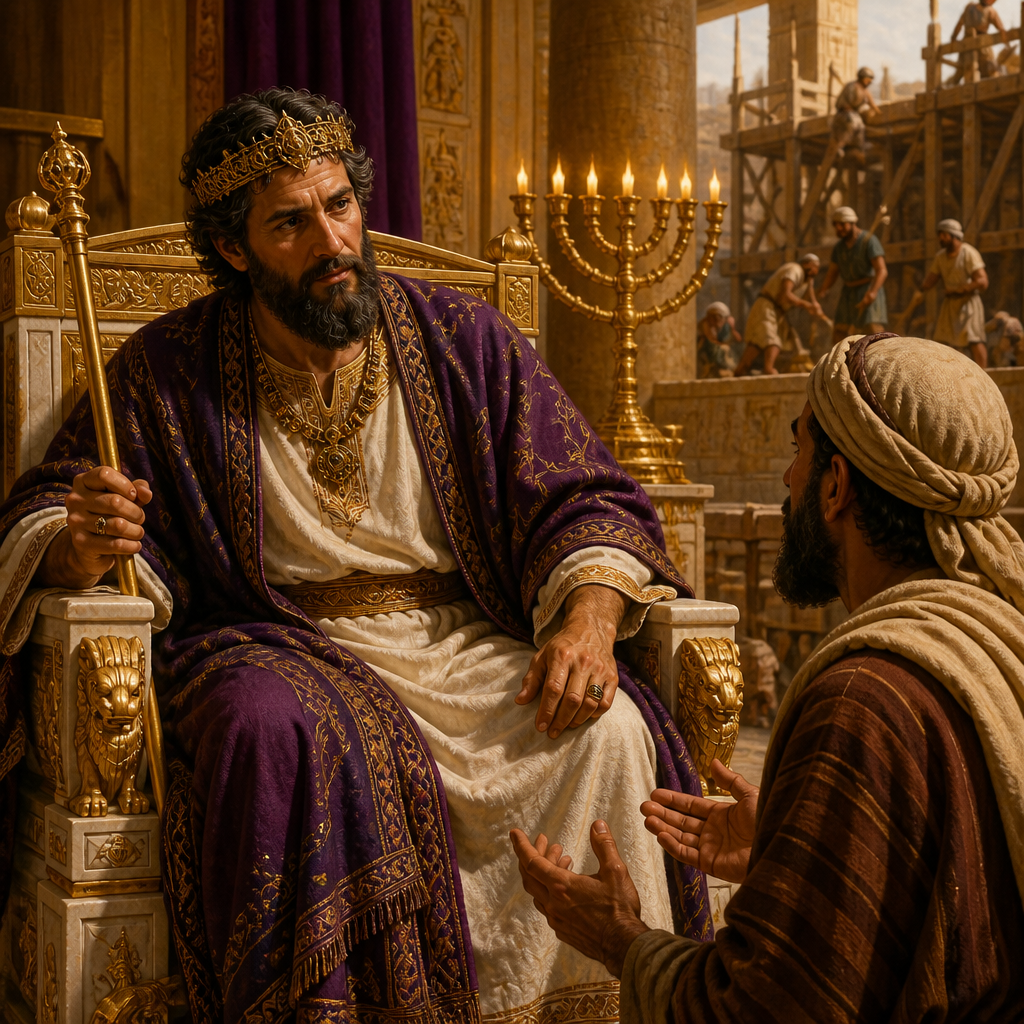
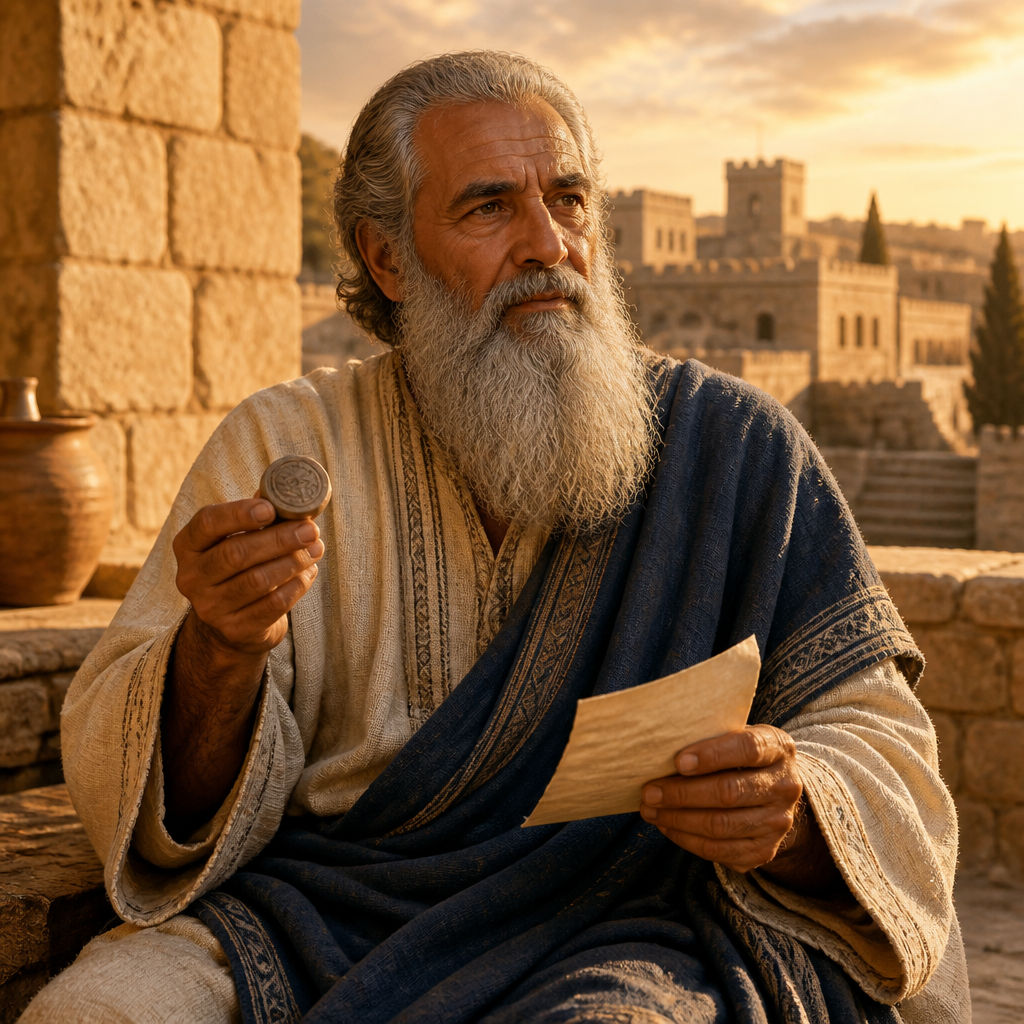
Jehoshaphat first appears in the administrative list of King David following the king's major military conquests. In 2 Samuel 8:16 and 1 Chronicles 18:15, he is listed alongside Joab, the commander of the army, and Zadok the priest. His role as the 'recorder' (Hebrew: mazkir) was not merely that of a clerk but likely that of a high-ranking chancellor or press secretary who managed the king's schedule, handled state correspondence, and acted as a formal witness to treaties and royal decrees.
Later in David's reign, following the rebellions of Absalom and Sheba, Jehoshaphat is again listed in 2 Samuel 20:24 as holding the same office. This suggests he remained loyal to David during internal conflicts. Upon the ascension of Solomon to the throne, Jehoshaphat was retained in his position. 1 Kings 4:3 confirms that while other offices changed hands or were newly created, Jehoshaphat son of Ahilud continued as the recorder, serving as a bridge between the two regimes during the transition to Israel's 'Golden Age.'
Relationship to Other Biblical Figures
Jehoshaphat worked at the highest levels of the Davidic government. He is consistently listed in the same breath as Joab son of Zeruiah (the military head) and Benaiah son of Jehoiada. In Solomon’s court, he served alongside the sons of Zadok and Shisha. His family connections were also significant; his brother Baana was tasked with overseeing the district of Taanach and Megiddo, one of the most economically vital regions of Solomon's kingdom. This implies that the house of Ahilud was a cornerstone of the United Monarchy's bureaucracy.
Spiritual Significance
In the biblical context, Jehoshaphat represents the 'silent' strength of the administrative state that allowed the kings of Israel to govern effectively. The office of recorder ensured that the 'remembrance' of God’s dealings with the king and the nation were preserved. While he is not credited with prophetic or military feats, his presence in the holy text serves as a testament to the importance of order, faithfulness, and institutional memory in the fulfillment of the Davidic covenant. His career spanning two reigns exemplifies the biblical virtue of steadfast service in one's appointed station.
Spiritual Significance
Jehoshaphat's role as recorder is significant for understanding the transition of Israel from a loose tribal confederation to a sophisticated bureaucratic state. His presence in the biblical text validates the historical reality of the United Monarchy's administrative structure. Theologically, he represents the necessary 'helpers' who facilitate the reign of the Lord's anointed, showing that every role within the kingdom, whether public or administrative, contributes to the stability of the nation.
Frequently Asked Questions
What was the role of a 'recorder' in the Bible?
The 'recorder' (mazkir) was a high-level official in the royal court, likely acting as a chancellor or chief of staff who kept official annals and advised the king on state matters.
Who was Jehoshaphat's father?
Jehoshaphat was the son of Ahilud.
Which kings did this Jehoshaphat serve?
He served as the recorder for both King David and King Solomon.
Did Jehoshaphat have any siblings?
Yes, 1 Kings 4:17 mentions his brother Baana, who served as a governor over Taanach and Megiddo.
Connected Figures

Categories
Mentions by Book
- 2 Samuel2
- 1 Chronicles1
- 1 Kings1
Family & Relationships
Sibling
2 Samuel 8:16
Parent
2 Samuel 8:16
Sibling
1 Kings 4:12
Others Named Jehoshaphat
Jehoshaphat, Father of King Jehu2 Kings 9:2
A man of the tribe of Israel during the Divided Monarchy, known primarily as the son of Nimshi and the father of King Jehu.
Jehoshaphat, District Governor of Issachar1 Kings 4:17
A district governor under King Solomon who oversaw the administration and taxation of the territory belonging to the tribe of Issachar.
Jehoshaphat, King of Judah1 Kings 15:24
The fourth king of the Southern Kingdom of Judah who initiated religious reforms, established a national judicial system, and successfully repelled a massive foreign coalition.