Eleazar, Son of Dodo the Ahohite
One of King David’s 'Three Mighty Men' renowned for his exceptional bravery and military prowess during the Philistine wars of the United Monarchy.
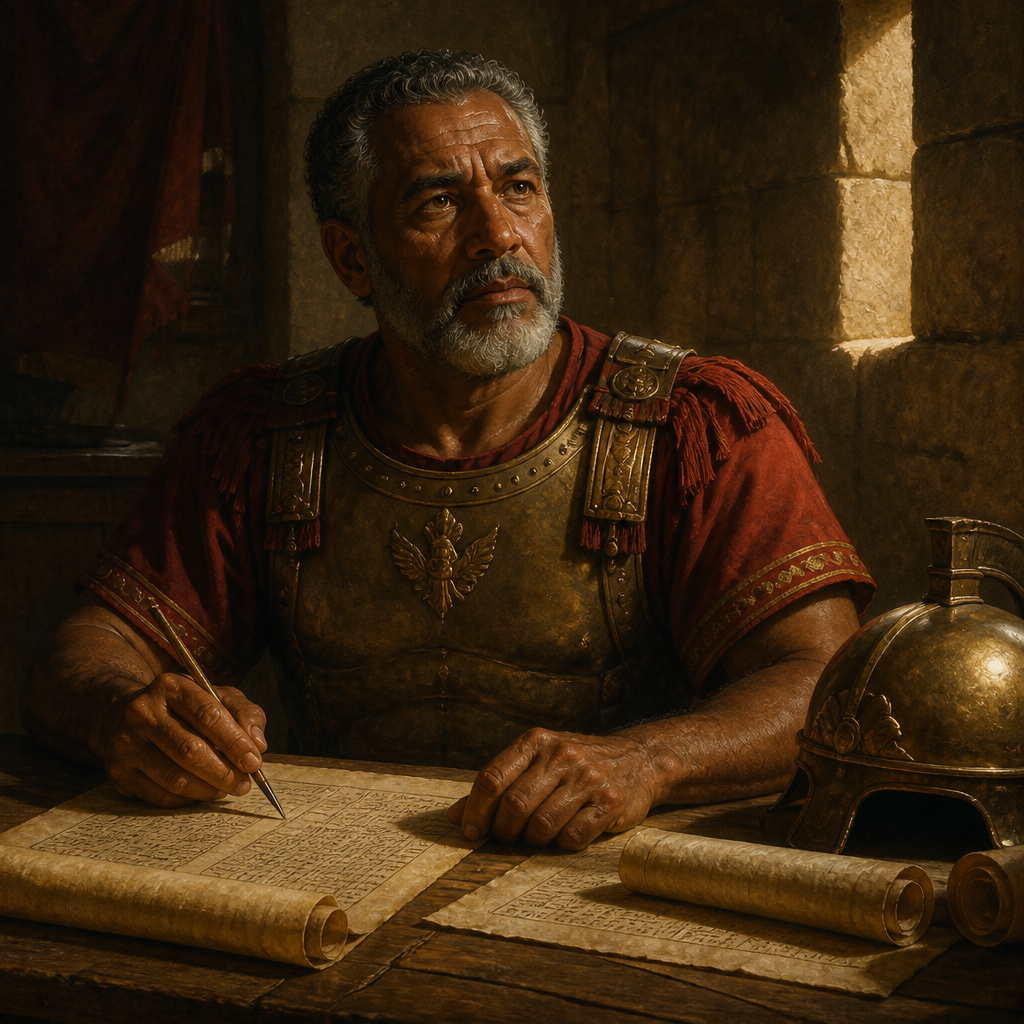
Eleazar, son of Dodo the Ahohite, stands as a premier figure within the military elite of King David’s administration. Recorded in the 'Mighty Men' lists of 2 Samuel and 1 Chronicles, he held the prestigious rank of being one of the 'Three,' an inner circle of warriors distinct from and superior to the broader group known as 'The Thirty.' His reputation was forged in the heat of the Philistine conflicts that characterized the early years of the United Monarchy.
While the biblical record concerning Eleazar is concise, it is remarkably potent, focusing on his unwavering resolve in the face of overwhelming odds. He is primarily remembered for a specific engagement at Pas-dammim, where his singular stand prevented a disastrous defeat for the Israelite forces. His inclusion in these royal chronicles underscores the importance of individual martial excellence in the establishment and security of David’s throne.
Background and Family
Eleazar is identified in the biblical genealogies as the son of Dodo (also spelled Dodai) the Ahohite. The designation 'Ahohite' suggests he belonged to the family or clan of Ahoah, who was a descendant of Benjamin (1 Chronicles 8:4). This indicates that Eleazar likely hailed from the tribe of Benjamin, the same tribe as David’s predecessor, King Saul. His father, Dodo, was himself a man of standing, mentioned in 1 Chronicles 27:4 as being in charge of the division of the army that served during the second month of the year.
Major Life Events
The defining moment of Eleazar’s career occurred during a battle against the Philistines at a location known as Pas-dammim (or Ephes-dammim). According to the accounts in 2 Samuel 23 and 1 Chronicles 11, the Philistines had gathered for battle, and the men of Israel began to retreat in the face of the enemy provocation.
Eleazar, however, refused to yield. The text describes him standing his ground alongside King David. In a display of extreme physical and mental endurance, he struck down the Philistines until his hand grew weary and literally 'froze' or 'stuck' to the hilt of his sword. The biblical narrative credits his tenacity with a 'great victory' brought about by the LORD that day. It is noted that the rest of the Israelite troops only returned to the scene to strip the dead, as Eleazar had already broken the enemy's momentum.
Relationship to Other Biblical Figures
Eleazar’s primary relationship was his subordinate yet intimate connection to King David. As one of the 'Three,' he was part of David’s most trusted military vanguard. He served alongside Jashobeam the Hachmonite and Shammah the son of Agee the Hararite (though 1 Chronicles 11 focuses specifically on Eleazar and Jashobeam). This group was distinguished by their specific acts of valor that went beyond the expectations of standard military duty. His loyalty to David during the precarious years of the Philistine wars helped solidify the king's authority over the united tribes.
Spiritual Significance
Though the account of Eleazar is primarily martial, it carries significant theological weight within the context of the Deuteronomistic History. The narrative emphasizes that while Eleazar fought with all his strength, it was the LORD who 'brought about a great victory.' This synergy between human faithfulness and divine intervention is a recurring theme in the chronicles of the United Monarchy. Eleazar serves as a prototype of the 'faithful remnant'—the individual who stands firm for the sake of God’s anointed king even when the majority flees in fear.
Spiritual Significance
Eleazar represents the ideal of the 'Mighty Man' (Gibbor) whose strength is placed at the service of God's appointed king. His narrative illustrates the concept that a single individual's courage, empowered by God, can reverse the fortunes of an entire nation. In the broader biblical canon, his deeds contribute to the 'Davidic mythos,' confirming that David's reign was supported by men of extraordinary character and divine favor.
Furthermore, his lineage as an Ahohite (Benjamite) serving David highlights the unification of the tribes under the Davidic banner. By recording his specific name and the name of his father, the biblical authors ensure that his personal sacrifice and physical endurance are memorialized as part of Israel's national identity.
Frequently Asked Questions
Who was Eleazar's father?
Eleazar was the son of Dodo the Ahohite.
What was Eleazar's rank in David's army?
He was one of the 'Three Mighty Men,' the highest-ranking elite warriors who stood above 'The Thirty.'
Where did Eleazar perform his most famous feat of bravery?
His most famous battle took place at Pas-dammim (or Ephes-dammim) against the Philistines.
What happened to Eleazar’s hand during battle?
The Bible records that his hand grew so tired from striking down the enemy that it 'clung' or 'froze' to the hilt of his sword.
Which tribe did Eleazar likely belong to?
As an Ahohite, he was likely from the tribe of Benjamin.
Connected Figures
Categories
Mentions by Book
- 1 Chronicles1
- 2 Samuel1
Family & Relationships
Parent
2 Samuel 23:9
Others Named Eleazar
Eleazar, Son of PhinehasEzra 8:33
A high-ranking religious official who helped inventory the gold and silver for the Second Temple following the return from Babylon.
Eleazar, Musician of the ReturnNehemiah 12:42
A Jewish musician or official who participated in the joyous dedication ceremony of the rebuilt walls of Jerusalem under the leadership of Nehemiah.
Eleazar, Son of Abinadab1 Samuel 7:1
The son of Abinadab who was consecrated to guard the Ark of the Covenant during its twenty-year stay in Kiriath-jearim.
Eleazar, Son of ParoshEzra 10:25
An Israelite from the family of Parosh who was among those required to put away foreign wives during the reforms of Ezra.
Eleazar, Son of AaronExodus 6:23
Eleazar was the third son of Aaron and his successor as the High Priest of Israel, serving as a key leader alongside Moses and Joshua during the wilderness wanderings and the conquest of Canaan.
Eleazar, Son of EliudMatthew 1:15
Eleazar was a member of the royal lineage of King David and an ancestor of Jesus Christ, appearing in the genealogy of Matthew.
Eleazar, Son of Mahli1 Chronicles 23:21
A Levite of the clan of Merari who died without sons, resulting in his daughters marrying their cousins to preserve the family inheritance.