Eleazar, Musician of the Return
A Jewish musician or official who participated in the joyous dedication ceremony of the rebuilt walls of Jerusalem under the leadership of Nehemiah.
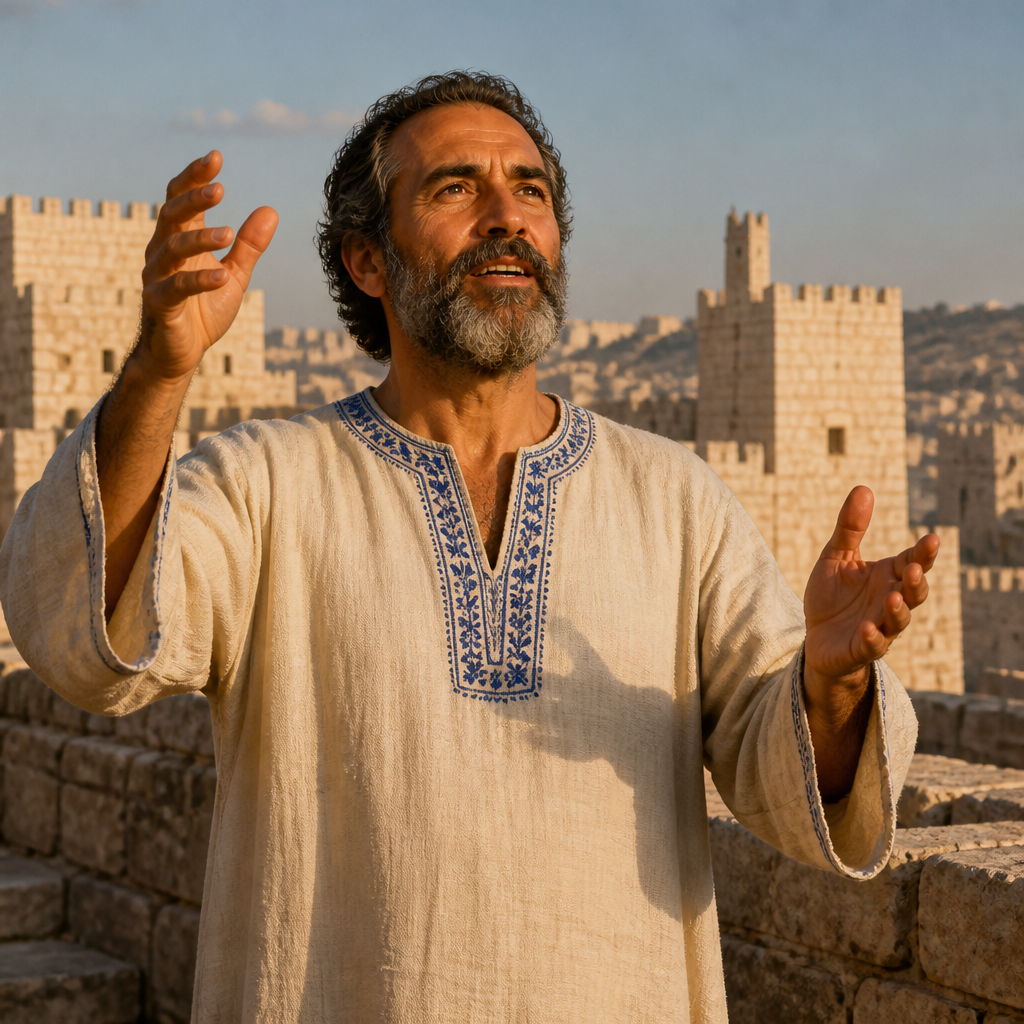
Eleazar was a participant in one of the most significant communal celebrations in post-exilic Jewish history: the dedication of the Jerusalem wall. During the era of the Exile and Return, specifically during the governorship of Nehemiah, the Jewish remnant worked to restore the physical and spiritual infrastructure of the holy city. Eleazar is listed among those who stood atop the walls to offer praise to God for the completion of this monumental task.
While the biblical record provides only a single mention of his name, his inclusion in the list of participants in Nehemiah 12 highlights his role in the religious life of the restored community. He was part of a specific group of leaders or musicians who processed with the second of two great choirs, contributing to a ceremony that was heard from a great distance away.
Background and Family
The biblical record for this specific Eleazar is limited to a single verse within the context of the dedication of the Jerusalem wall. His specific lineage and tribe are not explicitly stated in the text of Nehemiah 12:42. However, his placement among names such as Maaseiah, Shemaiah, and Uzzi suggests he was likely a member of the priestly or Levite classes, as these groups were primarily responsible for the musical and ceremonial aspects of the dedication. He lived during the Post-Exilic Period, a time when the Jewish people were returning from Babylonian captivity to rebuild their identity in the land of Judah.
Major Life Events
The defining moment of Eleazar’s recorded life occurred during the dedication of the Jerusalem wall. After the walls were completed despite significant opposition, Nehemiah organized two large thanksgiving choirs to walk atop the walls in opposite directions. Eleazar was part of the group that included Maaseiah, Shemaiah, Uzzi, Jehohanan, Malchijah, Elam, and Ezer.
According to the text, these individuals performed under the direction of Jezrahiah. The ceremony was a grand spectacle of liturgical music and sacrifice. The sound of their singing and the music of their instruments were so voluminous that Nehemiah 12:43 notes that "the joy of Jerusalem was heard from far away." Eleazar’s presence in this procession indicates he was a recognized leader or skilled musician within the community.
Relationship to Other Biblical Figures
Eleazar served under the administrative leadership of Nehemiah, the governor of Judah, and the spiritual oversight of Ezra the scribe. He is listed alongside seven other men in Nehemiah 12:42 who functioned as part of the musical leadership or ceremonial guard. While no specific family relationships are recorded for him, he worked in close coordination with Jezrahiah the director to ensure the dedication ceremony adhered to the prescribed religious standards of the time.
Spiritual Significance
The significance of Eleazar lies in his contribution to the restoration of Jewish worship. The rebuilding of the walls was not merely a construction project; it was a spiritual reclamation of Jerusalem as a holy city. By participating in the choir and the dedication, Eleazar helped transition the community from a state of mourning and vulnerability to one of security and public praise. His life exemplifies the service of those who work behind the scenes to facilitate communal worship and celebrate the providential protection of God over His people.
Spiritual Significance
Eleazar represents the collaborative spirit of the post-exilic community. His participation in the dedication of the walls signifies the importance of every individual role in the restoration of the covenant community. Even those with brief mentions in the text are immortalized as participants in God’s redemptive work for Israel.
Theologically, Eleazar’s role in the choir emphasizes the central place of joy and music in the life of the believer. The dedication ceremony was the culmination of years of struggle, and Eleazar’s voice was part of the collective sound that announced to the surrounding nations that God had restored His people.
Frequently Asked Questions
What role did Eleazar play in Nehemiah 12?
Eleazar was a participant, likely a singer or a leader, in the dedication ceremony of the Jerusalem walls, processing with one of the two large thanksgiving choirs.
When did this Eleazar live?
He lived during the era of the Exile and Return (Post-Exilic Period), specifically during the time when Nehemiah was governor of Judah, roughly in the mid-5th century BC.
Was this Eleazar a priest?
The Bible does not explicitly label him a priest, but his inclusion among the group leading the musical dedication strongly suggests he was a Levite or a priest.
What tribe did this Eleazar belong to?
His tribe is not mentioned in the biblical text, though his service in the temple-related ceremony usually implies Levi.
Who was Eleazar's leader during the dedication?
He performed under the direction of Jezrahiah, who was the leader of the singers during the wall's dedication.
Connected Figures
Nehemiah
Governor and leader of the wall dedication
Jezrahiah
Musical director of Eleazar's group
Maaseiah
Associate mentioned alongside him in the procession
Categories
Mentions by Book
- Nehemiah1
Others Named Eleazar
Eleazar, Son of PhinehasEzra 8:33
A high-ranking religious official who helped inventory the gold and silver for the Second Temple following the return from Babylon.
Eleazar, Son of Abinadab1 Samuel 7:1
The son of Abinadab who was consecrated to guard the Ark of the Covenant during its twenty-year stay in Kiriath-jearim.
Eleazar, Son of ParoshEzra 10:25
An Israelite from the family of Parosh who was among those required to put away foreign wives during the reforms of Ezra.
Eleazar, Son of AaronExodus 6:23
Eleazar was the third son of Aaron and his successor as the High Priest of Israel, serving as a key leader alongside Moses and Joshua during the wilderness wanderings and the conquest of Canaan.
Eleazar, Son of EliudMatthew 1:15
Eleazar was a member of the royal lineage of King David and an ancestor of Jesus Christ, appearing in the genealogy of Matthew.
Eleazar, Son of Dodo the Ahohite2 Samuel 23:9
One of King David’s 'Three Mighty Men' renowned for his exceptional bravery and military prowess during the Philistine wars of the United Monarchy.
Eleazar, Son of Mahli1 Chronicles 23:21
A Levite of the clan of Merari who died without sons, resulting in his daughters marrying their cousins to preserve the family inheritance.