Ahijah, Secretary of King Solomon
Ahijah was a high-ranking royal scribe and secretary serving in the administrative court of King Solomon during the United Monarchy.
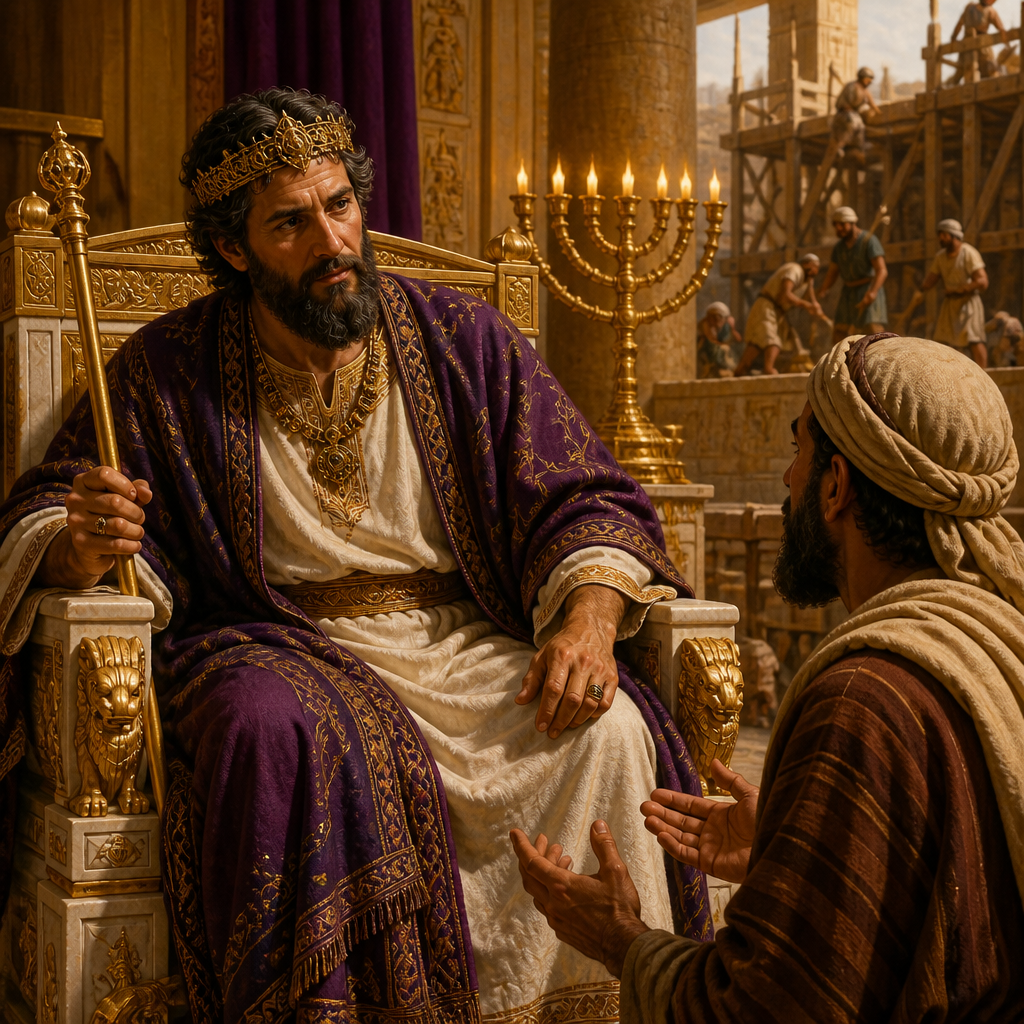
Ahijah was an influential administrative official in the early years of the United Monarchy under King Solomon. He held the prestigious position of secretary (or scribe), a role that involved managing the king’s official correspondence, drafting royal edicts, and maintaining the state archives. His inclusion in the short list of Solomon’s chief officials indicates he was a member of the inner circle of the Israelite government at its height of power.
While his individual actions are not detailed in the biblical narrative, his genealogy links him to a line of scribes, suggesting a hereditary tradition of literacy and civil service. He served alongside his brother, Elihoreph, indicating that the clerical administration of Israel was a significant family enterprise during this era. His service reflects the sophisticated bureaucratic structure that Solomon established to govern his vast and prosperous kingdom.
Background and Family
Ahijah was the son of Shisha (also identified in other contexts as Seraiah), who served as a scribe under King David. This lineage suggests that Ahijah was part of a professional class of administrators who transitioned from the military-focused reign of David to the more institutionalized, bureaucratic reign of Solomon. He served in his capacity as a secretary concurrently with his brother, Elihoreph.
The tribe of Ahijah is not explicitly stated in 1 Kings 4:3, though his father’s role in David’s court suggests a long-standing residence in Jerusalem and a close proximity to the royal house. The name Ahijah itself means "Brother of Yahweh" or "Friend of Yahweh," a common theophoric name during the United Monarchy that reflects the religious devotion of his family line.
Major Life Events
The primary record of Ahijah’s life is found in the administrative roster of King Solomon’s cabinet. This list represents the peak of Israelite organizational stability. Ahijah, along with his brother Elihoreph, occupied the office of sopherim (secretaries/scribes). Unlike modern secretaries, these individuals were high-ranking ministers of state, responsible for the king's official seals, international treaties, and the documentation of the empire's wealth and expansion.
Ahijah’s career took place during a period of unprecedented peace and construction. He would have been responsible for the written records concerning the building of the First Temple and the Royal Palace, as well as the diplomatic letters exchanged between Solomon and foreign rulers like Hiram of Tyre.
Relationship to Other Biblical Figures
Ahijah’s most significant relationship was his professional and familial bond with his brother, Elihoreph. Together, they formed a unique dual-secretariat that managed the clerical needs of the monarchy. He was a direct subordinate to King Solomon and worked alongside other high officials, such as Azariah son of Zadok the priest and Jehoshaphat son of Ahilud the recorder. This network of officials represents the transition of Israel from a tribal confederation into a structured state.
Spiritual Significance
Though Ahijah is a minor figure in terms of narrative action, his presence in the biblical text highlights the importance of the written word and the preservation of history within the covenant community. As a scribe, Ahijah was part of the class responsible for the literacy that eventually allowed for the transcription and preservation of sacred texts. His faithful service in the secular administration of the king is presented as a component of the divinely ordained order and wisdom that characterized Solomon’s reign. The inclusion of his name in the Holy Scriptures serves as a testament to the value of professional excellence and the foundational role of administrative support in the life of the nation of Israel.
Spiritual Significance
Ahijah represents the professionalization of the Israelite government under King Solomon. His role as a scribe underscores the shift toward a literate, organized society that could maintain a complex legal and religious infrastructure. Though his personal life is unrecorded, his inclusion in the official lists of the United Monarchy validates the importance of civil service as a calling within the biblical worldview.
Frequently Asked Questions
What was Ahijah’s job in King Solomon’s court?
Ahijah served as a secretary (or scribe), a high-ranking official responsible for the king's official records, edicts, and state correspondence.
Who was Ahijah’s father?
Ahijah was the son of Shisha, who is believed to be the same person as Seraiah, the scribe who served under King David.
Did Ahijah work alone?
No, he served as secretary alongside his brother, Elihoreph. They are the only pair of brothers listed as sharing this specific role in Solomon's administration.
In which book of the Bible is this Ahijah mentioned?
This specific Ahijah is mentioned only in the Book of 1 Kings, specifically in chapter 4, verse 3.
What does the name Ahijah mean?
The name Ahijah (Achiyah) means 'Brother of Yahweh' or 'Friend of Yahweh' in Hebrew.
Connected Figures

Categories
Mentions by Book
- 1 Kings1
Family & Relationships
Sibling
1 Kings 4:3
Parent
2 Samuel 8:17
Sibling
1 Kings 4:3
Others Named Ahijah
Ahijah the Pelonite1 Chronicles 11:36
A member of King David’s elite warriors, known as 'The Thirty,' during the transition into the Divided Monarchy period.
Ahijah the Shilonite1 Kings 11:29
A prophet from Shiloh who foretold the division of the United Monarchy and the rise and fall of Jeroboam I.
Ahijah, Father of King Baasha1 Kings 15:27
A man of the tribe of Issachar whose son, Baasha, overthrew the dynasty of Jeroboam I to become the third king of the northern Kingdom of Israel.
Ahijah, Son of Jerahmeel1 Chronicles 2:25
A descendant of the tribe of Judah and the house of Hezron during the era of the United Monarchy.
Ahijah, Levite of the Divided Monarchy1 Chronicles 26:20
A Levite during the Divided Monarchy period who was entrusted with the management of the temple treasuries and dedicated offerings in the house of God.
Ahijah, Son of Ehud1 Chronicles 8:7
Ahijah was a member of the tribe of Benjamin and a descendant of Ehud, listed among those who were carried into exile.