Ahijah the Shilonite
A prophet from Shiloh who foretold the division of the United Monarchy and the rise and fall of Jeroboam I.
Ahijah the Shilonite was a significant prophet active during the latter years of King Solomon’s reign and the beginning of the Divided Monarchy. Hailing from Shiloh, an ancient religious center in the territory of Ephraim, Ahijah served as a divine messenger during a pivotal transition in Israel’s history. He is best known for his symbolic prophecy regarding the fracturing of the twelve tribes and his subsequent judgments against the house of Jeroboam.
His ministry is characterized by dramatic symbolic actions and stern oracles. Although his presence in the biblical text is concentrated in a few specific episodes, his words provide the theological framework for the end of the United Monarchy. He is credited in the Books of Chronicles as having recorded his own prophecies, indicating his status as a literary figure among the early prophets of Israel.
Background and Family
Ahijah is consistently identified by his geographic origin as a "Shilonite," meaning he was a resident or native of Shiloh (1 Kings 11:29). This location is significant, as Shiloh had been the home of the Tabernacle and the Ark of the Covenant during the period of the Judges, long before the establishment of the Temple in Jerusalem. By identifying him with Shiloh, the biblical narrative links his prophetic authority to an older, venerable tradition of Israelite worship.
Regarding his personal lineage or family, the biblical record is silent. There are no mentions of his father, mother, or children in the texts of 1 Kings or 2 Chronicles. His identity is entirely defined by his office as a "prophet" (Hebrew: nabî) and his role as a "servant" of the Lord.
Major Life Events
The Prophecy of the Torn Cloak
The first appearance of Ahijah occurs toward the end of Solomon’s reign. Solomon had drifted into idolatry, prompting a divine decree that the kingdom would be divided. Ahijah was dispatched to meet Jeroboam, an industrious official under Solomon, as Jeroboam was leaving Jerusalem. In a private encounter in an open field, Ahijah performed a striking symbolic act: he took a new cloak he was wearing and tore it into twelve pieces (1 Kings 11:30).
Ahijah commanded Jeroboam to take ten pieces, symbolizing that God would tear the kingdom out of the hand of Solomon’s son and give ten tribes to Jeroboam. This prophecy established the theological justification for the eventual secession of the northern tribes. Ahijah also offered a conditional promise: if Jeroboam remained faithful to God’s commandments, God would build him a "lasting dynasty" similar to that of David (1 Kings 11:38).
The Confrontation with Jeroboam’s Wife
Years later, after Jeroboam had become king of the northern ten tribes and led them into the sin of golden calf worship, Ahijah appears again. Jeroboam’s son, Abijah, had fallen ill. Seeking a word from the Lord but fearing to appear before the prophet he had disappointed, Jeroboam sent his wife in disguise to Ahijah’s home in Shiloh.
By this time, Ahijah was elderly and physically blind—the text notes his "eyes were dim because of his age" (1 Kings 14:4). However, before the queen arrived, the Lord revealed her identity and the coming judgment to Ahijah. As soon as he heard her footsteps at the door, he called out, "Come in, wife of Jeroboam! Why are you disguised?" (1 Kings 14:6). He delivered a devastating oracle, predicting the death of the sick child and the total violent extermination of Jeroboam’s entire household because of his apostasy. This prophecy was fulfilled precisely during the reign of Baasha, who struck down every member of Jeroboam’s line (1 Kings 15:29).
Relationship to Other Biblical Figures
Ahijah’s primary relationship in the text is with Jeroboam I. He acts as both the kingmaker and the king-breaker, first elevating Jeroboam through prophecy and later pronouncing his doom. The text also links Ahijah to the broader history of Solomon’s reign; 2 Chronicles 9:29 mentions the "Prophecy of Ahijah the Shilonite" as a source for the acts of Solomon, suggesting that he was a contemporary historian or chronicler of that era.
While Ahijah does not interact directly with King Solomon in the recorded text, his prophecy to Jeroboam is the direct catalyst for the "turn of events" that caused Rehoboam (Solomon's son) to lose the northern tribes. The Chronicler notes that Rehoboam's refusal to listen to the people was orchestrated by God to fulfill the word spoken through Ahijah (2 Chronicles 10:15).
Spiritual Significance
Ahijah represents the sovereignty of the Word of God over political structures. In the biblical narrative, kings do not rise or fall by mere political maneuvering or military might, but by the decree of the Lord delivered through his prophets. Ahijah’s life demonstrates that even when a prophet is physically frail or blind, he remains the mouthpiece of the Almighty.
Furthermore, Ahijah’s ministry highlights the conditional nature of God’s blessings. The "lasting dynasty" offered to Jeroboam was predicated on obedience. Ahijah’s eventual condemnation of Jeroboam serves as a warning in the Deuteronomistic history that religious infidelity leads to the dissolution of power and the suffering of the nation. He stands as a witness to the transition from the unified glory of Solomon to the fractured, turbulent era of the two kingdoms.
Spiritual Significance
Ahijah the Shilonite serves as the foundational prophetic figure of the Divided Monarchy era. His symbolic act of tearing the cloak provided the spiritual and legal framework for the existence of the Northern Kingdom of Israel. Without his prophetic intervention, the secession of the ten tribes might have been viewed merely as a political rebellion; instead, the biblical writers present it as a divinely mandated judgment on the house of David for Solomon's idolatry.
Theologically, Ahijah embodies the 'prophetic word' that is both creative and destructive. His word creates a kingdom for Jeroboam, and his word later dismantles Jeroboam’s house. His role in the Records of Nathan and the Visions of Iddo suggests that early Israelite prophecy was closely tied to the recording of national history, ensuring that the interpretation of events remained centered on God’s covenantal requirements.
Frequently Asked Questions
What symbolic act did Ahijah perform to show the kingdom would be divided?
Ahijah took a new cloak he was wearing and tore it into twelve pieces, telling Jeroboam to take ten of them to symbolize the ten tribes he would rule.
Why did Jeroboam send his wife to see Ahijah in disguise?
Jeroboam sent his wife in disguise because their son was ill and he wanted to know the child's fate, but he likely feared Ahijah would give a negative prophecy because Jeroboam had abandoned the Lord's commands.
How did Ahijah know who Jeroboam's wife was if he was blind?
Although Ahijah was blind due to old age, the Lord spoke to him beforehand and revealed that the queen was coming in disguise, allowing him to identify her by the sound of her footsteps.
Where was Ahijah from?
Ahijah was from Shiloh, an ancient religious center in the territory of Ephraim that once housed the Tabernacle.
What did Ahijah prophesy regarding Jeroboam's family?
He prophesied that because of Jeroboam's idolatry, every male in his household would be cut off and the family would be completely destroyed, a prophecy fulfilled by King Baasha.
Connected Figures
Jeroboam I
Subject of Ahijah's prophecies and first king of Northern Israel
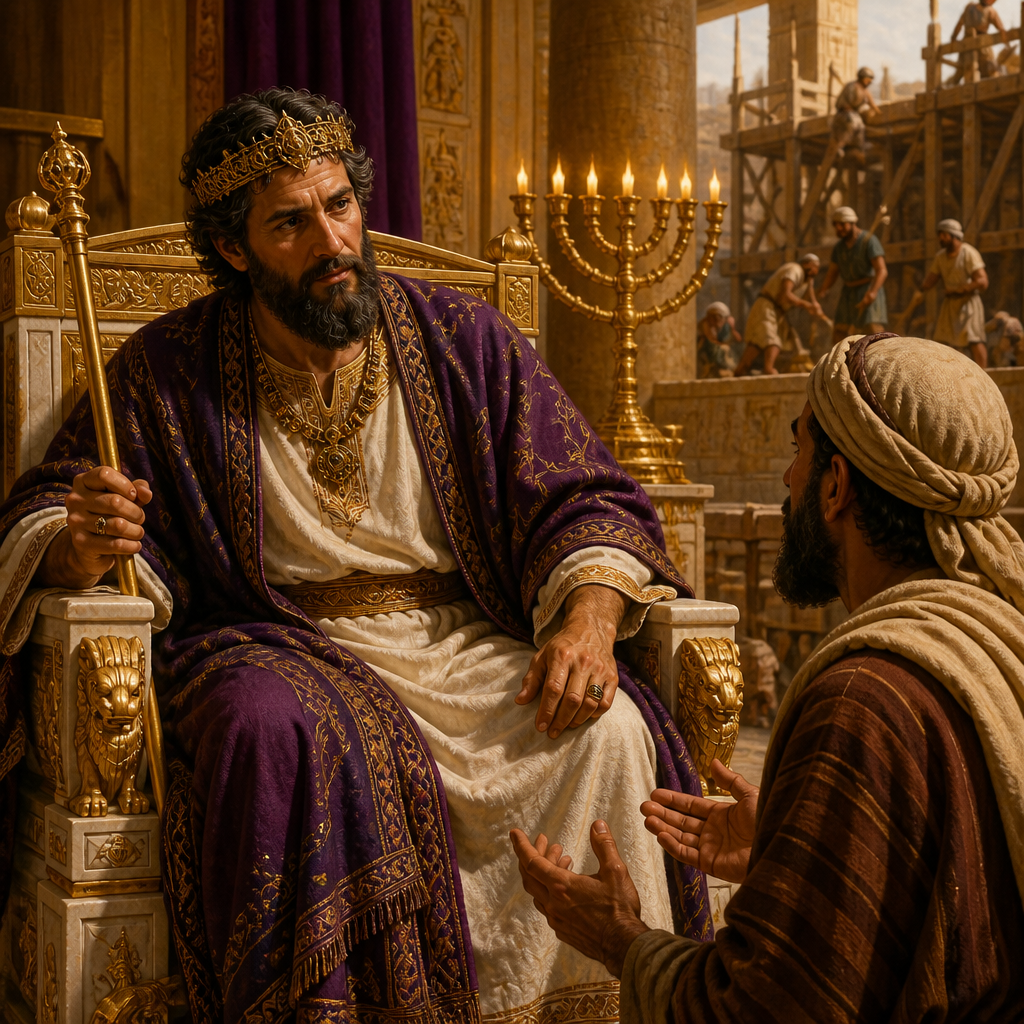
Solomon
King whose idolatry triggered Ahijah's prophecy of division
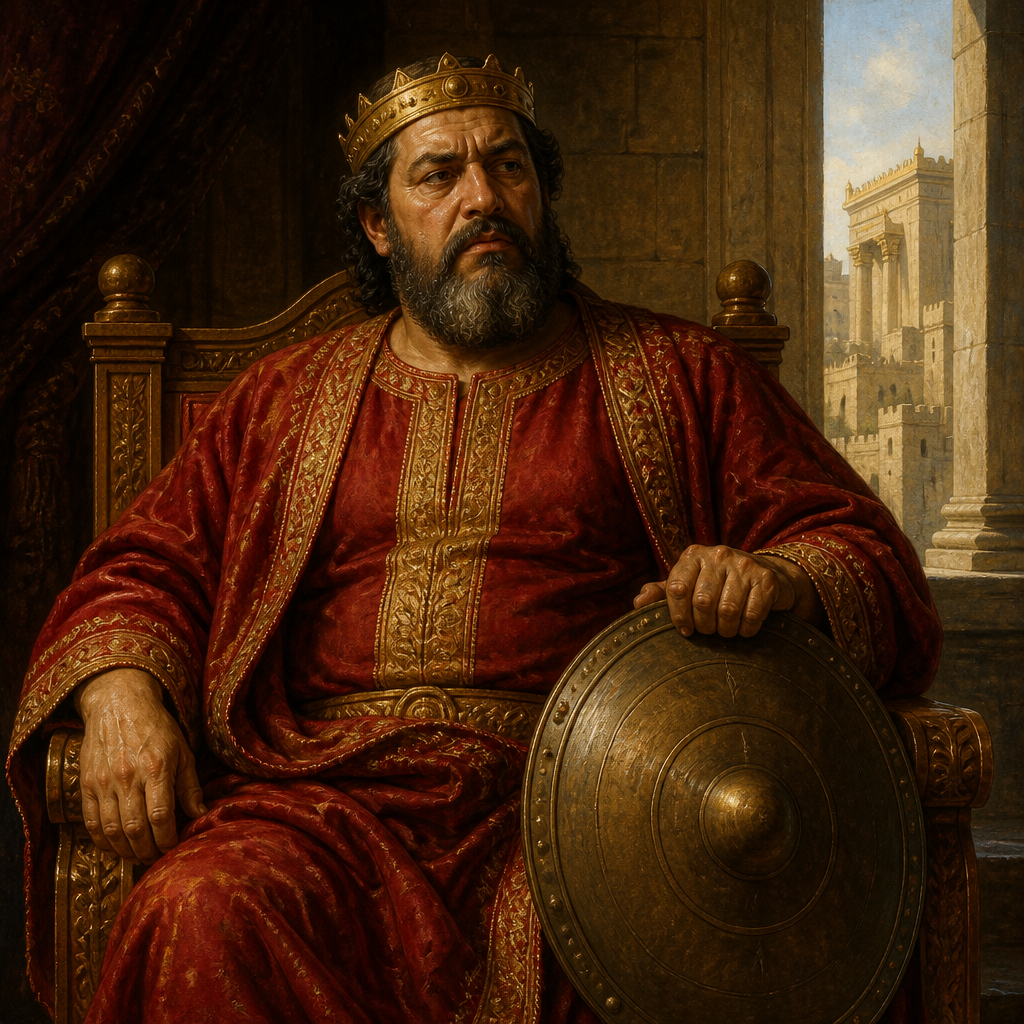
Rehoboam
Solomon's son whose loss of the kingdom fulfilled Ahijah's word

Baasha
King who fulfilled Ahijah's prophecy by destroying Jeroboam's house
Categories
Mentions by Book
- 1 Kings9
- 2 Chronicles2
Others Named Ahijah the Shilonite
Ahijah, Secretary of King Solomon1 Kings 4:3
Ahijah was a high-ranking royal scribe and secretary serving in the administrative court of King Solomon during the United Monarchy.
Ahijah the Pelonite1 Chronicles 11:36
A member of King David’s elite warriors, known as 'The Thirty,' during the transition into the Divided Monarchy period.
Ahijah, Father of King Baasha1 Kings 15:27
A man of the tribe of Issachar whose son, Baasha, overthrew the dynasty of Jeroboam I to become the third king of the northern Kingdom of Israel.
Ahijah, Son of Jerahmeel1 Chronicles 2:25
A descendant of the tribe of Judah and the house of Hezron during the era of the United Monarchy.
Ahijah, Levite of the Divided Monarchy1 Chronicles 26:20
A Levite during the Divided Monarchy period who was entrusted with the management of the temple treasuries and dedicated offerings in the house of God.
Ahijah, Son of Ehud1 Chronicles 8:7
Ahijah was a member of the tribe of Benjamin and a descendant of Ehud, listed among those who were carried into exile.