Abigail, Wife of David
An intelligent and beautiful woman from Carmel who averted a massacre through diplomacy and later became one of King David’s primary wives.
Abigail is presented in the Hebrew Bible as a woman of exceptional character, noted for her dual attributes of beauty and intelligence. Living during the late 11th century BC during the United Monarchy, she was initially the wife of a wealthy but harsh landowner named Nabal of Carmel. Her primary narrative significance arises during David’s years as a fugitive from King Saul, when her quick thinking and diplomatic speech prevented David from committing a mass slaughter of her household in a moment of vengeful anger.
Following the death of her husband Nabal, Abigail accepted David's proposal of marriage. She accompanied him through his remaining time as a wanderer, was captured and rescued during the raid on Ziklag, and eventually resided with him in Hebron as he was crowned King over Judah. Her life reflects the transition from the chaotic period of the Judges to the established royalty of the Davidic dynasty.
Background and Family
Abigail lived in the region of Carmel, a mountainous area in the Judean wilderness. She was the wife of Nabal, a descendant of Caleb who possessed immense wealth, including three thousand sheep and a thousand goats. The biblical text contrasts their characters sharply in 1 Samuel 25:3, describing Abigail as "intelligent and beautiful" while Nabal is characterized as "harsh and evil in his dealings."
Though her specific tribal origin is not explicitly stated, her residence in Carmel and Nabal’s Calebite lineage place her within the southern Judean cultural sphere. Abigail’s status in the household was significant enough that the servants turned to her, rather than Nabal, when a life-threatening crisis emerged involving David and his band of warriors.
Major Life Events
The Encounter with David
The central event of Abigail’s life occurred when David, then an outlaw leading approximately 600 men, sought a gift of provisions from Nabal during the sheep-shearing season—a time typically associated with hospitality. David’s men had protected Nabal’s shepherds, yet Nabal responded to the request with insults, questioning David’s legitimacy. In response, David armed 400 men with the intent to execute every male in Nabal’s household by morning.
Upon being warned by a servant, Abigail acted without consulting her husband. She organized a massive supply of provisions: two hundred loaves of bread, wine, butchered sheep, grain, raisins, and fig cakes. Intercepting David on the mountain, she performed a gesture of total submission, falling facedown at his feet. Her speech to David is one of the longest recorded for a woman in the Old Testament, blending humility with prophetic insight. She urged David to avoid the "bloodguilt" of unnecessary slaughter, reminding him that the Lord would surely build him a "lasting dynasty" because he fought the Lord’s battles (1 Samuel 25:28).
Marriage to David
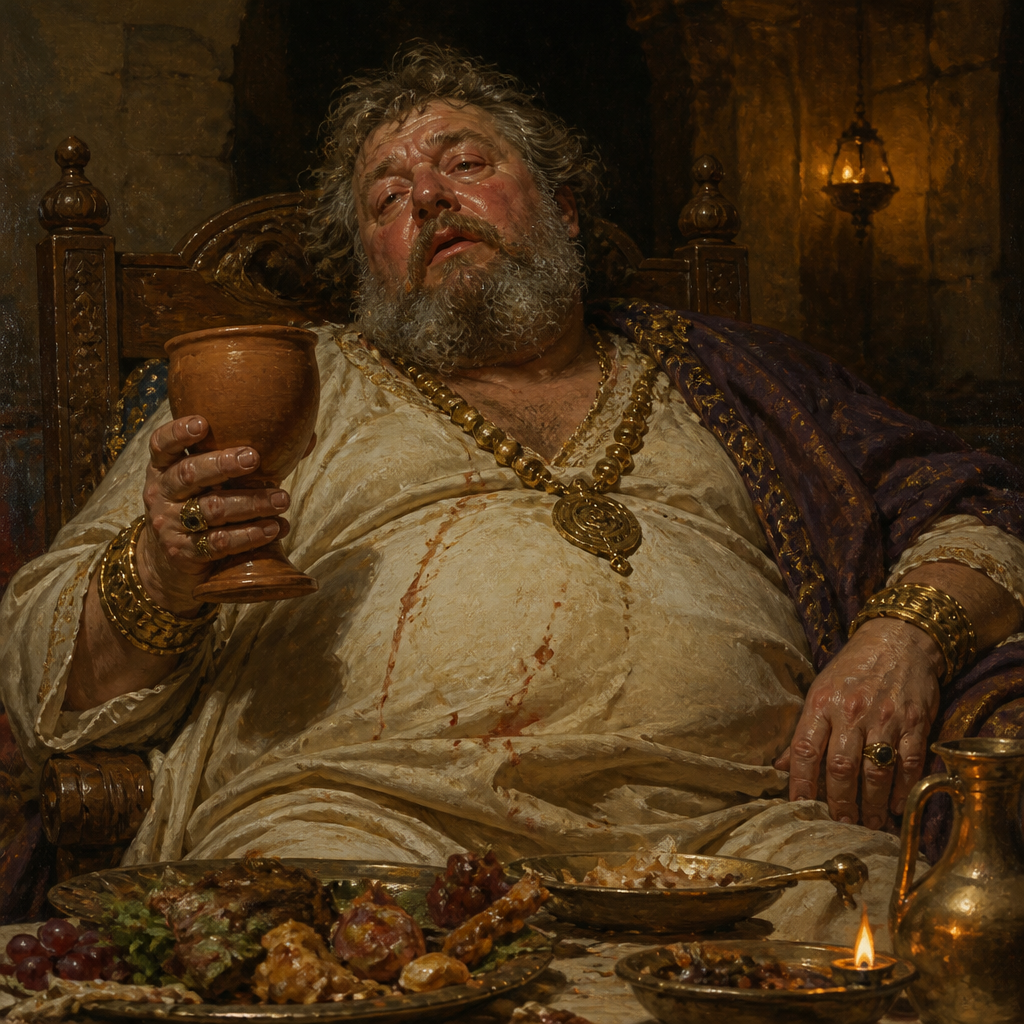
When Abigail returned home, she found Nabal in the midst of a feast "fit for a king" and severely intoxicated. She waited until the following morning to reveal her actions. Upon hearing the news, Nabal’s "heart failed him and he became like a stone"; he died ten days later. Recognizing Abigail's wisdom and the hand of God in the situation, David sent word to her, asking for her hand in marriage. Abigail responded with humility, stating she was ready to serve even as a servant to David's men, and then traveled with five maidens to become his wife.
Captivity and Hebron
Abigail’s life with David was marked by the volatility of his fugitive years. While living in Ziklag under the protection of the Philistines, Abigail and David’s other wife, Ahinoam, were captured by Amalekite raiders. David subsequently led a successful rescue mission, recovering both women unharmed (1 Samuel 30:18). Following the death of Saul, Abigail accompanied David to Hebron, where he was anointed King of Judah. During this period, she gave birth to David's second son, named Chileab (2 Samuel 3:3) or Daniel (1 Chronicles 3:1).
Relationship to Other Biblical Figures
Abigail’s primary relationships are defined by the two men she married. To Nabal, she was a protective and stabilizing force who saved him from his own folly. To David, she was a counselor and a voice of moral restraint. She shared her status as David's wife with Ahinoam of Jezreel, and the two women are frequently mentioned together in the accounts of David's travels and the birth of his heirs. Her son, Chileab/Daniel, is notably absent from the later struggles for David’s throne, leading some scholars to suggest he may have died young or was simply not a political contender.
Spiritual Significance
Abigail is held as a model of the "wise woman" in biblical tradition. Her significance lies in her ability to discern the work of God in David before he reached the throne. Unlike Nabal, who saw David as a mere runaway slave, Abigail recognized David as the future of Israel. Her intervention is portrayed not as subversion of her husband, but as an act of obedience to a higher moral order, preventing the future king from staining his reputation with vengeance. She represents the intersection of practical diplomacy and prophetic faith during the transition of the United Monarchy.
Spiritual Significance
Abigail is theologically significant as a figure of mediation and prophetic wisdom. Her speech to David in 1 Samuel 25 serves as a turning point in David's moral development, preventing him from taking private vengeance and reminding him that his authority comes from God. She is one of the few figures in the early monarchy who explicitly articulates the concept of the Davidic Covenant before it is formally established in 2 Samuel 7.
Furthermore, Abigail’s character serves as a literary foil to both Nabal and Saul. While Nabal and Saul represent the folly of resisting God's chosen leader, Abigail represents the wisdom of recognizing and supporting the divine transition of power. Her role highlights the influence of women in the political and spiritual landscape of early Israel, demonstrating that wisdom and discernment were valued traits that could alter the course of national history.
Frequently Asked Questions
Why did Abigail act without her husband Nabal's permission?
Abigail acted independently because Nabal’s refusal to help David had placed their entire household in immediate mortal danger. Her intervention was a desperate diplomatic mission to prevent a massacre that Nabal's 'harsh and evil' behavior had provoked.
What was the name of Abigail's son?
Abigail's son is referred to by two different names in the Bible: he is called Chileab in 2 Samuel 3:3 and Daniel in 1 Chronicles 3:1.
Where was Abigail from?
Abigail lived in Carmel, a town in the hill country of Judah, near the wilderness where David and his men were hiding. She is frequently identified in scripture as 'Abigail of Carmel' or 'the widow of Nabal of Carmel.'
How did Nabal die?
After Abigail told Nabal about her meeting with David, the text states his heart 'became like a stone.' About ten days later, the Lord struck Nabal and he died (1 Samuel 25:37-38), which David interpreted as divine judgment.
What did Abigail give to David as a peace offering?
She provided a substantial amount of food, including 200 loaves of bread, two skins of wine, five sheep, five seahs of roasted grain, 100 clusters of raisins, and 200 cakes of figs.
Connected Figures
Categories
Mentions by Book
- 1 Samuel11
- 2 Samuel2
- 1 Chronicles1
Family & Relationships
Others Named Abigail
Abigail, Sister of David1 Chronicles 2:16
Abigail was a daughter of Nahash or Jesse, a sister to King David, and the mother of Amasa, the commander of Absalom's rebel army.