Nabal
Who was Nabal in the Bible?
A wealthy but harsh Calebite landowner whose refusal to offer hospitality to David nearly resulted in his household's destruction, leading to his divine judgment and death.
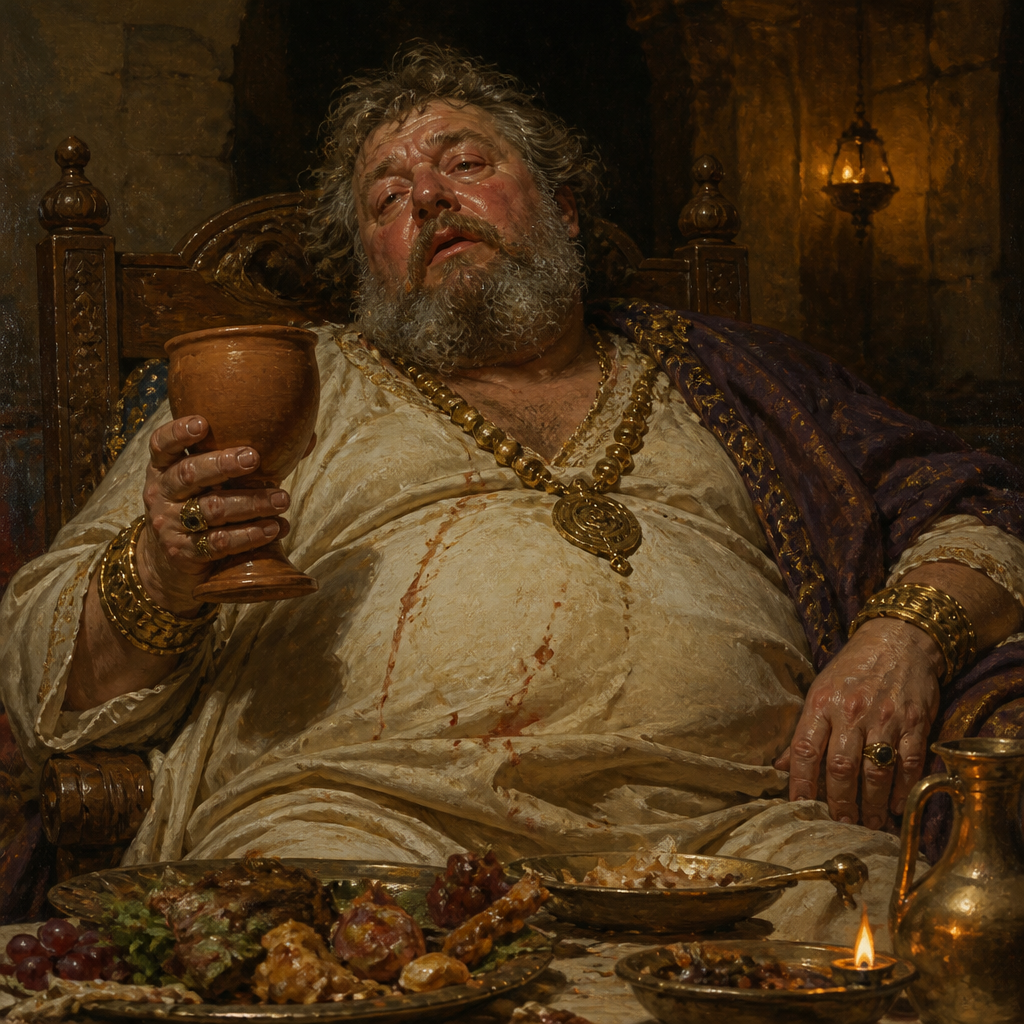
Nabal was a wealthy livestock owner residing in Maon who conducted his business in Carmel during the United Monarchy. He is introduced in the biblical narrative as a 'Calebite,' signifying his lineage from the house of Caleb, which afforded him significant social standing and material success. Despite his great wealth, including three thousand sheep and a thousand goats, Nabal is characterized by the biblical author as 'harsh and evil in his dealings,' a sharp contrast to his wife, Abigail, who is described as intelligent and beautiful.
His primary role in the biblical record occurs during the period when David was a fugitive from King Saul. Nabal’s refusal to acknowledge David’s protection of his shepherds and his subsequent dismissal of David’s request for provisions serves as a critical moment of tension in the rise of David’s kingship. The name Nabal itself means 'fool' in Hebrew, a trait that defines his brief but impactful appearance in the text of 1 Samuel. His death is portrayed not as a result of human vengeance, but as a direct act of divine judgment, clearing the way for David to marry Abigail.
Background and Family
Nabal was a man of significant means living in the wilderness of Paran, specifically associated with the towns of Maon and Carmel. The text identifies him as a Calebite (1 Samuel 25:3), a descendant of the famous scout Caleb who had received the region of Hebron and surrounding areas as an inheritance. This lineage suggests that Nabal was part of an established and powerful clan within the southern territories of Judah. He possessed immense wealth, categorized by three thousand sheep and a thousand goats, which placed him among the regional elite during the United Monarchy.
Nabal was married to Abigail. The biblical account emphasizes a stark disparity between the two: Abigail is noted for her discernment and beauty, whereas Nabal is described as a scoundrel (belial) whose name accurately reflects his nature. The narrative implies that despite his high-born lineage, Nabal’s character was markedly deficient in the virtues of hospitality and diplomacy expected of a man in his position.
Major Life Events
During the time of sheep shearing—a season typically associated with festivity and generosity—David, who was hiding from Saul, sent ten young men to Nabal to request a gift of provisions. David’s men had previously acted as a protective wall for Nabal’s shepherds, ensuring no harm came to them or their flocks while they were in the wilderness. David’s request was presented with great formal respect, appealing to Nabal’s prosperity and the peaceful relations they had shared.
Nabal’s response was one of extreme provocation. He did not merely deny the request but insulted David’s heritage and legitimacy, asking, "Who is David? Who is this son of Jesse?" (1 Samuel 25:10). By suggesting that David was simply one of many runaway servants, Nabal publicly challenged David’s honor. This refusal prompted David to arm four hundred men with the intent of slaughtering every male in Nabal's household.
Disaster was only averted through the quick thinking of Abigail. Informed by a servant of Nabal's rudeness, she prepared a massive feast and intercepted David’s war party without informing her husband. She successfully pleaded for mercy, citing Nabal’s inherent folly as a reason not to take vengeance. David relented, acknowledging that God had sent Abigail to prevent him from shedding blood.
Relationship to Other Biblical Figures
Nabal’s primary interactions were indirect. His relationship with David was defined by mutual hostility: Nabal viewed David as a social insurgent, while David viewed Nabal as an ungrateful debtor. Nabal’s relationship with his wife, Abigail, was characterized by a lack of communication; she acted independently of him to save the household because she recognized his inability to listen to reason. Following Nabal's death, Abigail became one of David's wives, and their son Chileab is later mentioned in the genealogy of David (2 Samuel 3:3).
Spiritual Significance
In the theological framework of the Books of Samuel, Nabal serves as a foil to David’s growing restraint and a testament to God’s justice. Nabal’s physical death is preceded by a spiritual and physical collapse; upon hearing from Abigail how narrowly he had escaped David’s sword, "his heart failed within him and he became like a stone" (1 Samuel 25:37). Ten days later, the text states that "the LORD struck Nabal dead."
His story illustrates the biblical concept of nabal (folly), which is not merely a lack of intelligence but a moral and spiritual dullness that disregards God and others. For David, Nabal’s death was a pivotal lesson in divine sovereignty: David refrained from taking his own revenge, and God subsequently removed his enemy. This event reinforced David’s commitment to waiting for God’s timing rather than seizing power or justice through personal violence.
Theologically, Nabal represents the antithesis of the 'wise man' found in Wisdom Literature. His refusal of hospitality is not just a social breach but a rejection of the burgeoning messianic line represented by David. The narrative serves to demonstrate that those who oppose God's anointed will face divine judgment without the need for the anointed to resort to lawless violence. Nabal’s sudden death acts as a precursor and a parallel to the eventual downfall of Saul, showing that God protects David’s path to the throne.
Furthermore, Nabal's story highlights the providential role of Abigail, whose wisdom counteracts Nabal's folly. The mention of Nabal in later chapters (1 Samuel 27, 30; 2 Samuel 2, 3) consistently labels Abigail as 'the widow of Nabal,' serving as a persistent reminder of David’s legal and providential acquisition of his household and the divine vindication David received in the wilderness.
Frequently Asked Questions
What does the name 'Nabal' mean?
The name Nabal (נָבָל) means 'fool' or 'senseless' in Hebrew. In the biblical narrative, his wife Abigail explicitly notes that he lives up to his name, stating that 'folly accompanies him.'
How did Nabal die?
After a night of heavy drinking and feasting 'fit for a king,' Nabal was told by Abigail the next morning about the danger he had narrowly escaped. The text says his heart failed and he became like a stone; ten days later, the LORD struck him and he died.
Was Nabal related to King Saul?
There is no recorded biological relation to Saul. However, Nabal’s dismissive attitude toward David mirrored Saul’s antagonism, and his death served as a theological sign that God would handle David's enemies.
What tribe did Nabal belong to?
Nabal was a Calebite. The Calebites were a prominent clan within the tribe of Judah, descending from Caleb, son of Jephunneh.
Why was David so angry at Nabal?
David had provided security for Nabal's flocks in the wilderness, preventing theft and loss. When David asked for a voluntary gift in return during the shearing festival, Nabal insulted David's character and heritage, which was a grave violation of Middle Eastern hospitality customs.
Family & Relationships
 Abigail, Wife of DavidWife1 Samuel 25:14Stated
 NabalThis page
Connected Figures
Family
Wife · 1 Samuel 25:14
An intelligent and beautiful woman from Carmel who averted a massacre through diplomacy and later became one of King David’s primary wives.
United MonarchyFirst: 1 Samuel 25:324 versesLandowner's wife, later Queen Consort
Categories
Mentions by Book
- 1 Samuel16
- 2 Samuel2
Scripture References
All 18 indexed verses, in canonical order, from the Berean Standard Bible.
1 Samuel · 16
- 1 Samuel 25:3
His name was Nabal, and his wife’s name was Abigail. She was an intelligent and beautiful woman, but her husband, a Calebite, was harsh and evil in his dealings.
- 1 Samuel 25:4
While David was in the wilderness, he heard that Nabal was shearing sheep.
- 1 Samuel 25:5
So David sent ten young men and instructed them, “Go up to Nabal at Carmel. Greet him in my name
- 1 Samuel 25:9
When David’s young men arrived, they relayed all these words to Nabal on behalf of David. Then they waited.
- 1 Samuel 25:10
But Nabal asked them, “Who is David? Who is this son of Jesse? Many servants these days are breaking away from their masters.
- 1 Samuel 25:14
Meanwhile, one of Nabal’s young men informed Nabal’s wife Abigail, “Look, David sent messengers from the wilderness to greet our master, but he screamed at them.
- 1 Samuel 25:19
and said to her young men, “Go ahead of me. I will be right behind you.” But she did not tell her husband Nabal.
- 1 Samuel 25:25Partial
My lord should pay no attention to this scoundrel Nabal, for he lives up to his name: His name means Fool, and folly accompanies him. I, your servant, did not see my lord’s young men whom you sent.
- 1 Samuel 25:26
Now, my lord, as surely as the LORD lives and you yourself live, since the LORD has held you back from bloodshed and from avenging yourself with your own hand, may your enemies and those who seek harm for my lord be like Nabal.
- 1 Samuel 25:34
Otherwise, as surely as the LORD, the God of Israel, lives, who has restrained me from harming you, if you had not come quickly to meet me, then surely no male belonging to Nabal would have been left alive by morning light.”
- 1 Samuel 25:36Partial
When Abigail returned to Nabal, there he was in the house, holding a feast fit for a king, in high spirits and very drunk. So she told him nothing until morning light.
- 1 Samuel 25:37
In the morning when Nabal was sober, his wife told him about these events, and his heart failed within him, and he became like a stone.
- 1 Samuel 25:38
About ten days later, the LORD struck Nabal dead.
- 1 Samuel 25:39Partial
On hearing that Nabal was dead, David said, “Blessed be the LORD, who has upheld my cause against the reproach of Nabal and has restrained His servant from evil. For the LORD has brought the wickedness of Nabal down upon his own head.” Then David sent word to Abigail, asking her to become his wife.
- 1 Samuel 27:3
David and his men settled in Gath with Achish. Each man had his family with him, and David had his two wives: Ahinoam of Jezreel and Abigail of Carmel, the widow of Nabal.
- 1 Samuel 30:5
David’s two wives, Ahinoam of Jezreel and Abigail the widow of Nabal of Carmel, had been taken captive.
2 Samuel · 2
- 2 Samuel 2:2
So David went there with his two wives, Ahinoam of Jezreel and Abigail the widow of Nabal of Carmel.
- 2 Samuel 3:3
his second was Chileab, by Abigail the widow of Nabal of Carmel; his third was Absalom, the son of Maacah daughter of King Talmai of Geshur;