Baal-hanan, King of Edom
The seventh listed king of Edom who reigned before any king ruled over the Israelites.
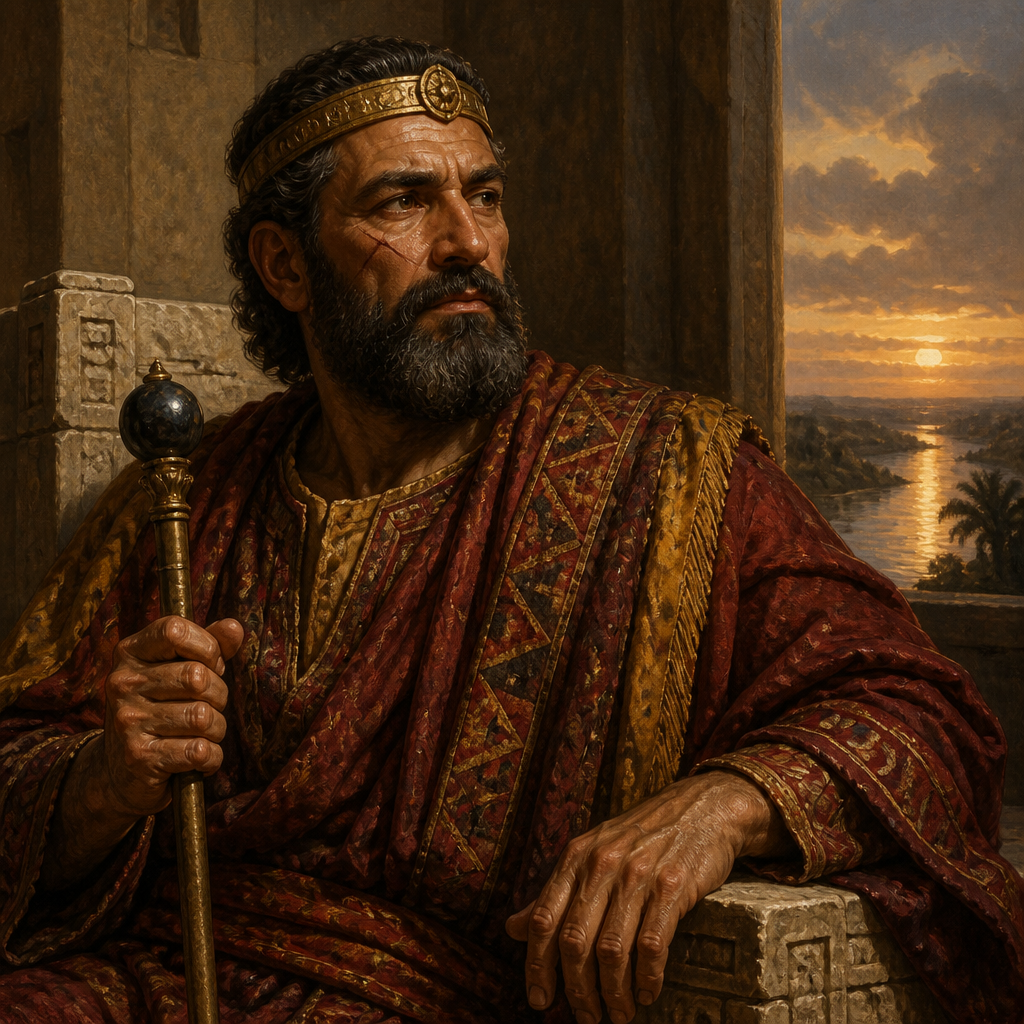
Baal-hanan was a pre-monarchic ruler of Edom, appearing in the genealogical records of the patriarchal era. He is specifically identified as the son of Achbor and is listed as the seventh of eight kings who reigned in the land of Edom before the establishment of the Israelite monarchy. His inclusion in the biblical text serves to document the early political development of the descendants of Esau.
Unlike many of his predecessors whose specific cities are named, the biblical record for Baal-hanan focuses primarily on his lineage and his place in the succession of Edomite power. He rose to the throne following the death of Shaul of Rehoboth and was eventually succeeded by Hadad. His life is recorded in two parallel historical accounts within the Old Testament.
Background and Family
Baal-hanan appears within the context of the "generations of Esau" (Genesis 36). The Bible identifies him as the son of Achbor. His name, which translates to "Baal is gracious" or "The Lord is gracious," reflects the linguistic and cultural environment of the ancient Near East during the patriarchal period. While the term "Baal" later became associated primarily with the Canaanite deity, in this early period, the title often functioned as a general descriptor for "lord" or "owner."
He belonged to the nation of Edom, the territory settled by Esau, the brother of Jacob. The biblical record distinguishes these Edomite kings by noting that they reigned "before any king reigned over the Israelites" (Genesis 36:31), placing Baal-hanan in a period of early statehood that predates the United Monarchy of Saul and David.
Major Life Events
The primary event recorded regarding Baal-hanan is his accession to the throne. Following the death of Shaul, who was from Rehoboth on the Euphrates River, Baal-hanan took command of the Edomite kingdom. The text does not specify whether this was a hereditary succession or an elective one; however, the shifting locations of the royal cities for each king suggest that the Edomite monarchy at this time may have been non-dynastic or based on shifting tribal strengths.
His reign concluded with his death, at which point the kingship passed to Hadad (also called Hadar in some manuscripts). While the text provides the name of Hadad’s wife and city (Pau), it provides no such details for Baal-hanan, focusing strictly on his father, Achbor, and his role as a transitional figure in the line of Edomite sovereigns.
Relationship to Other Biblical Figures
Baal-hanan is positioned in the biblical narrative as a contemporary of the expanding tribes of Israel, though the text does not record any direct interaction between him and the patriarchs of Israel. He is linked genealogically to Achbor, his father, and politically to Shaul (his predecessor) and Hadad (his successor). These lists in Genesis and 1 Chronicles serve to contrast the early political centralization of Edom with the tribal structure of Israel during the same era.
Spiritual Significance
The inclusion of Baal-hanan in the Holy Scriptures underscores the historical reality of the nations surrounding Israel. For the original readers, these genealogies provided a map of the geopolitical world and a reminder of God's promise to Esau that he, too, would become a great nation.
Theologically, Baal-hanan represents the fulfillment of the prophecy given to Rebekah regarding her two sons: "two nations are in your womb" (Genesis 25:23). His reign demonstrates that while Israel was still in a formative or nomadic state, their "brother" nation, Edom, had already achieved a level of organized monarchy, a fact the biblical authors recorded with historical precision.
Spiritual Significance
Baal-hanan is significant as a historical marker of Edomite sovereignty. His presence in the biblical text validates the antiquity of the Edomite kingdom and highlights the distinct paths taken by the descendants of Jacob and Esau. Theologically, he stands as a testament to God's providence over the nations outside of the direct covenant line of Israel, showing that the rise and fall of secular rulers are maintained in the divine record.
Frequently Asked Questions
Who was Baal-hanan's father?
Baal-hanan was the son of Achbor, as recorded in both Genesis 36:38 and 1 Chronicles 1:49.
Which nation did Baal-hanan rule?
He was a king of Edom, the nation founded by the descendants of Esau.
Who succeeded Baal-hanan as king?
He was succeeded by Hadad (also referred to as Hadar) after his death.
Did Baal-hanan rule during the time of King David?
No, the Bible states he ruled before any king reigned over the Israelites, placing him in the patriarchal or early exodus era, centuries before David.
Where is Baal-hanan mentioned in the Bible?
He is mentioned in two places: the genealogy of Esau in Genesis 36 and the historical chronicles in 1 Chronicles 1.
Connected Figures
Categories
Mentions by Book
- 1 Chronicles2
- Genesis2
Family & Relationships
Parent
Genesis 36:38
Others Named Baal-hanan
Baal-hanan the Gederite1 Chronicles 27:28
An official under King David who oversaw the royal olive and sycamore-fig groves in the Shephelah.