Zerubbabel, Governor of Judah
A Davidic prince and governor who led the first wave of Jewish exiles from Babylon to Jerusalem and laid the foundation for the Second Temple.
Zerubbabel, Governor of Judah, stands as one of the most pivotal figures in the history of the restoration of Israel. A descendant of King David through the line of Jeconiah, he served as the political leader of the Jewish exiles who returned to Jerusalem following the decree of Cyrus the Great in 538 BC. His leadership marked the transition from the Babylonian Captivity to the era of the Second Temple, a period characterized by both physical reconstruction and spiritual renewal.
Working alongside Jeshua (Joshua) the High Priest and the prophets Haggai and Zechariah, Zerubbabel oversaw the rebuilding of the altar and the laying of the Temple's foundation. Despite significant political opposition and internal discouragement, he remained the primary focus of divine encouragement, being identified by the prophets as God's chosen "signet ring." His role was not merely administrative but deeply messianic, as he represented the continuity of the Davidic line during a time when the monarchy was no longer in power.
Background and Family
Zerubbabel’s lineage is central to his role in biblical history, yet it presents a genealogical complexity. In 1 Chronicles 3:19, he is listed as the son of Pedaiah, who was the brother of Shealtiel and a son of King Jeconiah. However, in Ezra 3:2, Haggai 1:1, and the New Testament genealogy of Jesus in Matthew 1:12, he is consistently referred to as the "son of Shealtiel." This discrepancy is often resolved by scholars through the law of levirate marriage or legal adoption, ensuring that Zerubbabel remained the legal heir to the Davidic throne.
Born in Babylon during the exile, his name—likely meaning "Seed of Babylon" or "Begotten in Babylon"—reflects the circumstances of his birth. According to 1 Chronicles 3:19-20, Zerubbabel was the father of a large family, including sons Meshullam, Hananiah, Hashubah, Ohel, Berechiah, Hasadiah, and Jushab-hesed, and a daughter named Shelomith. The New Testament also identifies him as the father of Abiud, continuing the royal line that leads to Joseph, the legal father of Jesus.
Major Life Events
The Return to Jerusalem
Following the conquest of Babylon by the Persian Empire, King Cyrus issued a decree allowing the Jews to return to their homeland. Zerubbabel was appointed as the governor (Pecha) of Judah. He led a group of approximately 42,360 people, along with servants and livestock, back to the ruins of Jerusalem (Ezra 2). Upon arrival, his first priority was the restoration of worship. In the second month of the second year of their return, Zerubbabel and Jeshua the High Priest gathered the people to rebuild the altar of burnt offering and celebrate the Feast of Tabernacles (Ezra 3).
The Temple Foundation and Opposition
Under Zerubbabel’s supervision, the foundation of the second Temple was laid. The event was met with a mixture of great joy and sorrow; while the younger generation cheered, the elders who had seen Solomon’s Temple wept because the new foundation seemed small by comparison (Ezra 3:12).
Construction was soon halted by the "people of the land"—local inhabitants who had been settled in the region by the Assyrians. When these groups offered to help, Zerubbabel flatly refused, stating, "You have no part with us in building a house for our God" (Ezra 4:3). This refusal led to a period of intense lobbying and harassment that stalled the project for several years until the second year of King Darius.
Completion of the Work
In 520 BC, the prophets Haggai and Zechariah began to preach, stirring the spirit of Zerubbabel to resume the work (Haggai 1:14). Despite further inquiries from Persian officials, Zerubbabel persisted. The prophet Zechariah provided a divine assurance that the work would not be finished by human strength, but "by My Spirit," and that the hands of Zerubbabel, which laid the foundation, would also place the capstone (Zechariah 4:6-9).
Relationship to Other Biblical Figures
Zerubbabel operated in a diarchal leadership structure alongside Jeshua (or Joshua) son of Jozadak, the High Priest. While Jeshua handled the religious and cultic responsibilities, Zerubbabel held the civil and political authority. He was also heavily influenced by the contemporary prophets Haggai and Zechariah. Haggai focused on the immediate physical task and the governor's personal courage, while Zechariah provided the apocalyptic and visionary context for his leadership. In the broader biblical narrative, Zerubbabel is a critical link in the Matthew genealogy, preserving the Davidic line between the end of the monarchy and the birth of Christ.
Spiritual Significance
The spiritual significance of Zerubbabel lies in his role as a "signet ring" for God. In Haggai 2:23, God declares that He will take Zerubbabel and make him like a signet ring, a symbol of authority and personal ownership. This was a direct reversal of the judgment against his grandfather Jeconiah (Coniah), whom God had previously cast off like a discarded signet ring (Jeremiah 22:24).
Zerubbabel represents the "day of small things" (Zechariah 4:10). His efforts were modest compared to the grandeur of the pre-exilic kingdom, yet they were foundational for the continuation of God’s covenant promises. He serves as a type of the Messiah—a prince from the line of David who builds the temple of God and leads his people out of captivity. His life teaches that divine purposes are achieved through faithful obedience and the empowerment of the Holy Spirit rather than geopolitical might.
Spiritual Significance
Zerubbabel is the central figure in the restoration of the post-exilic Jewish community and the reconstruction of the Temple in Jerusalem. As a descendant of David and the appointed governor under Persian rule, he represents the continuity of the Davidic covenant during a period when Israel lacked a sovereign king. His leadership provided the political and social stability necessary for the survival of the remnant returning from Babylon.
Theologically, Zerubbabel is significant for the prophetic endorsements he received. The book of Zechariah uses him to illustrate the principle that God's work is accomplished not by human power but by the Divine Spirit. The promise that he would be God's 'signet ring' serves as a formal restoration of the Davidic house's status in the divine plan, bridging the gap between the fallen monarchy and the future Messianic King, Jesus Christ, who is eventually born of his lineage.
Frequently Asked Questions
Who was Zerubbabel’s father?
The Bible provides two names: 1 Chronicles 3:19 identifies him as the son of Pedaiah, while Ezra, Haggai, and Matthew 1:12 identify him as the son of Shealtiel. This is often explained by levirate marriage, where Pedaiah may have fathered Zerubbabel on behalf of his deceased brother Shealtiel.
What does the name 'Zerubbabel' mean?
The name is of Babylonian origin, typically translated as 'Seed of Babylon' or 'Begotten in Babylon,' reflecting his birth during the Jewish exile in the Babylonian Empire.
Is Zerubbabel the same person as Sheshbazzar?
Many scholars believe Sheshbazzar (mentioned in Ezra 1) and Zerubbabel are the same person, with Sheshbazzar being his official Persian or court name and Zerubbabel his Hebrew name. Both are credited with laying the foundation of the Temple.
What is the 'Signet Ring' prophecy?
In Haggai 2:23, God calls Zerubbabel His 'signet ring,' a symbol of divine authority. This signaled that God had chosen him to lead the restoration and had reinstated the Davidic line's favor after the exile.
What temple did Zerubbabel build?
He built the Second Temple, often called 'Zerubbabel’s Temple.' It was completed in 516 BC, roughly seventy years after the destruction of Solomon's Temple by the Babylonians.
Connected Figures
Jeshua
High Priest and close associate in rebuilding the Temple
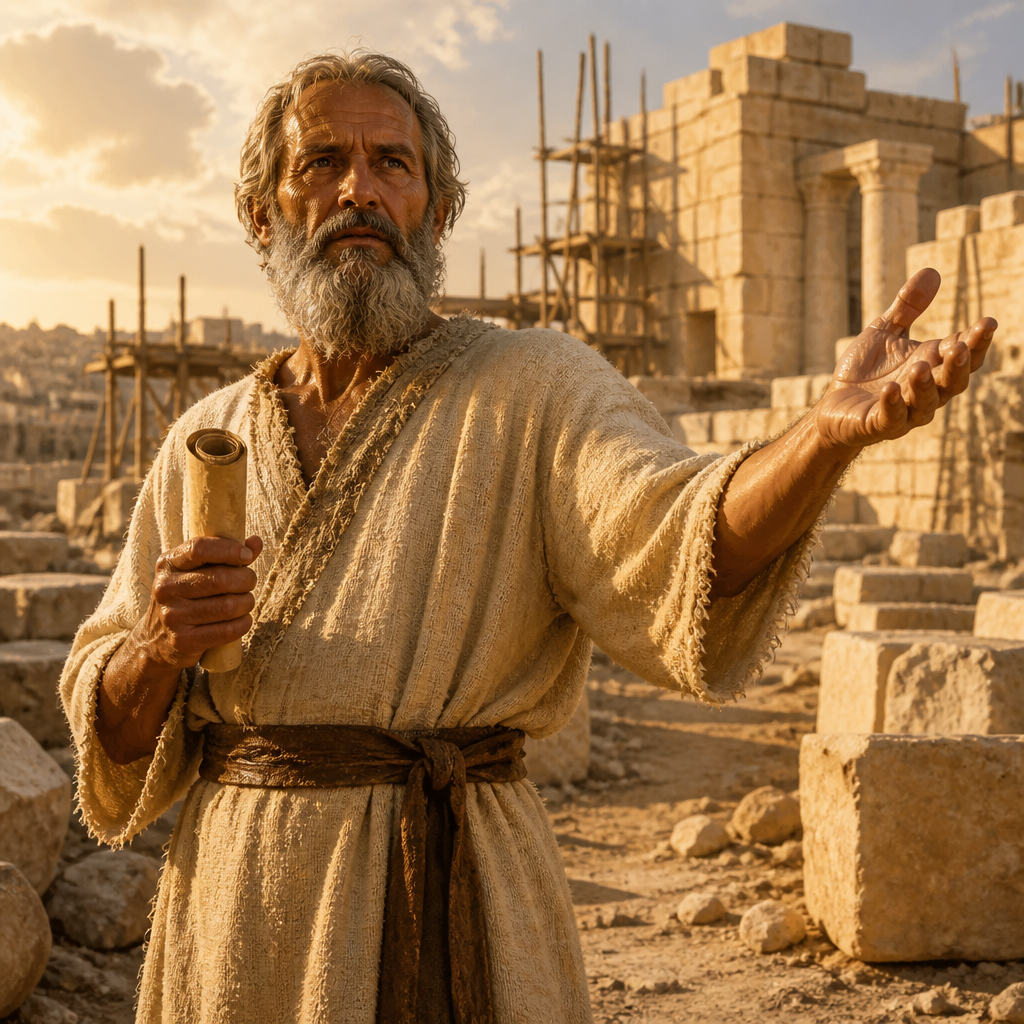
Haggai
Prophet who encouraged Zerubbabel to finish the Temple
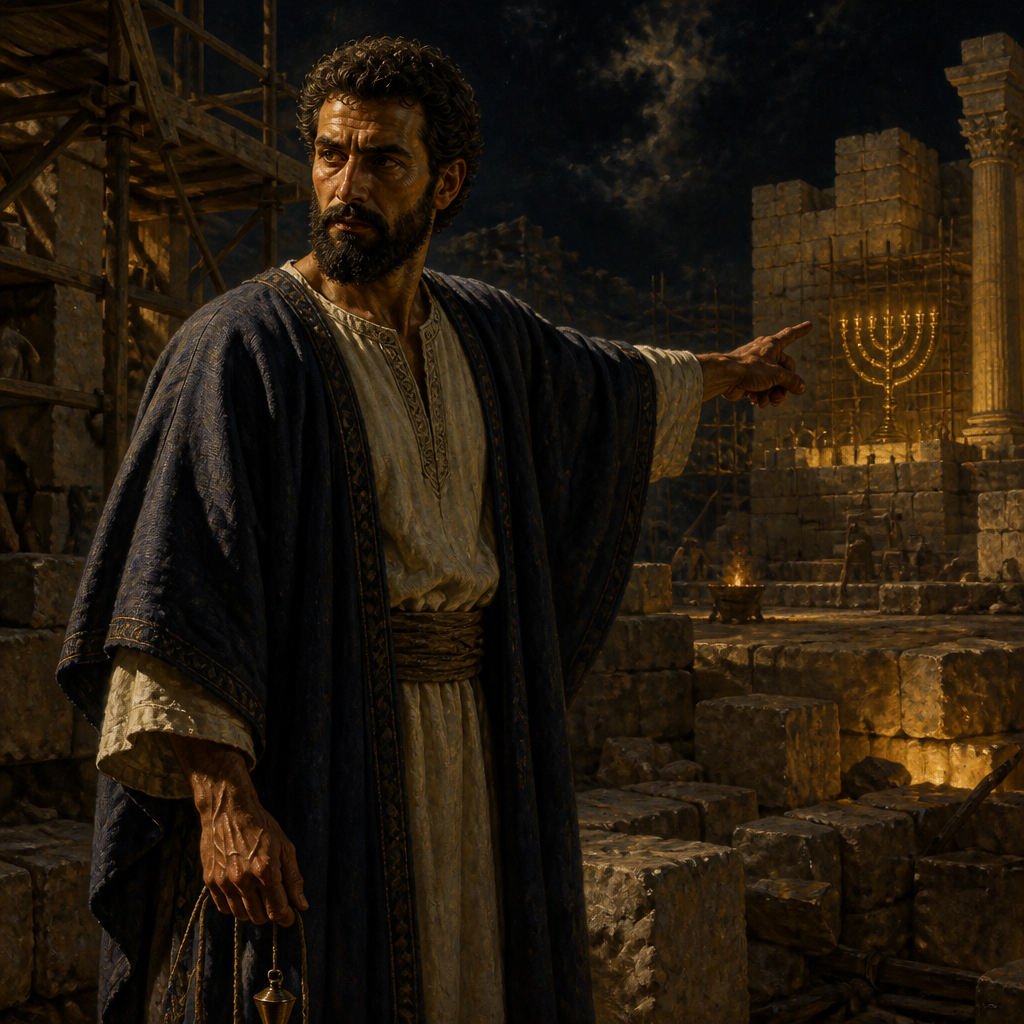
Zechariah
Prophet who provided visions of Zerubbabel's success
Cyrus the Great
Persian King who authorized his return to Jerusalem
Shealtiel
Father (or legal father) and son of King Jeconiah
Categories
Mentions by Book
- Ezra10
- Haggai7
- Zechariah4
- Nehemiah3
- Matthew2
- 1 Chronicles1
Family & Relationships
Child
1 Chronicles 3:19
Child
1 Chronicles 3:19
Child
1 Chronicles 3:19
Child
1 Chronicles 3:19
Child
1 Chronicles 3:19
Child
1 Chronicles 3:19
Child
1 Chronicles 3:19
Child
1 Chronicles 3:19
Child
Shelomith, Daughter of Zerubbabel
1 Chronicles 3:19
Sibling
1 Chronicles 3:19
Parent
1 Chronicles 3:18
Sibling
1 Chronicles 3:19
Others Named Zerubbabel
Zerubbabel, Descendant of NeriLuke 3:27
A member of the Davidic line listed in the Lucan genealogy of Jesus Christ, identified as the son of Shealtiel and the father of Rhesa.