Shallum, Gatekeeper of the Return
A Levite gatekeeper during the post-exilic return under Ezra who was among those addressed for taking foreign wives.
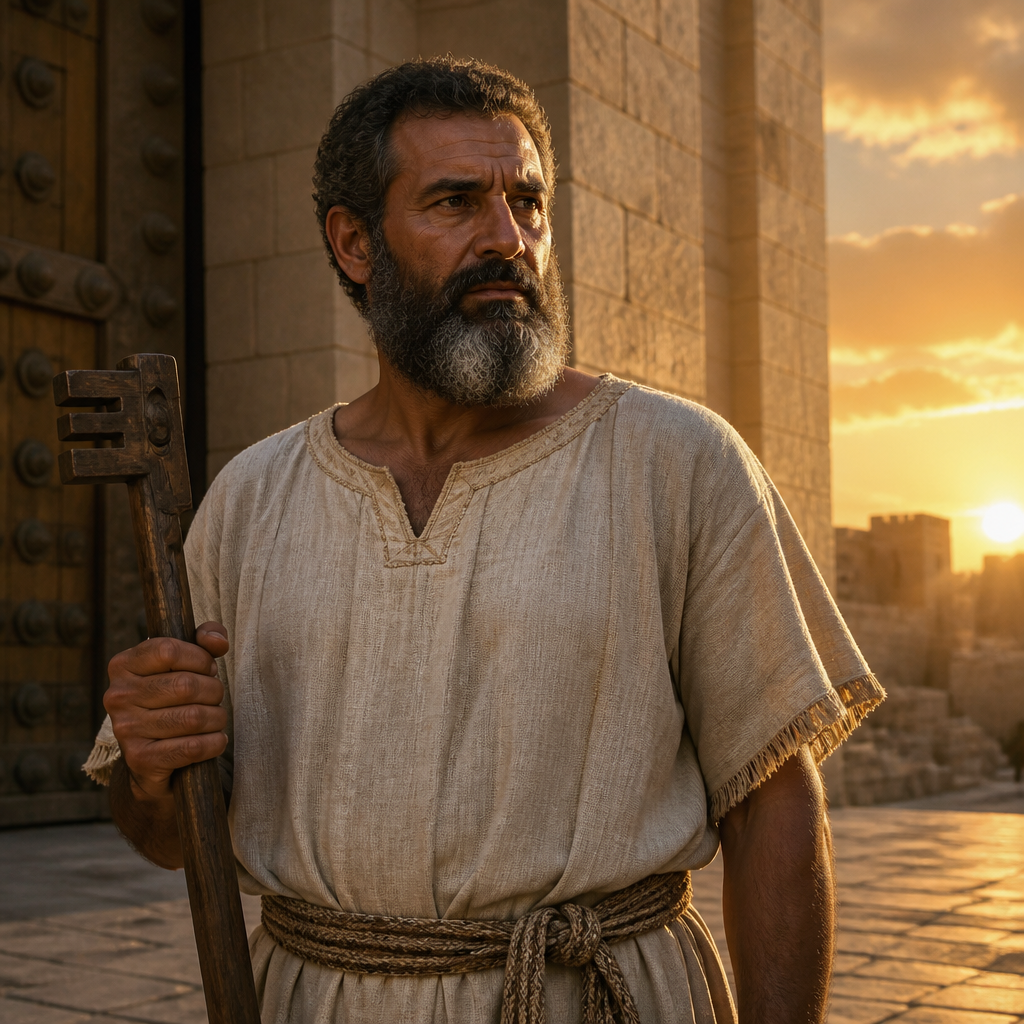
Shallum was a Levite official who served as a gatekeeper during the period of the Exile and Return. He is specifically identified in the records of Ezra as a member of the clerical staff responsible for the security and sanctity of the Temple precincts. As a gatekeeper, his role was not merely custodial but carried significant religious weight in maintaining the purity of the assembly of Israel.
Historically, Shallum is situated within the group of returning exiles who participated in the restoration of Jerusalem's religious life. However, his mention in the biblical text is primarily associated with the reforms of Ezra regarding the social and religious integrity of the community following the Babylonian captivity.
Background and Family
Shallum is identified in the post-exilic records as a gatekeeper (Hebrew: shoer). In the structure of the Second Temple, gatekeepers were Levites tasked with guarding the entrances to the sanctuary to ensure that nothing ritually unclean entered the holy precincts. While the biblical text in Ezra 10:24 provides his specific vocation, it does not detail his direct parentage or tribal lineage beyond his inclusion in the Levite lists. He is mentioned alongside other gatekeepers, namely Telem and Uri, suggesting a shared professional and social status within the restored community in Jerusalem.
Major Life Events
The primary event associated with this Shallum occurs during the ministry of Ezra the priest. Upon Ezra’s arrival in Jerusalem around 458 BC, he discovered that many of the returning exiles, including members of the priesthood and the Levites, had intermarried with the surrounding pagan nations. This was viewed as a significant breach of the covenant established at Sinai and a threat to the distinct identity of the Jewish people.
Shallum is listed in Ezra 10:24 as one of the Levite gatekeepers who had taken a foreign wife. This mention occurs within the context of a public assembly where the leaders of Israel agreed to a rigorous process of investigation and separation. Shallum’s inclusion in this list indicates that he was required to stand before the communal elders, acknowledge his transgression, and participate in the collective ritual of repentance which involved putting away his foreign wife and the children born of the union to preserve the holiness of the "holy seed."
Relationship to Other Biblical Figures
Shallum’s professional relationships are defined by his colleagues Eliashib (a singer) and fellow gatekeepers Telem and Uri. These men represented the musical and security infrastructure of the post-exilic Temple. His life was directly impacted by the judicial and spiritual authority of Ezra, whose decree forced a dramatic shift in Shallum’s domestic life. There are no other recorded interactions between Shallum and prominent figures of the era like Nehemiah or Zerubbabel within the specific scope of this textual reference.
Spiritual Significance
The spiritual significance of Shallum lies in his role as a representative of the struggle for holiness in the Second Temple period. As a gatekeeper, he was literally a guardian of the holy space; his failure to maintain personal and domestic holiness through prohibited marriage created a theological paradox. His eventual submission to the reform movement led by Ezra serves as a scriptural example of the priority of covenantal faithfulness over personal and familial ties. His story reflects the broader biblical theme of the necessity of ritual and social distinctiveness for the people of Israel following their return from judgment in Babylon.
Spiritual Significance
Shallum serves as a historical marker of the internal challenges faced by the returning Jewish community. His life illustrates the tension between the practical realities of life in a pluralistic Persian province and the strict requirements of the Mosaic Law. As a gatekeeper who failed to 'keep' the holiness of his own house, his inclusion in the list of offenders highlights the accountability of those in leadership positions.
Theologically, his presence in the book of Ezra underscores the comprehensive nature of the post-exilic reforms. Even those whose roles were secondary, such as gatekeepers and singers, were held to the same standard of purity as the high priests. His willingness to comply with the communal decision to separate from foreign influences points to a restoration of the fear of God among the remnants of the Exile.
Frequently Asked Questions
What was Shallum's job in the Temple?
Shallum was a gatekeeper, a Levite role responsible for guarding the Temple entrances to prevent unauthorized or ritually unclean individuals from entering.
Why is Shallum mentioned in the Book of Ezra?
He is listed among the Levites who had married foreign women, a practice forbidden by the Law of Moses which Ezra sought to correct through communal repentance.
Did Shallum have any children?
The text implies that those listed in Ezra 10, including Shallum, had children by their foreign wives, as Ezra 10:44 mentions that some of these women had borne children who were sent away during the reforms.
In what year did Shallum live?
Shallum lived during the mid-5th century BC, specifically around 458 BC when Ezra arrived in Jerusalem.
Connected Figures
Categories
Mentions by Book
- Ezra1
Others Named Shallum
Shallum, Son of Shaul1 Chronicles 4:25
Shallum was a member of the Tribe of Simeon and the son of Shaul, whose lineage is preserved in the genealogical records of 1 Chronicles.
Shallum, Father of Hilkiah1 Chronicles 6:12
A high-ranking priest of the line of Zadok who served during the Divided Monarchy and fathered the High Priest Hilkiah.
Shallum, Levite Gatekeeper of the Return1 Chronicles 9:17
A prominent Levite chief gatekeeper and head of a family whose descendants served at the Temple during the post-exilic return from Babylon.
Shallum of the Sons of BaniEzra 10:42
A returning exile from the family of Bani who was among those addressed by Ezra for taking a foreign wife.
Shallum, Son of HalloheshNehemiah 3:12
A district ruler in Jerusalem who assisted Nehemiah in rebuilding the city walls alongside his daughters during the post-exilic return.
Shallum son of Jabesh2 Kings 15:10
The fifteenth king of Israel, Shallum son of Jabesh ascended the throne through assassination and reigned for only one month in Samaria during the Divided Monarchy.
Shallum, Father of MaaseiahJeremiah 35:4
Shallum was a Levite doorkeeper during the Divided Monarchy whose son Maaseiah held a chamber in the Temple during the time of the prophet Jeremiah.
Shallum, Son of Sismai1 Chronicles 2:40
Shallum was a member of the Tribe of Judah and a descendant of Jerahmeel whose lineage is preserved in the genealogical records of 1 Chronicles.
Shallum, Uncle of JeremiahJeremiah 32:7
Shallum was the paternal uncle of the prophet Jeremiah and the father of Hanamel during the final years of the Divided Monarchy.
Shallum, Father of Jehizkiah2 Chronicles 28:12
An Ephraimite leader during the Divided Monarchy whose son, Jehizkiah, played a critical role in showing mercy to Judean captives during the reign of King Pekah.
Shallum, Keeper of the Wardrobe2 Kings 22:14
A high-ranking royal official in the kingdom of Judah and the husband of Huldah the prophetess during the reign of King Josiah.
Shallum, Son of Josiah1 Chronicles 3:15
A prince of Judah and the fourth son of King Josiah, recorded in the royal genealogies of the Divided Monarchy.
Shallum, Son of Col-hozehNehemiah 3:15
Shallum, son of Col-hozeh, was a district ruler of Mizpah who oversaw the reconstruction of the Fountain Gate and its adjacent structures during the return to Jerusalem.