Maaseiah, Father of Azariah
Maaseiah, son of Ananiah, was a resident of Jerusalem during the Post-Exilic Period whose son Azariah participated in the rebuilding of the city walls under Nehemiah.
Maaseiah, the son of Ananiah and father of Azariah, was a man of the Post-Exilic Period whose family resided in Jerusalem during the reconstruction of the city's defenses. His identity is firmly rooted in the era of the return from the Babylonian exile, a time characterized by the restoration of the Jewish community and the physical rebuilding of their holy city. While Maaseiah is not recorded as a worker on the wall himself, his presence in the biblical narrative is established through his son's diligent service near their family home.
Living in the mid-5th century BC, Maaseiah belonged to the generation that saw the governance of Nehemiah and the spiritual leadership of Ezra. His lineage, tracing through Ananiah, suggests a family of sufficient standing to own property within the city walls of Jerusalem, near the area known as the Ophel or the eastern slope of the city. The record of his name serves as a genealogical marker during one of the most critical transitions in Israel's history.
Background and Family
Maaseiah lived during the period of the Exile and Return, specifically during the governorship of Nehemiah (c. 445 BC). According to the genealogical record in Nehemiah 3:23, Maaseiah was the son of Ananiah. While the tribe of Maaseiah is not explicitly stated, his residence in Jerusalem and the involvement of his son in the wall's reconstruction suggest he was a member of the returning remnant of Judah or Benjamin.
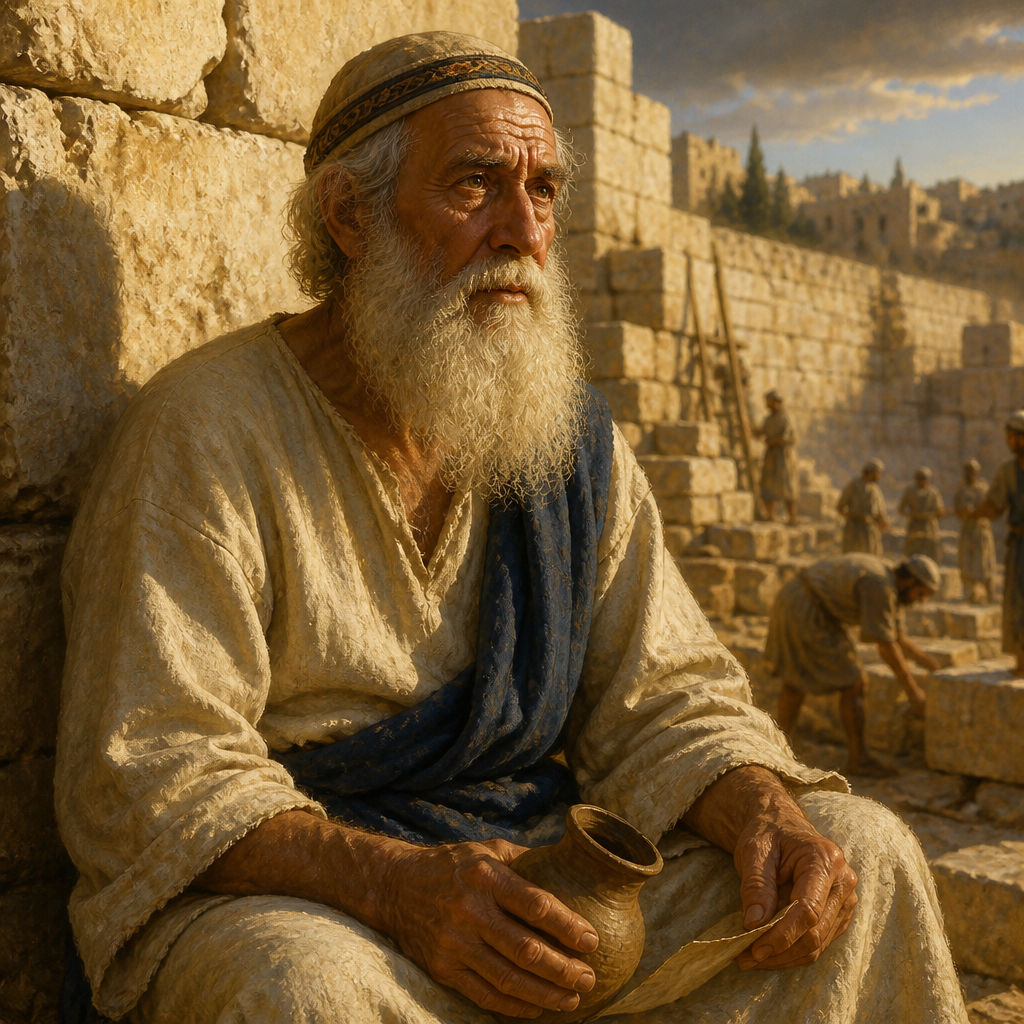
The family home was located in a strategic area of Jerusalem. Nehemiah’s account describes the repairs taking place "beside his [Azariah’s] house," which was also the house of Maaseiah. The proximity of their home to the wall indicates that Maaseiah was part of the urban population that resettled the city after it had lain in ruins for decades following the Babylonian destruction in 586 BC.
Major Life Events
Maaseiah’s primary mention in the biblical text occurs within the context of the massive infrastructure project led by Nehemiah. Following the decree of Artaxerxes I, the Jewish people began the arduous task of repairing the walls of Jerusalem to secure the city against surrounding adversaries like Sanballat and Tobiah.
Although Maaseiah is not listed as the primary laborer for his section of the wall, his son Azariah is credited with making repairs "beside his house" (Nehemiah 3:23). In the ancient Near East, the identification of a man by his father and grandfather (Maaseiah son of Ananiah) was a standard way to establish legal standing and property rights. Maaseiah’s role in this event is that of the patriarch of a household that contributed directly to the security of Zion. The family’s dedication to the project was personal; they repaired the portion of the wall that protected their own residence, a strategy Nehemiah used to ensure the workers remained motivated and vigilant.
Relationship to Other Biblical Figures
Maaseiah is defined primarily by his relationships to his father, Ananiah, and his son, Azariah. In the context of Nehemiah 3, he is positioned geographically near Benjamin and Hasshub, who made repairs in front of their own houses just before the section handled by Maaseiah’s son. This placement suggests a community of neighbors who coordinated their efforts to ensure there were no gaps in the city's defenses.
Unlike the high-ranking officials or priests mentioned elsewhere in the chapter, Maaseiah and his family represent the dedicated citizens of Jerusalem. His son Azariah is the active agent in the text, but the mention of Maaseiah provides the necessary link to the family's ancestral claim to the land they were defending.
Spiritual Significance
The mention of Maaseiah, though brief, contributes to the overarching theme of the Post-Exilic restoration: the rebuilding of a people through the rebuilding of a city. The inclusion of specific names like Maaseiah in the "Wall Builders' List" of Nehemiah 3 underscores the biblical principle that every individual and family had a stake in the restoration of God’s dwelling place.
By providing a home for his son and maintaining a presence in Jerusalem during a time of great opposition, Maaseiah represents the quiet endurance of the faithful remnant. His legacy is carried forward by his son Azariah, whose labor is immortalized in the sacred text. In the broader theological context of the Old Testament, Maaseiah stands as a witness to the fulfillment of the prophetic promises that the children of the exile would return and dwell once again in the city of their fathers.
Spiritual Significance
Maaseiah's significance lies in his role as a link in the genealogical chain of the returning exiles. By appearing in the detailed list of those who rebuilt Jerusalem, he signifies the communal effort required to restore the covenant community. His presence indicates that the reconstruction was not merely a military or political endeavor, but a domestic one involving established families who were willing to defend their heritage.
Furthermore, Maaseiah serves as a representative of the 'laypeople' whose names are preserved in Scripture alongside priests and governors. This highlights the biblical emphasis on the importance of every family unit in the spiritual and physical preservation of Israel during the Post-Exilic Period.
Frequently Asked Questions
Who was Maaseiah's son?
Maaseiah's son was Azariah, who is recorded in Nehemiah 3:23 as one of the individuals who repaired the wall of Jerusalem next to his own house.
Who was Maaseiah's father?
According to the genealogy provided in Nehemiah 3:23, Maaseiah was the son of Ananiah.
What era did Maaseiah live in?
Maaseiah lived during the Post-Exilic Period, specifically during the time when Nehemiah was the governor of Judah and the walls of Jerusalem were being rebuilt (c. 445 BC).
Where did Maaseiah live?
Maaseiah lived in Jerusalem. The Bible mentions that his son Azariah made repairs to the city wall 'beside his house,' indicating the family residence was located adjacent to the wall.
Did Maaseiah personally work on the wall of Jerusalem?
The text in Nehemiah 3:23 specifically credits his son, Azariah, with the physical labor of repairing the wall. Maaseiah is mentioned to identify Azariah's lineage and the ownership of the house.
Connected Figures
Categories
Mentions by Book
- Nehemiah1
Family & Relationships
Child
Azariah, Builder of Jerusalem's Wall
Nehemiah 3:23
Parent
Nehemiah 3:23
Others Named Maaseiah
Maaseiah son of Shallum, DoorkeeperJeremiah 35:4
A Levite official and doorkeeper of the Temple in Jerusalem during the final years of the Divided Monarchy.
Maaseiah the Officer2 Chronicles 26:11
A high-ranking military officer in the Judean army who served under King Uzziah during the 8th century BC.
Maaseiah, Priest of the Exile and ReturnEzra 10:18
A descendant of the priest Jeshua who was among the post-exilic leadership identified for having married a foreign woman during the return to Jerusalem.
Maaseiah of the Harim ClanEzra 10:21
A member of the descendants of Harim who returned to Jerusalem after the Babylonian exile and was identified for having married a foreign woman.
Maaseiah, Father of Zedekiah the False ProphetJeremiah 29:21
The father of the false prophet Zedekiah who was executed by Nebuchadnezzar during the Divided Monarchy.
Maaseiah, Father of ZephaniahJeremiah 21:1
A man of the Divided Monarchy whose son, Zephaniah the priest, served as a prominent diplomatic and religious official during the final years of the Kingdom of Judah.
Maaseiah, Signer of the CovenantNehemiah 10:25
A leader of the Jewish people during the Post-Exilic Period who signed the sacred covenant to follow God's law under Nehemiah.
Maaseiah son of BaruchNehemiah 11:5
A descendant of Judah through the line of Shelah who resettled in Jerusalem during the Post-Exilic Period under the leadership of Nehemiah.
Maaseiah of the Pashhur ClanEzra 10:22
A member of the descendants of Pashhur who returned to Jerusalem after the Babylonian exile and was cited in the book of Ezra.
Maaseiah of the Pahath-moab ClanEzra 10:30
A member of the descendants of Pahath-moab who returned from the Babylonian exile and committed to separating from his foreign wife during Ezra's reforms.
Maaseiah the TrumpeterNehemiah 12:41
A priest and musician who played the trumpet during the formal dedication of the rebuilt walls of Jerusalem under the leadership of Nehemiah.
Maaseiah, Musician of the Divided Monarchy1 Chronicles 15:18
A Levite musician appointed to play the harp during the transport of the Ark of the Covenant to Jerusalem during the Divided Monarchy era.
Maaseiah the InstructorNehemiah 8:7
A Levite during the Post-Exilic Period who assisted Ezra the scribe by instructing the people of Jerusalem in the understanding of the Mosaic Law.
Maaseiah, Ancestor of SalluNehemiah 11:7
A Benjamite ancestor whose descendant, Sallu, was among the first to resettle Jerusalem following the return from the Babylonian exile.
Maaseiah, Singer of the Wall DedicationNehemiah 12:42
A participant in the joyous musical procession during the dedication of Jerusalem's rebuilt walls under Nehemiah.
Maaseiah son of Adaiah2 Chronicles 23:1
A military commander of hundreds who entered into a sacred covenant with the high priest Jehoiada to overthrow Queen Athaliah and restore the Davidic line to the throne.
Maaseiah, son of King Ahaz2 Chronicles 28:7
A Judean prince and son of King Ahaz who was killed by Zichri of Ephraim during the Syro-Ephraimite War.
Maaseiah, Governor of Jerusalem2 Chronicles 34:8
A high-ranking Judean official who served as the governor of Jerusalem during the reign and religious reforms of King Josiah.
Maaseiah, Attendant to EzraNehemiah 8:4
A prominent leader or official who stood to the right of Ezra the scribe during the historic public reading of the Law in Jerusalem.