Maaseiah, Singer of the Wall Dedication
A participant in the joyous musical procession during the dedication of Jerusalem's rebuilt walls under Nehemiah.
Maaseiah was a Judean who lived during the Post-Exilic Period, a time defined by the return of the Jewish people from Babylonian captivity and the restoration of Jerusalem’s physical and spiritual infrastructure. He is specifically identified in the biblical record as one of the individuals who participated in the grand dedication ceremony of the city walls, an event led by Nehemiah and the priest Ezra.
As a member of the community that survived the exile, Maaseiah represents the restoration of liturgical life in Jerusalem. His role in the dedication ceremony highlights the importance of collective worship and the celebration of God's providence in the successful reconstruction of the city’s defenses. While his personal lineage is not detailed in the specific text where he appears, his inclusion in the list of participants signifies his recognized status within the post-exilic community.
Background and Family
The biblical record concerning this specific Maaseiah is situated within the book of Nehemiah, which chronicles the rebuilding of Jerusalem’s walls and the social reforms of the mid-5th century BC. Maaseiah appears in the context of the wall's completion and the subsequent celebration (Nehemiah 12:42). Although the text does not provide a specific tribal affiliation or a genealogy for this particular individual, he is listed alongside several other figures who were instrumental in the religious and civic life of the restored community.
Given the context of the passage, Maaseiah was part of the group that remained or returned to Jerusalem following the decree of Cyrus the Great. His presence during the ceremony suggests he was likely a man of some standing—possibly a Levite or a priest, though the text does not explicitly assign him these titles in this verse. He is grouped with figures such as Shemaiah, Eleazar, and Uzzi, all of whom participated in the vocal and musical liturgy of the day.
Major Life Events
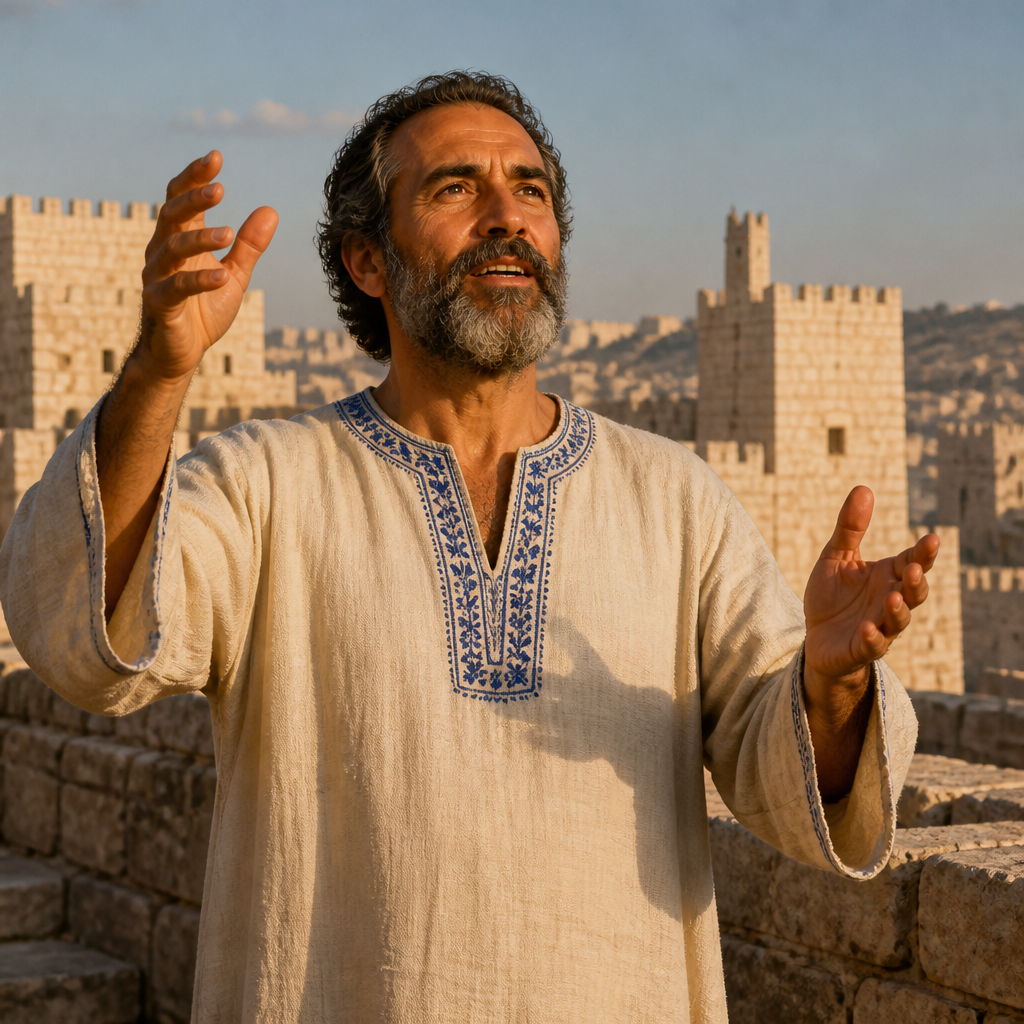
The defining moment for Maaseiah in the biblical narrative occurs during the formal dedication of the wall of Jerusalem. After the wall had been rebuilt despite intense opposition, Nehemiah organized a massive celebration to consecrate the structure to God. This involved two large thanksgiving choirs that walked in opposite directions atop the walls, eventually meeting at the House of God.
Maaseiah is named as one of the individuals present as the choirs "sang out under the direction of Jezrahiah" (Nehemiah 12:42). This event was not merely a civic parade but a deeply spiritual act of worship. The sound of the rejoicing was said to be heard from far away, symbolizing the renewed strength and divine favor upon the Jewish remnant. Maaseiah’s participation in this specific moment places him at the center of one of the most significant liturgical events in the post-exilic era.
Relationship to Other Biblical Figures
Maaseiah is listed in immediate proximity to seven other men: Shemaiah, Eleazar, Uzzi, Jehohanan, Malchijah, Elam, and Ezer. These men served together under the musical leadership of Jezrahiah. While the specific nature of their relationship—whether they were peers, subordinates, or part of a specific priestly course—is not explicitly defined, they functioned as a unified group in the service of the temple and the city. They worked under the overarching leadership of Nehemiah the governor and Ezra the scribe, participating in the fulfillment of the vision to see Jerusalem restored as a holy city.
Spiritual Significance
Maaseiah’s inclusion in the record of the wall’s dedication underscores the biblical theme of corporate worship. His presence reminds the reader that the work of God is rarely accomplished or celebrated by a single individual; it requires a community of faithful participants. The dedication of the wall was the culmination of physical labor (building) and spiritual devotion (singing and sacrifice).
By being named in Nehemiah 12, Maaseiah stands as a witness to the faithfulness of God in fulfilling the prophecy of return. His role in the choir reflects the transition from the "mourning" of the exile to the "joy" of restoration. His contribution, though briefly mentioned, was part of the "great joy" that God had given to the people, which served as a testimony to the surrounding nations that the God of Israel had restored His people to their land.
Spiritual Significance
Maaseiah serves as a representative of the faithful remnant that returned to Jerusalem to rebuild its ruins. His participation in the dedication of the wall highlights the integration of physical security with spiritual celebration, demonstrating that the restoration of the city was incomplete without the vocal praise of its citizens. His presence in the biblical text ensures that the names of those who stood for the restoration of Israel are preserved for posterity.
Theologically, Maaseiah's role in the choir directed by Jezrahiah illustrates the importance of orderly worship and the use of music to consecrate the works of human hands to the service of God. He is a character who embodies the transition from the struggle of reconstruction to the triumph of communal thanksgiving.
Frequently Asked Questions
What was Maaseiah's role during the dedication of the wall?
He was a participant in the musical celebration and choirs that sang under the direction of Jezrahiah during the formal dedication of Jerusalem's rebuilt walls.
In which book of the Bible is this Maaseiah mentioned?
This Maaseiah is mentioned exclusively in the book of Nehemiah, specifically in chapter 12, verse 42.
Was Maaseiah a priest or a Levite?
While the text mentions him among men who were likely involved in temple music and leadership, it does not explicitly state his tribe or official title.
What era of biblical history did Maaseiah live in?
He lived during the Post-Exilic Period (Exile and Return), specifically during the time when Nehemiah was governor of Judah in the 5th century BC.
Who was the musical director for Maaseiah’s group?
Maaseiah and his associates sang under the direction of a man named Jezrahiah.
Connected Figures
Nehemiah
Governor of Judah during the wall dedication
Jezrahiah
Musical director of the choir Maaseiah was in
Shemaiah
Associate listed alongside Maaseiah
Eleazar
Associate listed alongside Maaseiah
Categories
Mentions by Book
- Nehemiah1
Others Named Maaseiah
Maaseiah son of Shallum, DoorkeeperJeremiah 35:4
A Levite official and doorkeeper of the Temple in Jerusalem during the final years of the Divided Monarchy.
Maaseiah the Officer2 Chronicles 26:11
A high-ranking military officer in the Judean army who served under King Uzziah during the 8th century BC.
Maaseiah, Father of AzariahNehemiah 3:23
Maaseiah, son of Ananiah, was a resident of Jerusalem during the Post-Exilic Period whose son Azariah participated in the rebuilding of the city walls under Nehemiah.
Maaseiah, Priest of the Exile and ReturnEzra 10:18
A descendant of the priest Jeshua who was among the post-exilic leadership identified for having married a foreign woman during the return to Jerusalem.
Maaseiah of the Harim ClanEzra 10:21
A member of the descendants of Harim who returned to Jerusalem after the Babylonian exile and was identified for having married a foreign woman.
Maaseiah, Father of Zedekiah the False ProphetJeremiah 29:21
The father of the false prophet Zedekiah who was executed by Nebuchadnezzar during the Divided Monarchy.
Maaseiah, Father of ZephaniahJeremiah 21:1
A man of the Divided Monarchy whose son, Zephaniah the priest, served as a prominent diplomatic and religious official during the final years of the Kingdom of Judah.
Maaseiah, Signer of the CovenantNehemiah 10:25
A leader of the Jewish people during the Post-Exilic Period who signed the sacred covenant to follow God's law under Nehemiah.
Maaseiah son of BaruchNehemiah 11:5
A descendant of Judah through the line of Shelah who resettled in Jerusalem during the Post-Exilic Period under the leadership of Nehemiah.
Maaseiah of the Pashhur ClanEzra 10:22
A member of the descendants of Pashhur who returned to Jerusalem after the Babylonian exile and was cited in the book of Ezra.
Maaseiah of the Pahath-moab ClanEzra 10:30
A member of the descendants of Pahath-moab who returned from the Babylonian exile and committed to separating from his foreign wife during Ezra's reforms.
Maaseiah the TrumpeterNehemiah 12:41
A priest and musician who played the trumpet during the formal dedication of the rebuilt walls of Jerusalem under the leadership of Nehemiah.
Maaseiah, Musician of the Divided Monarchy1 Chronicles 15:18
A Levite musician appointed to play the harp during the transport of the Ark of the Covenant to Jerusalem during the Divided Monarchy era.
Maaseiah the InstructorNehemiah 8:7
A Levite during the Post-Exilic Period who assisted Ezra the scribe by instructing the people of Jerusalem in the understanding of the Mosaic Law.
Maaseiah, Ancestor of SalluNehemiah 11:7
A Benjamite ancestor whose descendant, Sallu, was among the first to resettle Jerusalem following the return from the Babylonian exile.
Maaseiah son of Adaiah2 Chronicles 23:1
A military commander of hundreds who entered into a sacred covenant with the high priest Jehoiada to overthrow Queen Athaliah and restore the Davidic line to the throne.
Maaseiah, son of King Ahaz2 Chronicles 28:7
A Judean prince and son of King Ahaz who was killed by Zichri of Ephraim during the Syro-Ephraimite War.
Maaseiah, Governor of Jerusalem2 Chronicles 34:8
A high-ranking Judean official who served as the governor of Jerusalem during the reign and religious reforms of King Josiah.
Maaseiah, Attendant to EzraNehemiah 8:4
A prominent leader or official who stood to the right of Ezra the scribe during the historic public reading of the Law in Jerusalem.