Hanun, Sixth Son of Zalaph
A participant in the reconstruction of Jerusalem's walls under Nehemiah, specifically identified as the sixth son of Zalaph.
Hanun, the sixth son of Zalaph, was a Jewish man who returned to Jerusalem from the Babylonian exile. He is documented in the book of Nehemiah as one of the dedicated laborers who participated in the physical restoration of the city's fortifications. His involvement is recorded during the mid-5th century BC, specifically around 444 BC, during the governorship of Nehemiah.
While his historical footprint is confined to a single verse, his inclusion in the formal register of wall-builders signifies his status as a head of a household or a recognized contributor to the national effort. He worked alongside other notable figures of the restoration era, including Hananiah and Meshullam, to secure the holy city against regional threats.
Background and Family
The biblical record identifies Hanun specifically as the "sixth son of Zalaph" (Nehemiah 3:30). This genealogical detail is unique, as the biblical text rarely specifies the numerical order of a son unless it carries specific social or legal weight. The mention of his father, Zalaph, suggests that while Zalaph himself may not have been present or able to work, his sons took up the mantle of civic duty. The fact that Hanun is distinguished as the sixth son may imply that his older brothers were also involved in the work elsewhere, or that he was the primary representative of his father's house in this specific task.
Major Life Events
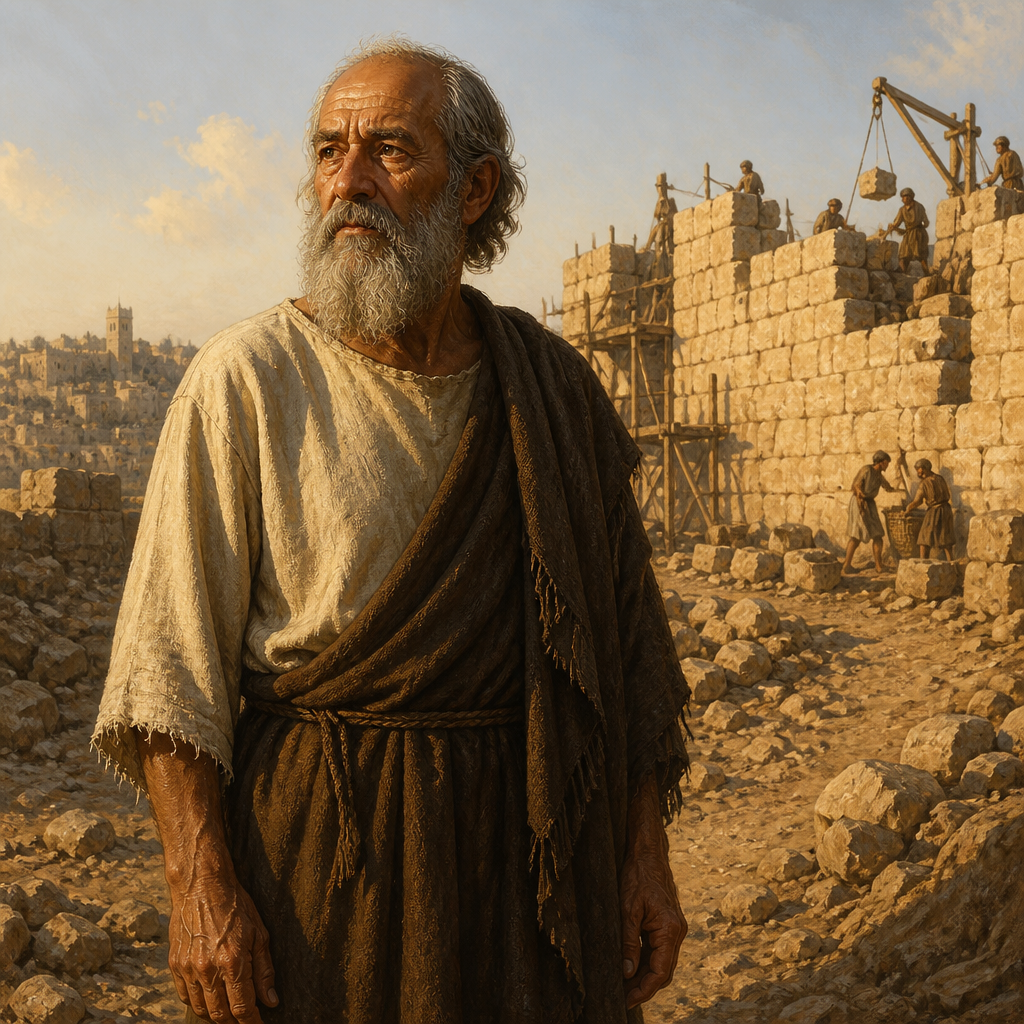
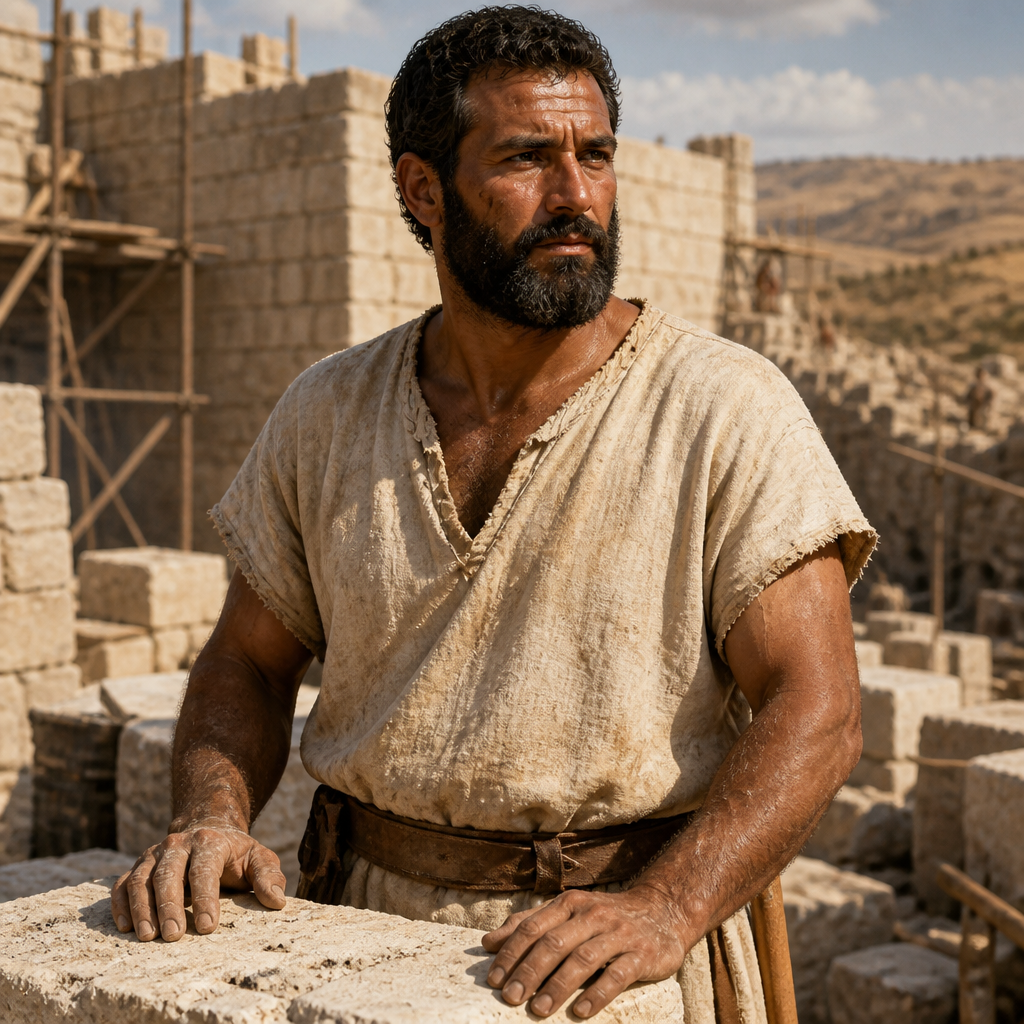
The defining event of Hanun’s life, as preserved in Scripture, is his labor on the walls of Jerusalem. Following the decree of Artaxerxes I, Nehemiah arrived in Jerusalem to find the city in ruins. Hanun was among those who answered the call to rebuild. According to Nehemiah 3:30, Hanun "repaired another section" of the wall.
Next to him, Hananiah son of Shelemiah, as well as Hanun the sixth son of Zalaph, repaired another section. Next to them, Meshullam son of Berechiah made repairs opposite his own quarters. (Nehemiah 3:30, BSB)
This labor was not merely construction but a defensive necessity, performed under constant threat from Sanballat the Horonite and Tobiah the Ammonite. Hanun's work was situated in a sequence of repairs that moved along the eastern or northern stretches of the city, contributing to the contiguous defense system that was miraculously completed in only fifty-two days.
Relationship to Other Biblical Figures
Hanun worked in close proximity to Hananiah son of Shelemiah and Meshullam son of Berechiah. This placement suggests a coordinated effort among various families and guilds. Unlike Meshullam, who is noted for repairing the section "opposite his own quarters," Hanun is described as repairing "another section," which may indicate he was assigned to a gap in the wall that did not necessarily border his own residence, demonstrating a willingness to serve where the need was greatest.
Spiritual Significance
Hanun represents the spirit of the Post-Exilic restoration—a period defined by communal effort and the re-establishment of Jewish identity. His name, which means "gracious" or "favored," reflects the hopeful themes of the Return. Though a minor figure, his presence in the text serves as a testament to the reality that the restoration of Jerusalem was not the work of a few leaders alone, but the result of specific, named individuals who contributed their labor to the covenant community.
Spiritual Significance
Hanun’s significance lies in his contribution to the physical and symbolic restoration of Jerusalem. By repairing a section of the wall, he participated in the fulfillment of prophetic hopes regarding the return of the remnant to Zion. His inclusion in Nehemiah's list ensures that his family's contribution to the protection of the Temple and the city was permanently memorialized in the canon of Scripture.
Theologically, Hanun serves as an example of the 'theology of the wall' found in Nehemiah, where every individual's contribution—regardless of their rank or birth order—was essential to the integrity of the whole structure. As the 'sixth son,' he demonstrates that even those who might have lower status in traditional primogeniture played a vital role in the work of God.
Frequently Asked Questions
What does the name Hanun mean?
The name Hanun (חָנוּן) is derived from a Hebrew root meaning 'gracious,' 'favored,' or 'shown mercy.'
Which section of the wall did Hanun repair?
The Bible does not give the specific gate name for Hanun's section, but it notes he worked alongside Hananiah son of Shelemiah and near the quarters of Meshullam son of Berechiah.
Who was Hanun's father?
Hanun was the son of a man named Zalaph.
In what year did Hanun help rebuild Jerusalem?
Hanun participated in the rebuilding efforts under Nehemiah's leadership, which occurred around 444 BC.
Connected Figures
Categories
Mentions by Book
- Nehemiah1
Family & Relationships
Parent
Nehemiah 3:30
Others Named Hanun
Hanun, Repairer of the Valley GateNehemiah 3:13
A collaborator in the post-exilic reconstruction of Jerusalem who, alongside the residents of Zanoah, rebuilt the Valley Gate and a significant portion of the city wall.
Hanun, King of the Ammonites2 Samuel 10:1
The son of Nahash and King of Ammon whose mistreatment of King David's ambassadors triggered a major regional war during the United Monarchy.