Daniel, Prophet of the Exile
A Judean exile who rose to high office in Babylon and Persia, known for his uncompromising faith, wisdom, and prophetic visions concerning the rise and fall of world empires.
Daniel was a young man of noble or royal Judean descent who was taken captive to Babylon by King Nebuchadnezzar during the late 7th century BC. Along with his three companions—Hananiah, Mishael, and Azariah—Daniel was selected for a three-year training program designed to assimilate the best and brightest of the conquered peoples into the Babylonian imperial service. Despite the pressures of a pagan culture, Daniel remained steadfast in his commitment to the laws of his God, famously refusing to eat the king's rich food to avoid ritual defilement.
His career spanned the entire duration of the Babylonian Captivity and extended into the early years of the Persian Empire. Serving under multiple monarchs, including Nebuchadnezzar, Belshazzar, Darius, and Cyrus the Great, Daniel became renowned for his ability to interpret dreams and mysterious signs that baffled the professional magicians and astrologers of the court. His life was characterized by a consistent practice of prayer and an unwavering trust in God, even when faced with the threat of execution in the lions' den.
Beyond his administrative duties, Daniel received profound apocalyptic visions that outlined the future of Israel and the surrounding nations. His prophecies, which include the 'Seventy Weeks' and visions of symbolic beasts representing successive world empires, serve as a foundational element of biblical eschatology. Referenced by the prophet Ezekiel and later by Jesus Christ, Daniel stands as a paramount figure of integrity and divine revelation during one of Israel's darkest historical periods.
Background and Early Life
The account of Daniel begins around 605 BC, following the first siege of Jerusalem by Nebuchadnezzar II. Daniel is introduced as one of the "young men" from the royal family and the nobility of Judah, chosen for their physical appearance and intellectual aptitude to serve in the palace of Babylon (Daniel 1:3-4). The biblical text does not name his parents or specific lineage, but his inclusion among the elite captives suggests he was part of the Judean upper class.
Upon arrival in Babylon, Daniel was given the Chaldean name Belteshazzar, meaning "protect his life" or associated with the god Bel. This was part of a systemic effort to strip the captives of their Jewish identity. However, Daniel 1:8 records a pivotal moment: "But Daniel made up his mind that he would not defile himself with the king’s food or wine." By requesting a diet of vegetables and water, Daniel demonstrated that his primary loyalty remained with the God of Israel. After a ten-day trial, he and his friends appeared healthier than those eating the king's rations, leading to their promotion and the recognition of their superior wisdom.
Service Under Babylonian Kings
Daniel’s reputation was solidified during the reign of Nebuchadnezzar when he alone was able to recount and interpret the king’s dream of a massive statue. Daniel credited God as the "Revealer of Mysteries," explaining that the statue represented a succession of kingdoms starting with Babylon and ending with a kingdom set up by God that would never be destroyed (Daniel 2:44). In response, Nebuchadnezzar promoted Daniel to ruler over the province of Babylon and chief administrator over all the wise men.
Decades later, during the reign of Belshazzar, Daniel was summoned to interpret the "handwriting on the wall" during a blasphemous banquet. He boldly rebuked the king for his pride and correctly prophesied the imminent fall of the Babylonian Empire to the Medes and Persians. That very night, Belshazzar was slain, and the empire transitioned to Persian rule (Daniel 5:30-31).
The Persian Administration and the Lions' Den
Under the Medo-Persian administration of Darius, Daniel was appointed as one of three top administrators over the entire kingdom. His "extraordinary spirit" and integrity provoked jealousy among his peers, who could find no fault in his professional conduct. They manipulated the king into signing an irrevocable decree that prohibited petitioning any god or man except the king for thirty days.
Daniel’s response was a public display of continued devotion: he prayed toward Jerusalem three times a day as was his custom. This resulted in his arrest and sentence to the lions' den. The biblical record highlights the king's distress and his hope for Daniel's deliverance. After a night in the den, Daniel was found unharmed, declaring, "My God sent His angel and shut the lions' mouths" (Daniel 6:22). This miracle led Darius to issue a decree honoring the God of Daniel throughout the empire.
Visions and Prophetic Ministry
The latter half of the Book of Daniel shifts from historical narrative to apocalyptic prophecy. Daniel recorded visions of four great beasts emerging from the sea (Daniel 7), a ram and a goat (Daniel 8), and a detailed timeline of seventy weeks concerning the future of his people (Daniel 9). These visions were often accompanied by physical exhaustion and spiritual distress, as they revealed great conflicts and the eventual "abomination of desolation" mentioned later by Jesus (Matthew 24:15).
Daniel’s ministry was not limited to his own writings. He is mentioned by his contemporary, the prophet Ezekiel, as a paragon of righteousness alongside Noah and Job (Ezekiel 14:14, 20) and as a standard of wisdom (Ezekiel 28:3). Daniel’s life ended during the reign of Cyrus the Persian, having seen the beginning of the Jewish return to Jerusalem, though the text does not record his own return to the land of Israel.
Relationship to Other Biblical Figures
Daniel’s primary relationships were with his three Judean companions: Hananiah (Shadrach), Mishael (Meshach), and Azariah (Abednego). The four men operated as a cohesive unit of faithful resistance in the Babylonian court. Daniel also interacted with celestial beings; the angel Gabriel was sent to give him insight into his visions (Daniel 8:16, 9:21).
Chronologically, Daniel was a contemporary of Jeremiah and Ezekiel. He specifically mentions studying the "sacred books" and the word of the Lord given to Jeremiah to understand the seventy-year duration of the Babylonian desolation (Daniel 9:2). While he served pagan kings, his interactions with them—particularly Nebuchadnezzar and Darius—were marked by a mix of respectful service and firm witness to the sovereignty of God.
Spiritual Significance
Daniel serves as the ultimate biblical model for the 'faithful exile,' demonstrating how a believer can achieve high professional success in a secular or even hostile environment without compromising religious integrity. Theologically, the Book of Daniel introduces and expands upon several critical themes, including the sovereignty of God over human history, the reality of spiritual warfare in the heavenly realms, and the promise of a future resurrection (Daniel 12:2).
In the New Testament, Daniel is explicitly recognized as a 'prophet' by Jesus (Matthew 24:15). His visions provided the symbolic language and chronological framework used in the Book of Revelation to describe the end of the age and the final triumph of the Kingdom of God. Daniel’s character—marked by prayer, fasting, and the study of Scripture—remains a standard for personal holiness and spiritual discernment.
Frequently Asked Questions
Why was Daniel given the name Belteshazzar?
The name was given by the Babylonian chief official as part of an effort to assimilate Daniel into Babylonian culture. It was common for the empire to rename captives after local deities; Belteshazzar is generally understood to be related to the god Bel.
Did Daniel return to Jerusalem after the exile?
The Bible does not record Daniel returning to Jerusalem. He is last mentioned as remaining in service until the third year of Cyrus the Great (Daniel 10:1), by which time he would have been an elderly man, likely in his 80s or 90s.
What is the 'abomination of desolation' Daniel mentioned?
It refers to a sacrilegious object or act that desecrates the temple. Daniel mentions it in his prophecies (Daniel 9:27, 12:11), and Jesus cites it as a sign of the end times in Matthew 24:15.
How did Daniel know the exile would last seventy years?
According to Daniel 9:2, he understood this by reading the 'sacred books,' specifically the writings of the prophet Jeremiah, who had foretold a seventy-year period of Babylonian dominance.
Was Daniel a priest or a king?
While of noble or royal Judean descent, Daniel was neither a king nor a priest. He served as a high-ranking civil administrator (a satrap or governor) and was recognized by God as a prophet.
Connected Figures
Nebuchadnezzar II
Captor and King served by Daniel
Hananiah
Companion and fellow Judean exile

Darius the Mede
King who cast Daniel into the lions' den
Gabriel
Angel who interpreted Daniel's visions
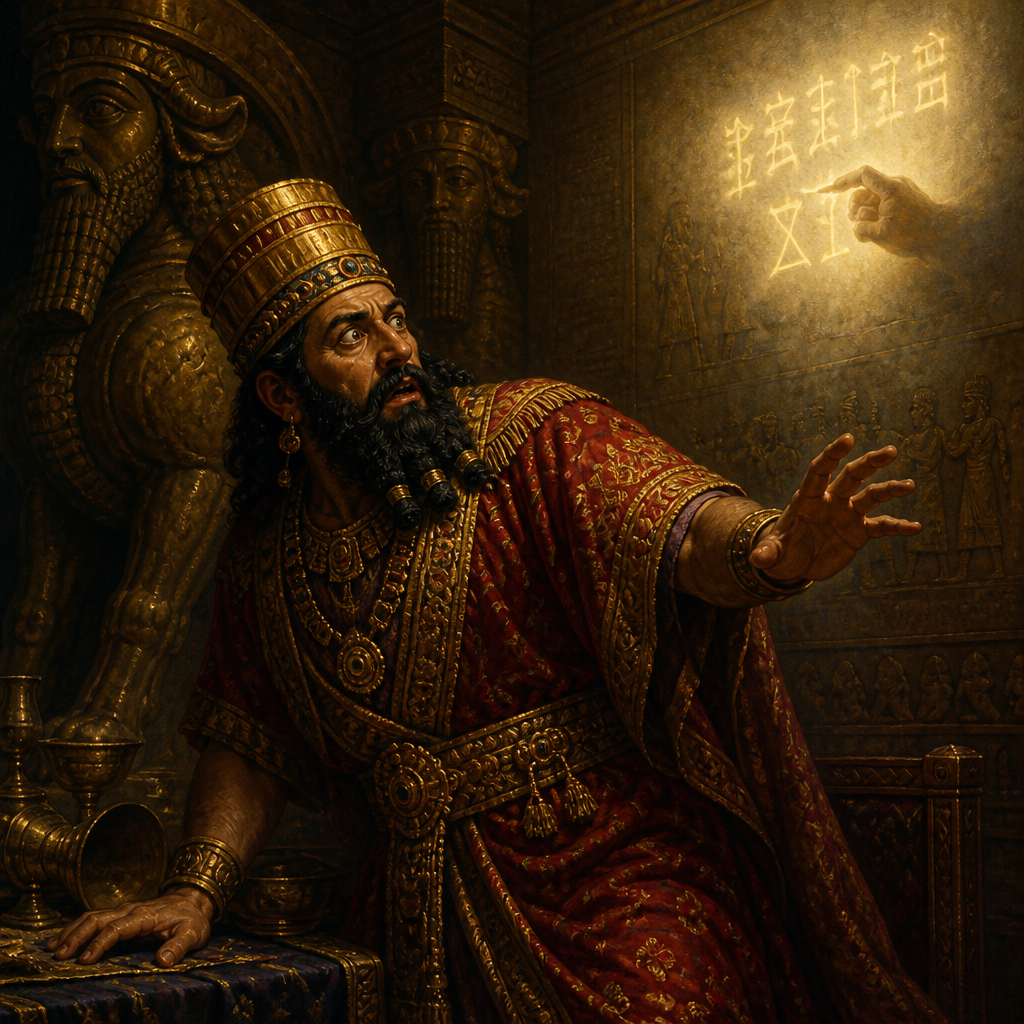
Belshazzar
Last Babylonian king served by Daniel
Categories
Mentions by Book
- Daniel67
- Ezekiel3
- Mark1
- Matthew1
Others Named Daniel
Daniel, Son of IthamarEzra 8:2
A priest of the line of Ithamar who returned to Jerusalem from the Babylonian exile with Ezra and later signed the covenant with Nehemiah.