Elishama, Leader of Ephraim
Elishama, son of Ammihud, served as the chief prince of the tribe of Ephraim during the Exodus from Egypt and was the grandfather of Joshua.
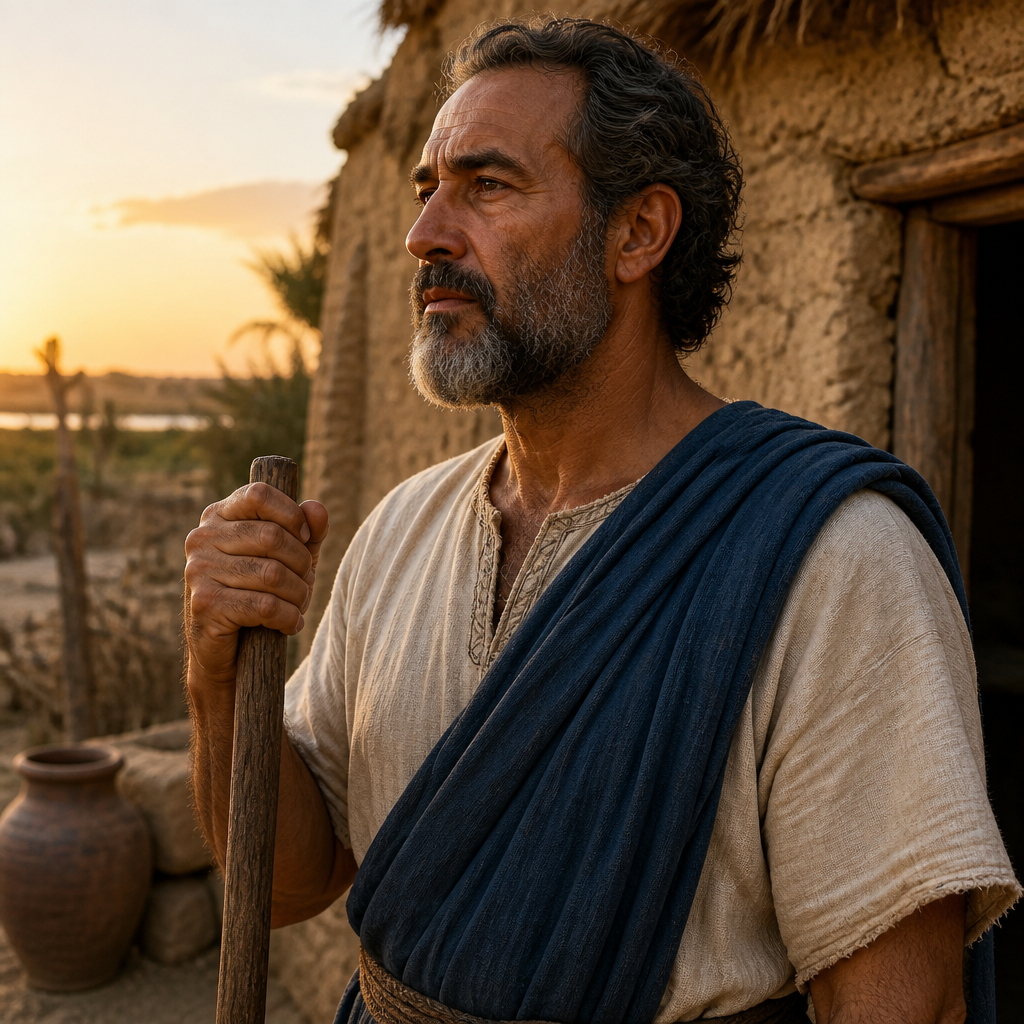
Elishama, son of Ammihud, was a prominent tribal leader of the Israelites during the pivotal era of the Exodus and the subsequent wilderness wanderings. As the designated 'prince' or 'leader' of the tribe of Ephraim, he held a position of high administrative and military authority during the formative years of Israel’s national identity. His role was established shortly after the departure from Egypt, approximately in the second year following the Exodus, around 1445 BC.
Beyond his individual service as a tribal head, Elishama is significant within the biblical narrative for his genealogical position. He is recorded as the son of Ammihud and the father of Nun, which identifies him as the grandfather of Joshua, the man who would eventually succeed Moses and lead the Israelites into the Promised Land. His leadership occurred during the period of transition between Egyptian bondage and the eventual conquest of Canaan, placing him at the center of the camp's organization and ritual life.
Background and Family
Elishama belonged to the tribe of Ephraim, one of the two tribes descending from Joseph. According to the genealogical records in 1 Chronicles 7:26, his lineage is traced through Ladan to Ammihud. While the biblical text does not provide personal anecdotes regarding his early life in Egypt, his status as the leader of his tribe at the time of the census in Numbers 1 suggests he was a man of significant stature and maturity by the time the Israelites reached the Wilderness of Sinai.
His primary legacy is rooted in his descendants. The book of 1 Chronicles clarifies that Elishama was the father of Nun, who in turn was the father of Joshua (originally named Hoshea). This placement indicates that Elishama was likely an elder contemporary of Moses and Aaron, representing the generation that witnessed the plagues of Egypt and the crossing of the Red Sea, while his grandson represented the generation that would inherit the land of Canaan.
Major Life Events
Elishama’s public life is defined by four major administrative and liturgical acts recorded in the book of Numbers:
The First Census
In the second month of the second year after the Exodus, God commanded Moses to take a census of the men of Israel who were able to go to war. Elishama was specifically chosen by name to assist Moses and Aaron in this task (Numbers 1:10). As the representative for the tribe of Ephraim, he was responsible for the registration of 40,500 men from his tribe.
Military Organization and Camping
When the Tabernacle was completed, the camp of Israel was organized into specific divisions. Elishama was appointed as the commander of the Ephraimite division, which camped on the west side of the Tabernacle (Numbers 2:18). This division included the tribes of Ephraim, Manasseh, and Benjamin. In the marching order of Israel, Elishama led his division under their specific tribal standard, following the Tabernacle and the tribes of the south (Numbers 10:22).
The Dedication of the Altar
One of the most significant ceremonial moments for the tribal leaders was the dedication of the altar in the Tabernacle. Over a period of twelve days, each leader brought an identical offering to the Lord. Elishama presented his offering on the seventh day (Numbers 7:48). His contribution consisted of costly vessels and sacrificial animals, including a silver charger weighing 130 shekels, a silver bowl of 70 shekels—both filled with fine flour mixed with oil—and a gold dish of 10 shekels filled with incense. He also provided oxen, rams, goats, and lambs for the burnt, sin, and peace offerings.
Relationship to Other Biblical Figures
Elishama worked directly alongside the foundational figures of Israelite history: Moses, Aaron, and the other eleven tribal princes, such as Nahshon of Judah. However, his most profound relationship is his role as the patriarch of the house of Joshua. The leadership qualities seen in Joshua—military prowess and administrative discipline—find their human precedent in Elishama, who managed the logistics of one of the largest tribal contingents in the wilderness. As the grandfather of Joshua, Elishama represents the bridge between the Joseph-narrative of Egypt and the conquest-narrative of the Promised Land.
Spiritual Significance
Elishama’s name in Hebrew means "My God has heard." This name is reflective of the spiritual climate of the Exodus—a time when the Israelites cried out to God in their bondage and He heard their groaning (Exodus 2:24). While the biblical record focuses on his administrative duties, Elishama’s consistent presence in the census, the camp organization, and the sacrificial offerings underscores the importance of order, obedience, and stewardship in the biblical tradition. He serves as a model of the 'prince' who uses his wealth and influence to support the sanctuary and the community, ensuring that the tribe of Ephraim fulfilled its divine mandate during the long journey through the desert.
Spiritual Significance
Theologically, Elishama represents the faithfulness of God to the house of Joseph. Though he belonged to the generation that was ultimately barred from entering the Promised Land due to the rebellion of the people, his service was essential in establishing the structure of the nation. His primary significance in the biblical canon is genealogical; by listing him as the father of Nun, the text provides a pedigree for Joshua, demonstrating that the leader who conquered Canaan came from a line of established tribal authority.
Elishama’s participation in the altar dedication (Numbers 7) also highlights the principle of equal devotion. By offering exactly what the other tribal leaders offered, he demonstrated the unity of the twelve tribes under one God. His life serves as a reminder that every generation has a specific role to play in the unfolding plan of salvation, even if that role is largely administrative or preparatory for the next generation's successes.
Frequently Asked Questions
Who was Elishama’s son?
Elishama was the father of Nun, according to 1 Chronicles 7:26-27.
Which tribe did Elishama lead?
He was the prince and leader of the tribe of Ephraim.
What is the meaning of the name Elishama?
The name Elishama is Hebrew for 'My God has heard.'
Was Elishama related to Joshua?
Yes, Elishama was the grandfather of Joshua (the son of Nun).
What was Elishama's role during the Exodus?
He served as a tribal commander, assisted in the census of Israel, and presented offerings for the dedication of the Tabernacle's altar.
Connected Figures
Categories
Mentions by Book
- Numbers5
- 1 Chronicles1
Family & Relationships
Child
Numbers 1:10
Parent
Numbers 1:10
Others Named Elishama
Elishama, Scribe of the Divided MonarchyJeremiah 36:12
Elishama was a high-ranking royal official and scribe serving in the court of King Jehoiakim during the final years of the Kingdom of Judah.
Elishama, Son of Jekamiah1 Chronicles 2:41
A member of the tribe of Judah recorded in the post-exilic genealogies as the son of Jekamiah.
Elishama, Priest of the Divided Monarchy2 Chronicles 17:8
A priest commissioned by King Jehoshaphat of Judah to travel throughout the kingdom teaching the Law of the Lord to the people.
Elishama, Ancestor of Ishmael2 Kings 25:25
A member of the royal family of Judah during the Divided Monarchy, known as the grandfather of Ishmael son of Nethaniah.
Elishama, Son of David2 Samuel 5:16
A son of King David born in Jerusalem during the United Monarchy and listed among the royal descendants in the books of Samuel and Chronicles.