Ammihud, Son of Ladan
Who was Ammihud, Son of Ladan, in the Bible?
An Ephraimite whose son served as the tribal leader of Ephraim during the Exodus and the wilderness wanderings.
This is one of 5 people named Ammihud in the Bible. See all 5 →
Ammihud, a member of the tribe of Ephraim, lived during the critical transition period of Israel’s history between their long sojourn in Egypt and their eventual arrival at the borders of Canaan. He is primarily identified in the biblical record as the son of Ladan and the father of Elishama, the man who represented Ephraim during the census and ceremonial offerings in the wilderness.
While Ammihud himself is not recorded as performing direct leadership actions in the Book of Numbers, his position in the genealogical line is significant. He serves as a vital link between the generation that suffered under Egyptian bondage and the generation that organized into a formal military and liturgical community under the leadership of Moses. His name, which may be translated as 'my people is majesty' or 'people of glory,' reflects the rising national identity of the Israelites during the Exodus era.
Background and Family
Ammihud was born into the tribe of Ephraim, the younger but preeminent son of Joseph. According to the genealogical records preserved in 1 Chronicles 7, Ammihud was the son of Ladan. This lineage places him within a specific branch of the Ephraimites who were present during the final years of the Egyptian stay and the early years of the Exodus.
The historical context of Ammihud's life is defined by the massive demographic shift of the Israelites. As a descendant of Joseph, he belonged to a tribe that held significant status but also faced the same systemic oppression as the rest of Israel during the years of slavery in Egypt. While the Bible does not explicitly detail Ammihud’s personal experience in Egypt, his inclusion in the census records of the wilderness suggests he was a figure of hereditary importance, passing on a legacy of leadership to his son, Elishama.
Major Life Events
Ammihud’s presence in the biblical narrative is felt primarily through his progeny and his role in the formal organization of the Israelite camp. He is mentioned first in Numbers 1:10, where his son Elishama is appointed by God to assist Moses and Aaron in the first census of Israel. This appointment indicates that Ammihud belonged to one of the leading families of the tribe; to be the father of the 'prince' or 'leader' (nasi) of Ephraim was a mark of high social and religious standing.
During the second year after the Exodus, when the Tabernacle was completed and dedicated, the tribal leaders brought their offerings before the Lord. Ammihud’s name is invoked in Numbers 7:48 and 7:53 to identify Elishama, who presented his tribe's gifts on the seventh day of the dedication ceremony. These offerings—silver plates, gold bowls, incense, and various livestock for sacrifices—represented the wealth and devotion of the Ephraimites under the banner of Ammihud’s lineage.
Furthermore, Ammihud is mentioned in the context of the military order of Israel. In Numbers 10:22, as the cloud lifted from the Tabernacle and the tribes set out in their designated order, the division of the camp of Ephraim moved forward under the command of Elishama, son of Ammihud. This positioning, on the west side of the Tabernacle, placed Ammihud’s family at the heart of the Ephraimite-Manasseh-Benjamin coalition.
Relationship to Other Biblical Figures
Ammihud’s primary relationship in the text is to his son, Elishama. Through Elishama, Ammihud is an ancestor of one of the most significant figures in the Old Testament: Joshua (Hoshea), the son of Nun. The genealogy in 1 Chronicles 7:26-27 explicitly traces the line from Ladan to Ammihud, to Elishama, to Nun, and finally to Joshua.
This makes Ammihud the great-grandfather of Joshua, the man who would eventually lead Israel into the Promised Land. This genealogical connection underscores Ammihud’s role as a bridge between the patriarchal past (Joseph) and the conquest of Canaan. While Ammihud likely died in the wilderness along with the rest of his generation, his direct line remained central to the survival and victory of the nation.
Spiritual Significance
In the biblical tradition, genealogies serve more than just historical purposes; they demonstrate the continuity of God’s covenant promises. Ammihud’s inclusion in the records of Numbers and 1 Chronicles signifies that even those who do not have recorded speeches or individual miracles are essential components of the divine plan.
As a member of the generation that left Egypt, Ammihud represents the fulfillment of the promise made to Joseph—that his bones would be carried out of Egypt and his descendants would multiply. His life, situated between the anonymity of slavery and the documented leadership of the wilderness, illustrates the steady building of the tribal structures that would define Israelite life for centuries. By raising a son like Elishama, who served the Tabernacle and led the tribal host, Ammihud contributed to the spiritual and physical order of the people of God.
Ammihud’s significance lies in his placement within the priestly and military records of the tribe of Ephraim. As the father of Elishama, the tribal chief during the Sinai period, he is the head of the house that oversaw the west side of the Tabernacle's encampment. His presence in the genealogies confirms the structural integrity of the tribe of Ephraim during the transition from Egyptian captivity to nomadic life.
Furthermore, Ammihud serves as a vital genealogical link to Joshua, the successor of Moses. By documenting Ammihud's lineage, the biblical text establishes the legitimate authority and noble heritage of the house that would eventually produce Israel's greatest military commander. His name remains a testament to the preservation of tribal identity during the harsh conditions of the wilderness wanderings.
Frequently Asked Questions
Who was Ammihud’s father?
According to the genealogy in 1 Chronicles 7:26, Ammihud was the son of Ladan, a descendant of Ephraim.
Which tribe did Ammihud belong to?
Ammihud belonged to the tribe of Ephraim, one of the two tribes descended from Joseph.
Who was Ammihud's famous son?
His son was Elishama, who served as the leader (prince) of the tribe of Ephraim during the census and the dedication of the Tabernacle in the wilderness.
Is Ammihud related to Joshua son of Nun?
Yes. According to 1 Chronicles 7:26-27, Ammihud was the grandfather of Nun and the great-grandfather of Joshua.
What does the name Ammihud mean?
The name Ammihud is Hebrew for 'my people is majesty' or 'people of glory.'
Family & Relationships
Parents
 LadanFather1 Chronicles 7:26Stated
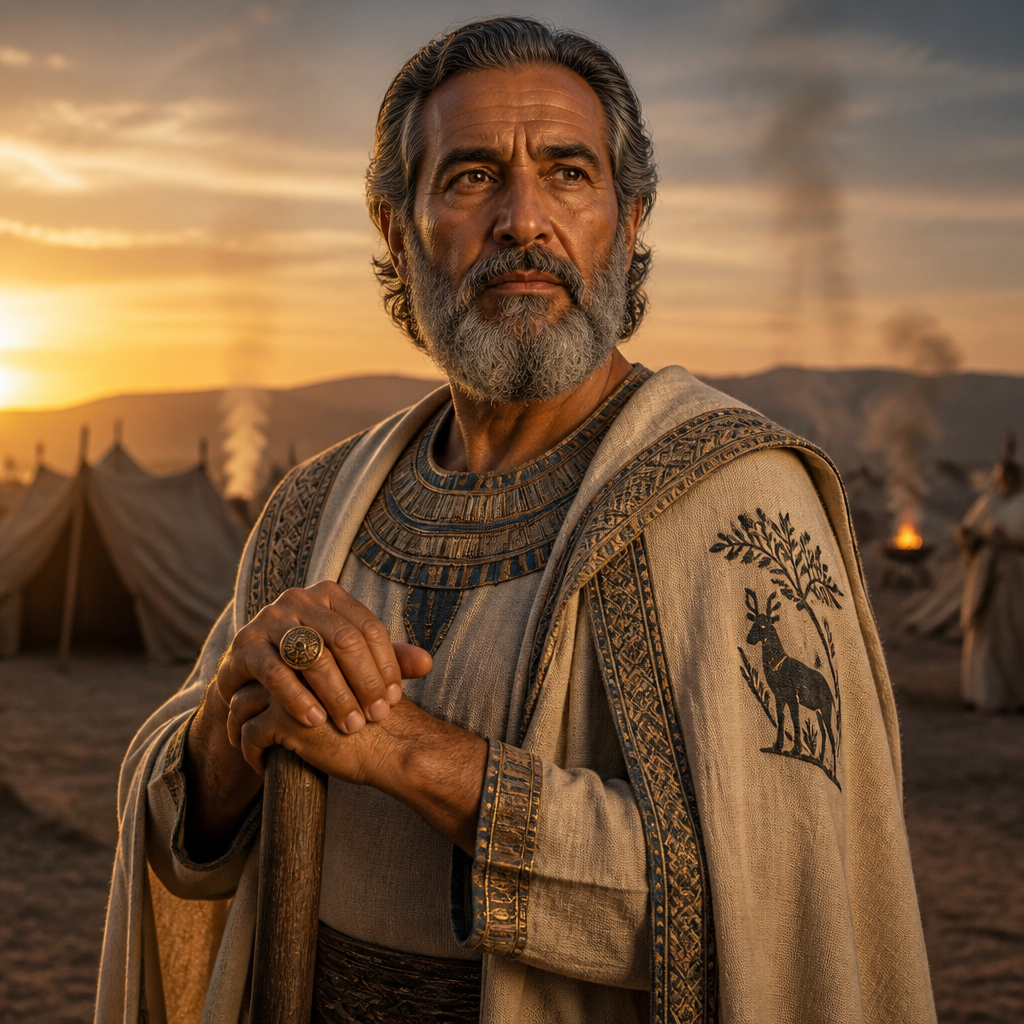 Ammihud, Son of LadanThis page
Children
 Elishama, Leader of EphraimSonNumbers 1:10Stated
Extended family
 NunGrandsonNumbers 1:10
Inferred
No verse names Ammihud and Nun together; the grandson link is carried from the surrounding genealogy and is not stated in Scripture.Evidence: Numbers 1:10; Numbers 2:18; Numbers 7:48; Numbers 7:53; 1 Chronicles 7:26; 1 Chronicles 7:27
Connected Figures
Family
Father · 1 Chronicles 7:26
An Ephraimite who lived during the Egyptian sojourn and served as a crucial genealogical link between the patriarch Ephraim and the military leader Joshua.
Son · Numbers 1:10
Elishama, son of Ammihud, served as the chief prince of the tribe of Ephraim during the Exodus from Egypt and was the grandfather of Joshua.
Egypt and WildernessFirst: Numbers 1:107 versesMilitary CommanderEphraim
Grandson · Numbers 1:10
Nun was an Ephraimite who lived during the Egyptian sojourn and the Exodus, best known as the father of Joshua, the leader who succeeded Moses.
Categories
Mentions by Book
- Numbers5
- 1 Chronicles2
Scripture References
All 7 indexed verses, in canonical order, from the Berean Standard Bible.
Numbers · 5
- Numbers 1:10
from the sons of Joseph: from Ephraim, Elishama son of Ammihud, and from Manasseh, Gamaliel son of Pedahzur;
- Numbers 2:18
On the west side, the divisions of Ephraim are to camp under their standard: The leader of the Ephraimites is Elishama son of Ammihud,
- Numbers 7:48
On the seventh day Elishama son of Ammihud, the leader of the Ephraimites, drew near.
- Numbers 7:53
and a peace offering of two oxen, five rams, five male goats, and five male lambs a year old. This was the offering of Elishama son of Ammihud.
- Numbers 10:22
Next, the divisions of the camp of Ephraim set out under their standard, with Elishama son of Ammihud in command.
1 Chronicles · 2
- 1 Chronicles 7:26
Ladan his son, Ammihud his son, Elishama his son,
- 1 Chronicles 7:27Partial
Nun his son, and Joshua his son.
Cited as evidence on a family card; added so References, Key Verses and Mentions by Book share one index.
Others Named Ammihud
Compare all 5 bearers →Ammihud, Father of PedahelNumbers 34:28
Ammihud was the father of Pedahel, the leader of the tribe of Naphtali appointed to assist in the division of the Promised Land.
Ammihud, Father of Talmai2 Samuel 13:37
Ammihud was the father of Talmai, the King of Geshur, and a grandfather of Absalom through David’s wife Maakah.
Ammihud, Father of ShemuelNumbers 34:20
A man of the tribe of Simeon whose son, Shemuel, was appointed by God to oversee the division of the Promised Land.
Ammihud, Father of Uthai1 Chronicles 9:4
A member of the tribe of Judah whose descendants were among the first to resettle Jerusalem following the Babylonian exile.