Elishama, Scribe of the Divided Monarchy
Elishama was a high-ranking royal official and scribe serving in the court of King Jehoiakim during the final years of the Kingdom of Judah.
Elishama was a prominent scribe and royal official during the turbulent reign of King Jehoiakim of Judah. As a member of the Judean administrative elite, he operated out of the royal palace in Jerusalem. His role as a scribe (Hebrew: 'sopher') was not merely that of a copyist, but rather a significant governmental position involving record-keeping, legal documentation, and diplomatic correspondence.
Elishama appears in the biblical narrative during a pivotal moment of tension between the prophet Jeremiah and the royal court. His office in the palace served as a meeting place for other high-ranking officials and was the initial site where the controversial scroll of Jeremiah's prophecies was secured before being presented to the king.
Background and Family
Elishama lived during the late 7th and early 6th centuries BC, a period defined by the declining power of the Kingdom of Judah and the rising threat of the Neo-Babylonian Empire. While the biblical text provides his profession and his standing among the Jerusalemite nobility, it does not specify his lineage or his tribe. Based on his position as a scribe in the king's palace (Jeremiah 36:12), it is evident that he was a man of significant education and political influence, belonging to the upper echelon of Judean society under the Davidic monarchy.
Major Life Events
Elishama’s role is primarily documented in Jeremiah 36, which details the writing and reading of a scroll containing the words of the Lord spoken through Jeremiah. In the fourth or fifth year of King Jehoiakim (c. 605–604 BC), Jeremiah’s scribe, Baruch, read these prophecies aloud in the temple. When the officials heard of this, they requested Baruch to bring the scroll to them.
Elishama is listed first among the officials gathered in the scribe’s chamber in the royal palace to hear Baruch’s report. Upon hearing the dire warnings contained in the scroll, Elishama and his colleagues were struck with fear. Recognizing the gravity of the message and the likely volatile reaction of King Jehoiakim, the officials advised Baruch and Jeremiah to go into hiding.
Following this, the officials went to the king’s courtyard to report the matter. They chose to store the scroll in Elishama’s private chamber for safekeeping rather than presenting it to the king immediately. However, King Jehoiakim eventually sent Jehudi to retrieve the scroll from Elishama’s chamber. As the scroll was read to the king, Jehoiakim notoriously cut it with a scribe’s knife and burned it in a firepot, despite the protests of some of the officials present.
Relationship to Other Biblical Figures
Elishama functioned within a circle of high-ranking courtiers that included Delaiah son of Shemaiah, Elnathan son of Achbor, and Gemariah son of Shaphan. His professional relationship with Baruch, the son of Neriah, is also noted, as Baruch was the one who delivered the prophetic scroll to Elishama’s office. Though Elishama was part of the administration that handled Jeremiah’s messages, there is no record of him taking a direct stance against the prophet; rather, he seems to have acted as a cautious intermediary between the prophetic word and the volatile king.
Spiritual Significance
Elishama’s involvement in the events of Jeremiah 36 highlights the intersection of the divine word and state power. His office became the literal storehouse for the written word of God during a time of national crisis. The contrast between the officials’ initial fear upon hearing the word in Elishama’s chamber and the king’s subsequent contemptuous burning of the scroll illustrates the internal division within Judah’s leadership regarding their faithfulness to Yahweh’s warnings. Elishama stands as a witness to the preservation and subsequent rejection of the prophetic message that preceded the Babylonian exile.
Spiritual Significance
Elishama represents the bureaucratic structure of the late Divided Monarchy that was forced to contend with the unsettling prophecies of Jeremiah. His inclusion in the text underscores the historical reality of the Judean court and provides a specific context for how the written word of God was handled by those in power. His chamber served as the temporary repository for one of the most significant prophetic documents in Israel's history.
Furthermore, the mention of Elishama serves to validate the authenticity of the narrative, as the role of the royal scribe was a documented historical office. His reaction to the scroll—fearful yet cautious—demonstrates that even within the corrupt administration of Jehoiakim, there were those who recognized the weight of God's word, even if they were unable or unwilling to prevent the king's ultimate rebellion against it.
Frequently Asked Questions
What was Elishama's job in the royal court?
Elishama served as a scribe (sopher), a high-ranking administrative and secretarial official in the palace of King Jehoiakim.
Which king did Elishama serve?
He served King Jehoiakim of Judah during the Divided Monarchy period.
Where was the scroll of Jeremiah kept before the king burned it?
The scroll was stored in Elishama's chamber in the royal palace after the officials heard its contents from Baruch.
Did Elishama witness King Jehoiakim burning the scroll?
While the text says the king sent for the scroll from Elishama's chamber, Elishama was among the officials standing beside the king when Jehudi read the scroll and the king destroyed it.
Did Elishama try to stop the king from burning the scroll?
The Bible mentions that Elnathan, Delaiah, and Gemariah urged the king not to burn the scroll; it does not explicitly state whether Elishama joined their verbal protest, though he was present.
Connected Figures
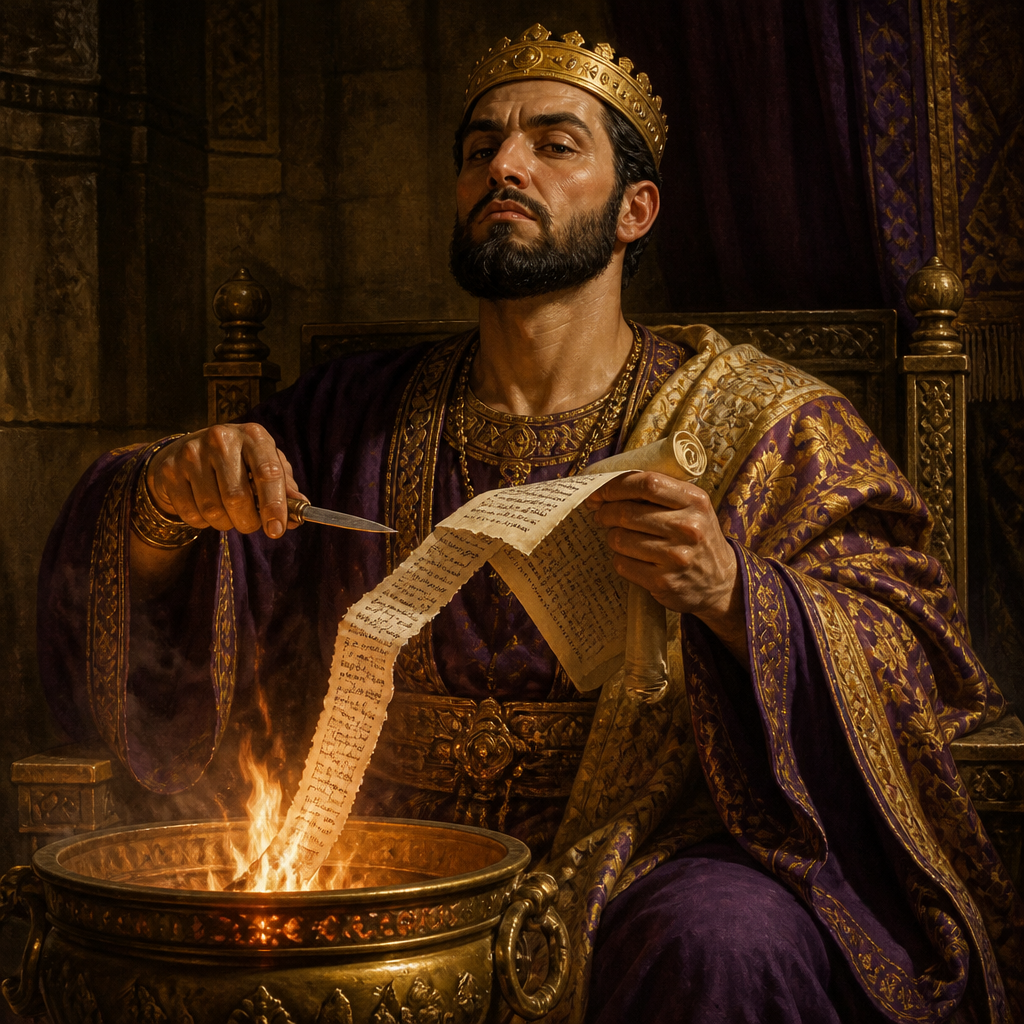
Jehoiakim
King he served
Baruch
Prophet's scribe who brought the scroll to him
Gemariah
Fellow official and colleague
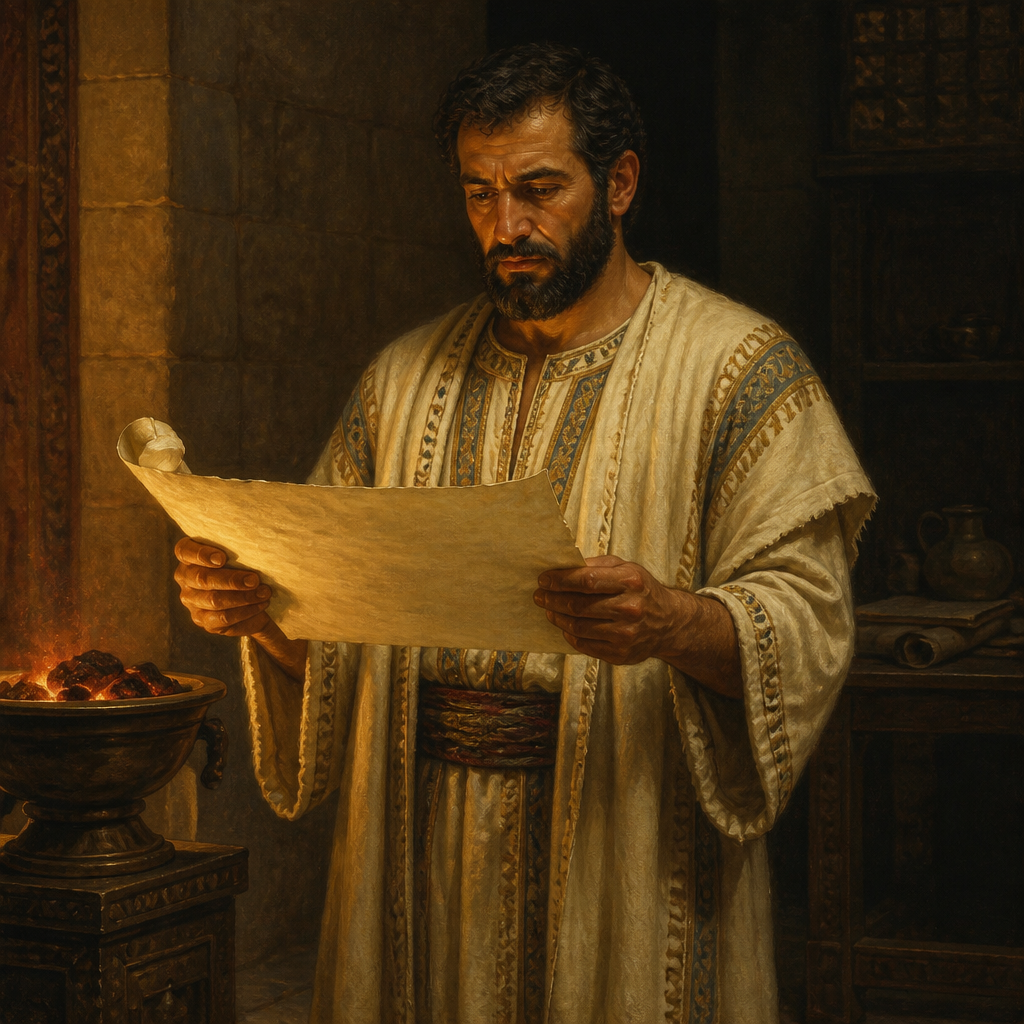
Jehudi
Official who retrieved the scroll from Elishama's office
Categories
Mentions by Book
- Jeremiah3
Others Named Elishama
Elishama, Son of Jekamiah1 Chronicles 2:41
A member of the tribe of Judah recorded in the post-exilic genealogies as the son of Jekamiah.
Elishama, Leader of EphraimNumbers 1:10
Elishama, son of Ammihud, served as the chief prince of the tribe of Ephraim during the Exodus from Egypt and was the grandfather of Joshua.
Elishama, Priest of the Divided Monarchy2 Chronicles 17:8
A priest commissioned by King Jehoshaphat of Judah to travel throughout the kingdom teaching the Law of the Lord to the people.
Elishama, Ancestor of Ishmael2 Kings 25:25
A member of the royal family of Judah during the Divided Monarchy, known as the grandfather of Ishmael son of Nethaniah.
Elishama, Son of David2 Samuel 5:16
A son of King David born in Jerusalem during the United Monarchy and listed among the royal descendants in the books of Samuel and Chronicles.