Gedaliah, Governor of Judah
A high-ranking Judean official appointed by King Nebuchadnezzar to serve as governor over the remnant of Judah following the fall of Jerusalem.
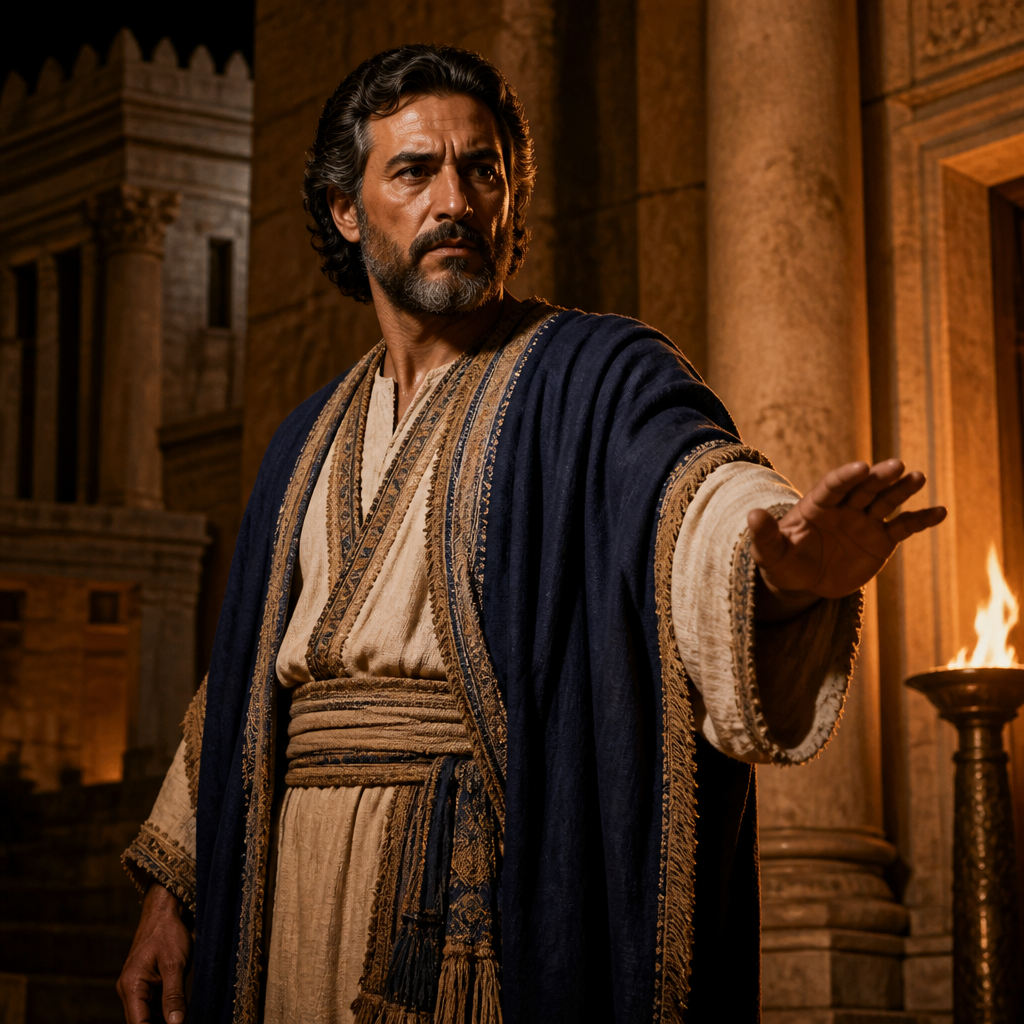
Gedaliah, the son of Ahikam and grandson of Shaphan, was a Judean official who served as the governor of Judah under Babylonian authority. After the destruction of Jerusalem and the First Temple in 586 BC, the Babylonian King Nebuchadnezzar II chose not to exile the entire population but left behind the poorest of the land to tend the vineyards and fields. Gedaliah was appointed to oversee this remnant, establishing his administrative seat at Mizpah, a short distance north of the ruined capital.
His brief tenure represented a fleeting moment of stability and potential recovery for the devastated nation. He successfully encouraged dispersed Judean soldiers and refugees who had fled to neighboring lands—such as Moab, Ammon, and Edom—to return and resettle the land. However, his governorship ended abruptly in a violent assassination that effectively ended the last vestige of Jewish self-governance in the land until the post-exilic return, triggering a final wave of flight to Egypt.
Background and Family
Gedaliah was born into a family of significant political and religious influence in the Kingdom of Judah. He was the son of Ahikam and the grandson of Shaphan. His grandfather, Shaphan, served as the royal scribe during the reign of King Josiah and was instrumental in the discovery and reading of the Book of the Law found in the Temple (2 Kings 22). His father, Ahikam, was a high official who protected the prophet Jeremiah from execution during the reign of Jehoiakim (Jeremiah 26:24). This lineage suggests that Gedaliah belonged to a pro-prophetic, pro-reform faction within the Judean court that advocated for submission to Babylonian authority as a matter of divine judgment and political realism, rather than futile rebellion.
Major Life Events
Appointment as Governor
Following the final siege of Jerusalem in 586 BC, Nebuchadnezzar II executed the sons of King Zedekiah and took the monarch in chains to Babylon. To maintain order and agricultural production in the region, the Babylonians appointed Gedaliah as governor over the "remnant"—those who had not been carried away in the deportations (2 Kings 25:22). Gedaliah established his headquarters at Mizpah, a site with deep historical significance in Benjaminite territory.
Restoration of Order
Upon his appointment, Gedaliah faced the challenge of uniting a fractured and traumatized population. Several Judean military commanders, including Ishmael son of Nethaniah and Johanan son of Kareah, who had been in the open fields during the siege, came to him at Mizpah. Gedaliah took a solemn oath before them, urging them to accept the new reality: "Do not be afraid to serve the Chaldeans. Live in the land and serve the king of Babylon, and it will go well with you" (Jeremiah 40:9). Under his leadership, Jews who had fled to neighboring nations began to return. The biblical record notes that they gathered an abundance of wine and summer fruit, suggesting a period of immediate, though fragile, agricultural recovery (Jeremiah 40:12).
The Assassination at Mizpah
The peace was short-lived. Johanan son of Kareah warned Gedaliah of a conspiracy involving Baalis, the king of the Ammonites, and Ishmael son of Nethaniah—a member of the Judean royal family. Johanan even offered to secretly assassinate Ishmael to prevent the collapse of the new administration, but Gedaliah, perhaps characterized by an excess of trust or a commitment to law, dismissed the report as a lie (Jeremiah 40:14-16).
In the seventh month of his first year, Ishmael arrived at Mizpah with ten men. Gedaliah hosted them for a meal, a gesture of hospitality that Ishmael violated by rising up and murdering Gedaliah with the sword. The conspirators also slaughtered the Judean and Babylonian soldiers stationed at Mizpah and attempted to carry the remaining population captive to Ammon (Jeremiah 41:1-10).
Relationship to Other Biblical Figures
Gedaliah’s most significant relationship was with the prophet Jeremiah. Following the fall of Jerusalem, the Babylonian captain of the guard gave Jeremiah the choice to go to Babylon or stay in Judah. Jeremiah chose to remain and went specifically to stay with Gedaliah at Mizpah (Jeremiah 40:6). This association highlights the alignment between Jeremiah’s message of submission to Babylon and Gedaliah’s administrative policy. Gedaliah also interacted with military leaders like Johanan son of Kareah, whose warnings he tragically ignored, and his rival Ishmael, whose royal lineage likely fueled his resentment of Gedaliah’s appointment by a foreign power.
Spiritual Significance
The story of Gedaliah is one of tragic missed opportunity. For the biblical writers, his governorship represented a chance for the people to remain in the Promised Land, albeit under foreign rule, as a way of enduring their exile locally. His death signaled the total dissolution of the Judean state. The fear generated by his assassination was so great that the remaining Jews, despite Jeremiah's warnings, fled to Egypt, taking the prophet with them against his will. This act was seen as a reversal of the Exodus, a return to the house of bondage from which God had originally delivered them. In Jewish tradition, the Fast of Gedaliah (Tzom Gedaliah) is observed on the third of Tishrei to mourn the loss of this last spark of Jewish sovereignty in the land during the First Temple period.
Spiritual Significance
Gedaliah serves as a pivotal figure in the transition between the Divided Monarchy and the Exilic Period. His leadership provided a brief window of hope for the 'remnant of Judah,' demonstrating that even in judgment, there was a path for survival through obedience to God's word regarding Babylonian rule. His refusal to believe the warnings about his assassin Ishmael is often cited in theological and ethical discussions regarding the balance between charity and prudence.
His death is recorded with profound gravity because it led to the total abandonment of the land of Judah, fulfilling the prophetic warnings of complete desolation. The murder of a righteous leader by a member of the Davidic line (Ishmael) underscores the internal corruption that led to Judah's downfall. Consequently, Gedaliah is remembered not as a king, but as a faithful steward who perished while attempting to rebuild a shattered community.
Frequently Asked Questions
Who appointed Gedaliah as governor?
Gedaliah was appointed by Nebuchadnezzar, the king of Babylon, following the destruction of Jerusalem in 586 BC.
Where did Gedaliah establish his capital?
He established his administrative center at Mizpah, a city in the territory of Benjamin, north of Jerusalem.
Why was Gedaliah assassinated?
He was killed by Ishmael son of Nethaniah, a member of the royal family. The assassination was likely motivated by Ishmael's resentment of a non-royal governor serving under Babylon and was supported by the king of the Ammonites.
What happened to the people of Judah after Gedaliah's death?
Fearing Babylonian retaliation for the murder of their appointed governor, the remaining Jews fled to Egypt, taking the prophet Jeremiah with them.
Was Gedaliah related to the kings of Judah?
No, Gedaliah was not of the Davidic royal line. He was from a family of high-ranking court officials (the house of Shaphan) who had served the kings of Judah.
Connected Figures
Ahikam
Father
Shaphan
Grandfather
Jeremiah
Prophetic advisor and companion

Ishmael son of Nethaniah
Assassin

Johanan son of Kareah
Military commander and supporter
Categories
Mentions by Book
- Jeremiah22
- 2 Kings4
Family & Relationships
Parent
2 Kings 22:12
Others Named Gedaliah
Gedaliah, Priest of the ReturnEzra 10:18
A priest of the line of Jeshua who was among those required to divorce foreign wives during the reforms of Ezra.
Gedaliah, Levite of the United Monarchy1 Chronicles 25:3
A Levite musician and son of Jeduthun who was appointed by King David to lead the second division of temple singers in Jerusalem.
Gedaliah, Great-Grandfather of ZephaniahZephaniah 1:1
A Judean man of the Divided Monarchy period known as the son of Amariah and the great-grandfather of the prophet Zephaniah.
Gedaliah, son of PashhurJeremiah 38:1
Gedaliah son of Pashhur was a Judean official who opposed the prophet Jeremiah during the Babylonian siege of Jerusalem.