Eliakim son of Hilkiah
A high-ranking official and palace administrator under King Hezekiah during the Assyrian invasion of Judah.
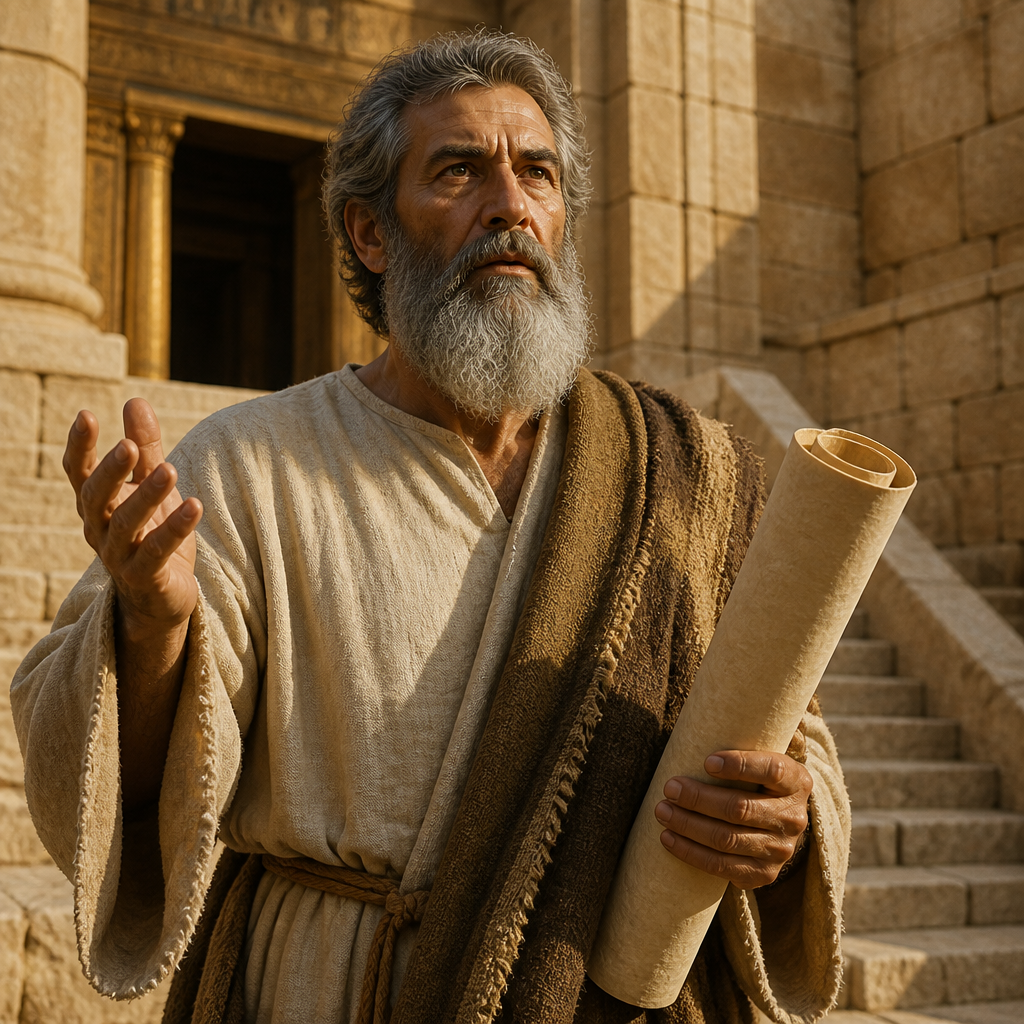
Eliakim, the son of Hilkiah, was a prominent Judean official who served as the palace administrator (steward) during the reign of King Hezekiah in the late 8th century BC. His position was one of the most influential in the royal court, essentially serving as the prime minister or master of the household. Eliakim is best known for his role as a lead diplomat during the harrowing siege of Jerusalem by the Assyrian forces under King Sennacherib, where he stood as a primary representative of the Davidic throne.
Historically, Eliakim's rise to power is noted as a fulfillment of divine appointment, replacing a predecessor named Shebna. The biblical narrative focuses on his presence during the psychological warfare waged by the Assyrian Rabshakeh and his subsequent role in seeking the counsel of the prophet Isaiah. His conduct during this national crisis reflects a man of high responsibility and deep religious conviction, appearing in the records of both 2 Kings and the Book of Isaiah.
Background and Family
Eliakim was the son of Hilkiah. While the text does not provide an exhaustive genealogy or mention his specific tribe, his name—meaning "God establishes" or "God raises up"—aligns with his role as a divinely appointed leader. He served during the Divided Monarchy, specifically during the period when the Southern Kingdom of Judah faced existential threats from the expanding Neo-Assyrian Empire.
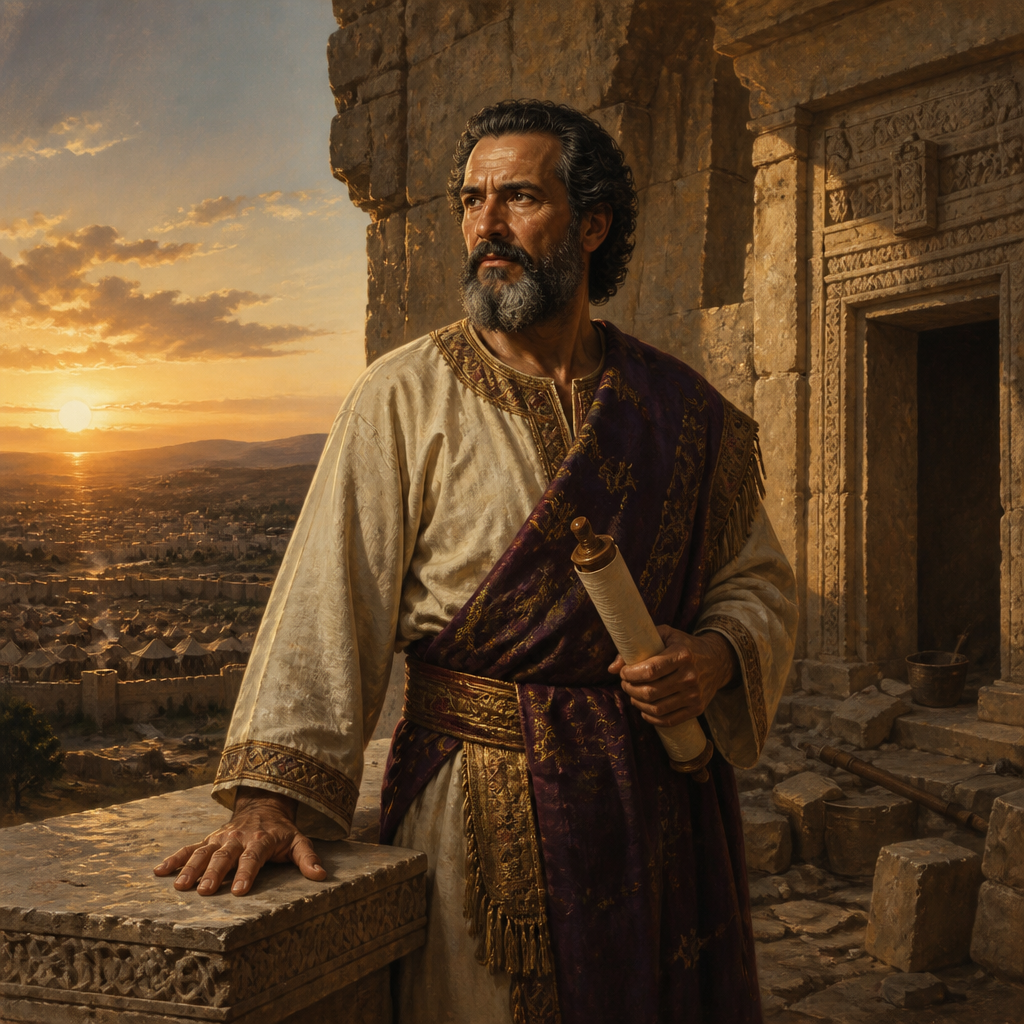
Before Eliakim’s rise to prominence, the office of palace administrator was held by Shebna. However, the prophet Isaiah delivered a stinging rebuke against Shebna for his pride, prophesying that he would be cast down and that Eliakim would be called to take his place. In Isaiah 22, the Lord describes Eliakim as "My servant," indicating a level of spiritual integrity that distinguished him from his predecessor. He was symbolically invested with the robe, sash, and the "key of the house of David," granting him absolute authority over the royal household and access to the king.
Major Life Events
The Confrontation with the Rabshakeh
In 701 BC, the Assyrian King Sennacherib sent a massive army to Jerusalem. The Rabshakeh, a high-ranking Assyrian official, stood near the conduit of the Upper Pool and shouted threats against the city. Eliakim, accompanied by Shebna (who had been demoted to scribe) and Joah the recorder, went out to meet him (2 Kings 18:18).
During this negotiation, Eliakim demonstrated his concern for the morale of the Judean people. When the Rabshakeh spoke in Hebrew to intimidate the citizens watching from the city walls, Eliakim requested that the negotiation proceed in Aramaic—the international language of diplomacy—to spare the common people from hearing the blasphemous threats (2 Kings 18:26). The Rabshakeh refused, continuing his psychological warfare. Eliakim and his companions returned to King Hezekiah with their clothes torn in a traditional sign of mourning and distress, relaying the terrifying ultimatum of the Assyrians (Isaiah 36:22).
Seeking the Prophet Isaiah
Following the reports of the Assyrian threats, King Hezekiah sent Eliakim, Shebna, and the leading priests to the prophet Isaiah (2 Kings 19:2). Dressed in sackcloth, Eliakim served as the royal messenger to petition God for a remnant of the people. This act of humility and reliance on prophetic guidance was a turning point in the siege. Isaiah responded with a message of hope, declaring that God would defend Jerusalem for His own sake and for the sake of His servant David. This event solidified Eliakim's role as a bridge between the political administration and the spiritual leadership of the nation.
Relationship to Other Biblical Figures
Eliakim’s primary relationship was his subordinate role to King Hezekiah. He was one of the three men Hezekiah trusted most to handle the empire's most sensitive diplomatic crisis. He also worked closely with Shebna and Joah; interestingly, the biblical text consistently lists Eliakim first among these three, confirming his seniority in the administration. His interaction with Isaiah the prophet highlights his position as a conduit for the king's spiritual inquiries.
Spiritual Significance
Theologically, Eliakim is presented as a faithful steward. In Isaiah 22:20-24, the language used to describe his appointment is deeply significant. He is promised to be "a father to the inhabitants of Jerusalem" and is given the "key of the house of David," an image later used in the New Testament to describe the authority of Christ (Revelation 3:7). The prophecy describes him as a "peg driven into a firm place," suggesting that he was a source of stability for the nation during a time of upheaval. However, the prophecy also warns that even a firm peg can give way if it becomes overburdened, serving as a reminder of the fragility of human leadership compared to divine sovereignty.
Spiritual Significance
Eliakim son of Hilkiah stands as a model of the 'faithful servant' in the Old Testament. His promotion over the self-seeking Shebna illustrates the biblical theme of God humbling the proud and exalting the humble. His role as the bearer of the 'Key of David' makes him a significant typological figure, representing the administrative authority that governs the household of God.
Furthermore, his conduct during the Assyrian crisis highlights the importance of intercessory leadership. Rather than relying solely on political maneuvering, Eliakim’s primary action was to facilitate communication between the king and the prophet, demonstrating that true national security is found in seeking the will of Yahweh. He remains a key figure in understanding the internal court dynamics of the Davidic monarchy during its most critical historical moments.
Frequently Asked Questions
What was Eliakim's specific job title?
Eliakim was the 'palace administrator' (2 Kings 18:18), a role often translated as 'over the household.' This was the highest-ranking office in the royal court, similar to a modern prime minister or chief of staff.
Who was Eliakim's predecessor in his office?
Eliakim replaced Shebna. According to Isaiah 22, Shebna was removed from office for his pride and for hewing out a prestigious tomb for himself, leading God to summon Eliakim to take his place.
What language did Eliakim ask the Assyrians to speak?
Eliakim requested that the Rabshakeh speak in Aramaic rather than Hebrew, so that the common people on the walls of Jerusalem would not understand the terrifying threats being made by the Assyrians.
How did Eliakim respond to the Assyrian threats?
He responded with deep mourning, tearing his clothes and later wearing sackcloth as he went to consult the prophet Isaiah on behalf of King Hezekiah.
What symbolic item was given to Eliakim by God?
According to the prophecy in Isaiah 22:22, Eliakim was given the 'key of the house of David,' symbolizing his absolute authority to open and shut doors within the kingdom's administration.
Connected Figures
Categories
Mentions by Book
- Isaiah5
- 2 Kings4
Family & Relationships
Parent
2 Kings 18:18
Others Named Eliakim son of Hilkiah
Eliakim, Son of AbiudMatthew 1:13
A member of the royal tribe of Judah who appears in the lineage of Jesus Christ, connecting the post-exilic line of Zerubbabel to the birth of the Messiah.
Eliakim, Priest of the Post-Exilic RestorationNehemiah 12:41
A priest and musician who participated in the historic dedication of the rebuilt walls of Jerusalem under Nehemiah.
Eliakim, Son of MeleaLuke 3:30
Eliakim, son of Melea, was a member of the Tribe of Judah listed within the biological lineage of Jesus Christ as recorded in the Gospel of Luke.