Ahaz, King of Judah
The twelfth king of Judah, known for his catastrophic alliance with Assyria, widespread idolatry, and the desecration of the Temple in Jerusalem during the Divided Monarchy.
Ahaz, the son of Jotham, ascended to the throne of Judah at the age of twenty and reigned for sixteen years in Jerusalem (c. 732–716 BC). His reign is documented extensively in 2 Kings 16, 2 Chronicles 28, and the prophecies of Isaiah. Unlike his predecessors, Uzziah and Jotham, who were generally regarded as faithful to the Yahwistic tradition, Ahaz is characterized by biblical historians as one of the most spiritually negligent monarchs in the history of the Davidic line. His tenure was marked by severe military pressure from the Northern Kingdom of Israel and Aram, leading to a pivotal but spiritually disastrous decision to seek aid from the Neo-Assyrian Empire.
Ahaz’s legacy is defined by his systematic dismantling of the traditional worship of the LORD in favor of foreign religious practices. He is recorded as the first king of Judah to engage in the horrific practice of child sacrifice and for his architectural innovations that replaced the holy artifacts of the Temple with copies of pagan altars. Despite the warnings of the prophet Isaiah, who offered Ahaz a sign of divine protection, the king chose political pragmatism and syncretism, setting the stage for the religious reforms later required by his son, Hezekiah.
Background and Family
Ahaz was born into the royal house of David, the son of King Jotham. He ascended to power in the seventeenth year of Pekah, son of Remaliah, who ruled the Northern Kingdom of Israel (2 Kings 16:1). While the biblical record provides the name of his wife, Abi (also called Abijah), and mentions his sons Hezekiah and Maaseiah, his personal domestic life is overshadowed by his public apostasy. His son Hezekiah would eventually become one of Judah's greatest reformers, suggesting a sharp contrast between the father's spiritual failures and the son's later devotion. Ahaz's reign began during a period of shifting geopolitical powers, as the Neo-Assyrian Empire began its aggressive expansion westward, threatening the sovereignty of smaller Levantine states.
Major Life Events
The Syro-Ephraimite War
Early in his reign, Ahaz faced a coordinated military threat known as the Syro-Ephraimite War. Rezin, king of Aram (Damascus), and Pekah, king of Israel, formed an alliance to resist Assyrian encroachment and attempted to force Judah into their coalition. When Ahaz refused, the two kings besieged Jerusalem with the intent of replacing Ahaz with a puppet ruler (Isaiah 7:1-6). During this crisis, the prophet Isaiah met Ahaz at the aqueduct of the upper pool, urging him to trust in the LORD rather than foreign alliances. Isaiah famously offered a sign—the promise of a child named Immanuel—as proof that the threatening northern kings would soon be destroyed. Ahaz, however, refused to "test the LORD," masking his lack of faith with a veneer of false piety (Isaiah 7:12).
The Assyrian Alliance
Rejecting Isaiah’s counsel, Ahaz sent messengers to Tiglath-pileser III of Assyria, declaring, "I am your servant and your son" (2 Kings 16:7). To secure this alliance, Ahaz plundered the silver and gold from the house of the LORD and the royal treasury to pay tribute. While the Assyrian intervention successfully broke the siege by attacking Damascus, it reduced Judah to a vassal state. This political submission led to religious compromise. Ahaz traveled to Damascus to pay homage to Tiglath-pileser and was so impressed by a pagan altar he saw there that he sent detailed plans to Uriah the priest to construct a replica in the Jerusalem Temple. Upon his return, Ahaz moved the bronze altar of the LORD to make room for this new structure, effectively subordinating Yahwistic worship to foreign ritual.
Religious Apostasy and Desecration
The chronicler provides a harrowing account of Ahaz's spiritual decline. He is credited with closing the doors of the Temple, cutting the sacred vessels into pieces, and establishing altars on every street corner in Jerusalem (2 Chronicles 28:24). Perhaps most infamously, 2 Kings 16:3 notes that he "made his son pass through the fire," a reference to the Canaanite practice of child sacrifice. His reign saw the widespread adoption of high-place worship and the installation of incense altars on the roof of the royal palace. Even the physical layout of the Temple was altered; Ahaz removed the bronze basins and the "Sea" from the backs of the bronze oxen to accommodate his new aesthetic and political alignment.
Relationship to Other Biblical Figures
Ahaz’s reign is defined by his interactions with the prophet Isaiah. The book of Isaiah contains critical dialogues where the prophet attempts to steer the king toward divine reliance. In addition to Isaiah, the prophets Hosea and Micah also began their ministries during Ahaz’s reign, though their primary focus often fell on the broader social and moral decay of both Israel and Judah. Within his family, Ahaz is the biological link between the stable reign of Jotham and the radical reformation of Hezekiah. The contrast between Ahaz and his son is one of the most stark in the Davidic genealogy, as Hezekiah spent the early years of his reign undoing the specific structural and religious changes his father had implemented.
Spiritual Significance
In the biblical narrative, Ahaz serves as the antithesis of the "man after God’s own heart." He represents the danger of syncretism—the blending of divine worship with worldly power and pagan practice. His refusal to trust God during a military crisis resulted in the long-term subjugation of Judah to Assyria, an entanglement that would plague his successors for generations. Theologically, the "Sign of Immanuel" given during his reign remains one of the most significant messianic prophecies in the Old Testament, though Ahaz himself remained oblivious to its spiritual depth. When he died, he was denied a place in the royal tombs of the kings of Israel (Judah) due to his unfaithfulness, though he was buried within the city of Jerusalem.
Spiritual Significance
Theologically, Ahaz represents the spiritual nadir of the House of David during the Divided Monarchy. His reign illustrates the biblical principle that political security found at the cost of spiritual integrity is ultimately self-defeating. By inviting the Assyrians into the affairs of Judah, Ahaz traded temporary relief for permanent vassalage and introduced a level of idolatry that had not been seen since the time of the Judges. His actions were so egregious that 2 Chronicles 28:19 explicitly states that the LORD 'humbled Judah because Ahaz... had been most unfaithful.'
However, the reign of Ahaz is also the historical backdrop for some of the most profound prophetic revelations regarding the coming Messiah. The promise that a virgin would conceive and bear a son (Isaiah 7:14) was delivered directly to this unfaithful king. This highlights a recurring biblical theme: God’s faithfulness to the Davidic covenant remains steadfast even when the individual Davidic king is profoundly unfaithful. Ahaz’s inclusion in the genealogy of Jesus in Matthew 1:9 serves as a testament to the grace of God, working through a flawed lineage to bring about the ultimate King.
Frequently Asked Questions
Why did Ahaz refuse to ask for a sign from God?
Although Ahaz claimed he did not want to 'test the LORD,' his refusal was actually an act of rebellion. He had already decided to trust in an alliance with the King of Assyria and did not want a divine sign that might obligate him to change his political plans.
What was the 'stairway of Ahaz'?
The stairway (or sundial) of Ahaz was a structure used to track the movement of the sun. It is mentioned in 2 Kings 20 and Isaiah 38, where God miraculously made the shadow move backward ten steps as a sign to Ahaz's son, Hezekiah.
Did Ahaz really sacrifice his own children?
Yes, 2 Kings 16:3 and 2 Chronicles 28:3 record that he followed the 'detestable practices of the nations,' including making his son(s) pass through the fire, which is widely understood by scholars as a reference to human sacrifice to the god Molech.
Where was Ahaz buried?
Ahaz was buried in the City of David in Jerusalem, but because of his extreme unfaithfulness and the spiritual damage he caused, he was not permitted to be buried in the specific royal tombs reserved for the kings of Judah.
Connected Figures
Jotham
Father
Hezekiah
Son and Successor
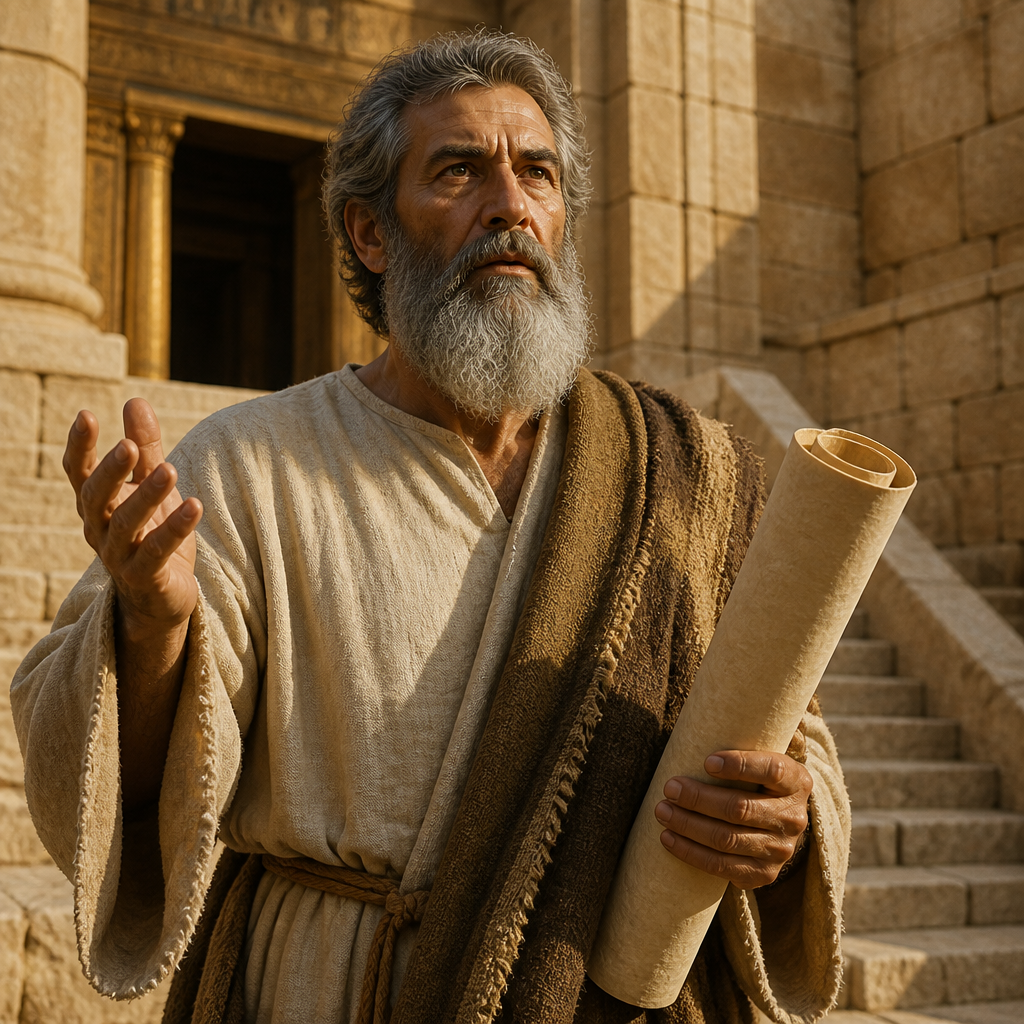
Isaiah
Prophetic Advisor/Antagonist
Tiglath-pileser III
Assyrian Overlord
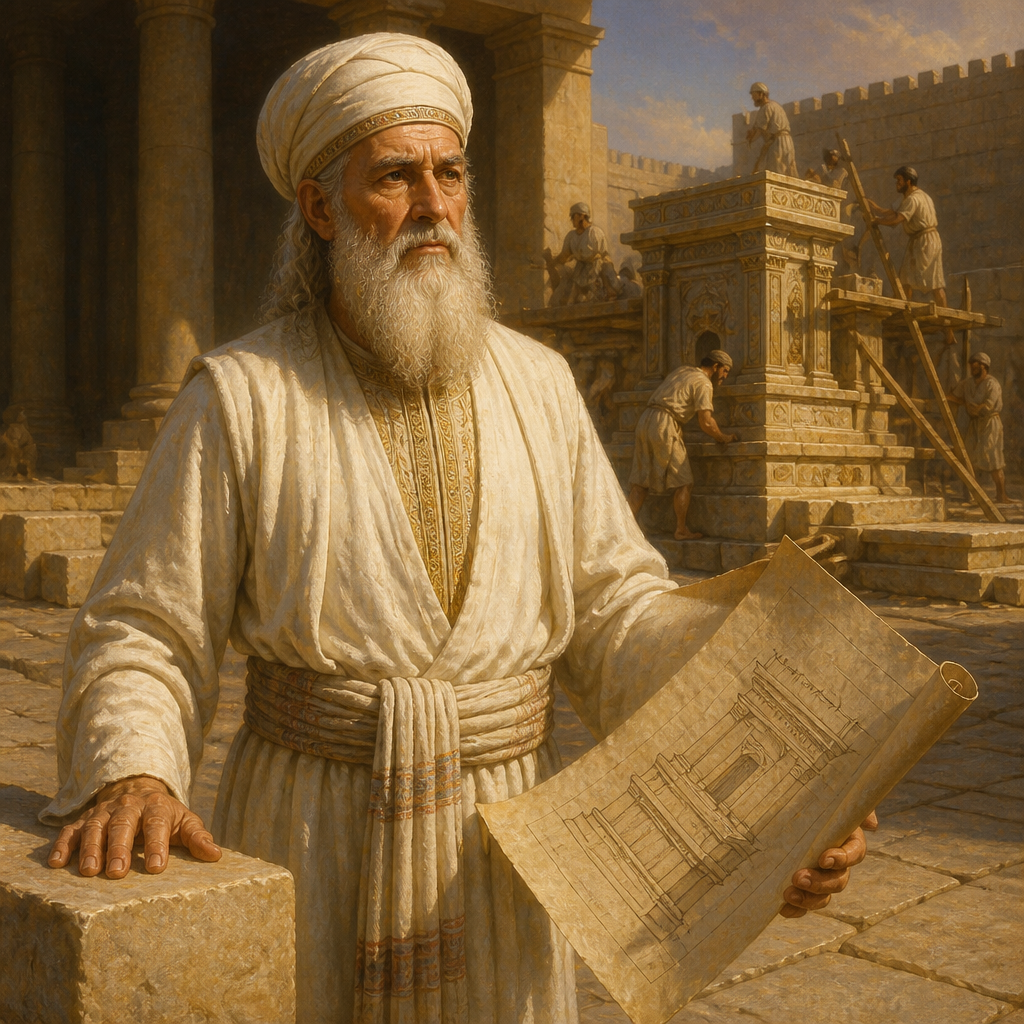
Uriah the Priest
Collaborator in Temple Desecration
Categories
Mentions by Book
- 2 Kings17
- 2 Chronicles9
- Isaiah7
- 1 Chronicles1
- Hosea1
- Matthew1
- Micah1
Family & Relationships
Child
2 Kings 15:38
Child
2 Kings 15:38
Spouse / partner
2 Kings 15:38
Spouse / partner
2 Kings 18:2
Parent
2 Kings 15:5
Others Named Ahaz
Ahaz, Descendant of Saul1 Chronicles 8:35
A Benjamite descendant of King Saul and Jonathan, mentioned in the genealogical records of the United Monarchy as a son of Micah and father of Jehoaddah.