Jotham, King of Judah
A righteous king of Judah who reigned for sixteen years, known for his building projects and for growing powerful by ordering his ways before the LORD.
Jotham was the eleventh king of the Southern Kingdom of Judah during the era of the Divided Monarchy. He was the son of King Uzziah (also known as Azariah) and Jerusha, the daughter of Zadok. His reign is characterized by a unique period of co-regency, as he took over the administration of the palace and the governance of the people while his father was still alive but incapacitated by leprosy.
Scripture portrays Jotham as a successful and godly monarch who avoided the prideful mistakes of his father. During his sixteen-year tenure in Jerusalem, he focused on strengthening the infrastructure of Judah, expanding its military fortifications, and asserting dominance over neighboring rivals such as the Ammonites. His reign occurred during a critical prophetic window, overlapping with the early ministries of Isaiah, Hosea, and Micah.
Background and Family
Jotham was born into the Davidic line during a period of relative prosperity and military strength for the Kingdom of Judah. His father, Uzziah, was a highly successful king who eventually fell into pride, attempting to burn incense in the Temple—a duty reserved solely for the priests. As a result, God afflicted Uzziah with leprosy. This event fundamentally shaped Jotham's entry into leadership. According to 2 Kings 15:5 and 2 Chronicles 26:21, Jotham assumed management of the royal palace and judicial duties while his father lived in isolation.
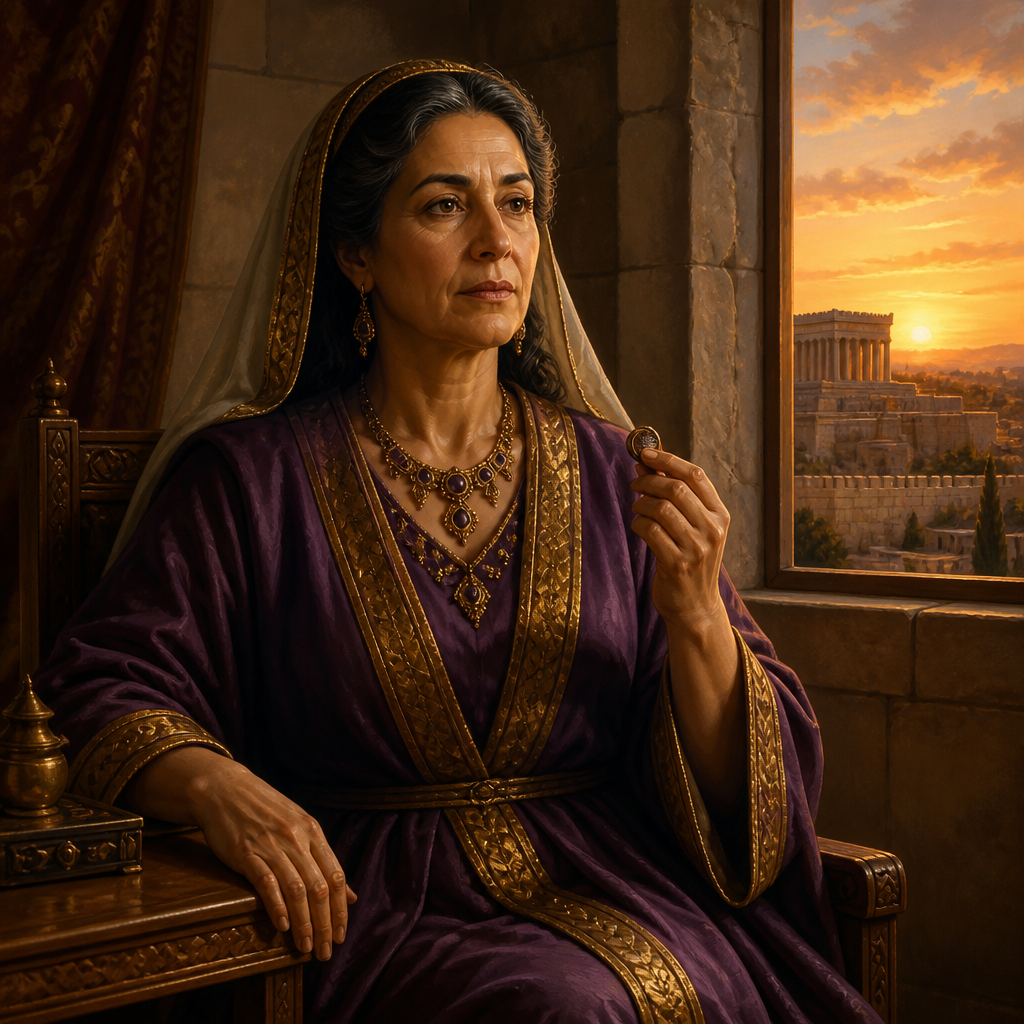
His mother was Jerusha, the daughter of Zadok. The mention of Zadok suggests a possible connection to the high-priestly line, which may have influenced Jotham’s lifelong respect for the sanctity of the Temple. Unlike many of his predecessors and successors, the biblical record identifies Jotham as a king who remained faithful to the LORD throughout his life.
Major Life Events
Jotham officially began his solo reign at the age of twenty-five (2 Chronicles 27:1). His administration was marked by significant architectural and military achievements. He is credited with building the Upper Gate of the Temple of the LORD and conducting extensive work on the wall of Ophel, a fortified area in Jerusalem. Beyond the capital, he built cities in the hill country of Judah and constructed forts and towers in the wooded areas to ensure national security.
His military prowess was demonstrated in his conflict with the Ammonites. Jotham defeated the king of the Ammonites and imposed a heavy tribute on them for three consecutive years: one hundred talents of silver, ten thousand cors of wheat, and ten thousand cors of barley. This victory underscored the expansion of Judah's influence during his reign.
The Chronicler summarizes his success in 2 Chronicles 27:6: "So Jotham grew powerful because he ordered his ways before the LORD his God." However, despite his personal righteousness, the biblical text notes that the people of Judah continued in their corrupt practices, and the high places (unauthorized sacrificial sites) were not removed.
Relationship to Other Biblical Figures
Jotham’s life is framed by his relationships with his predecessor, his successor, and the great prophets of the 8th century BC. He was the father of Ahaz, who would unfortunately become one of Judah’s most wicked kings. The transition from the stability of Jotham to the apostasy of Ahaz is one of the more jarring shifts in the history of the Divided Monarchy.
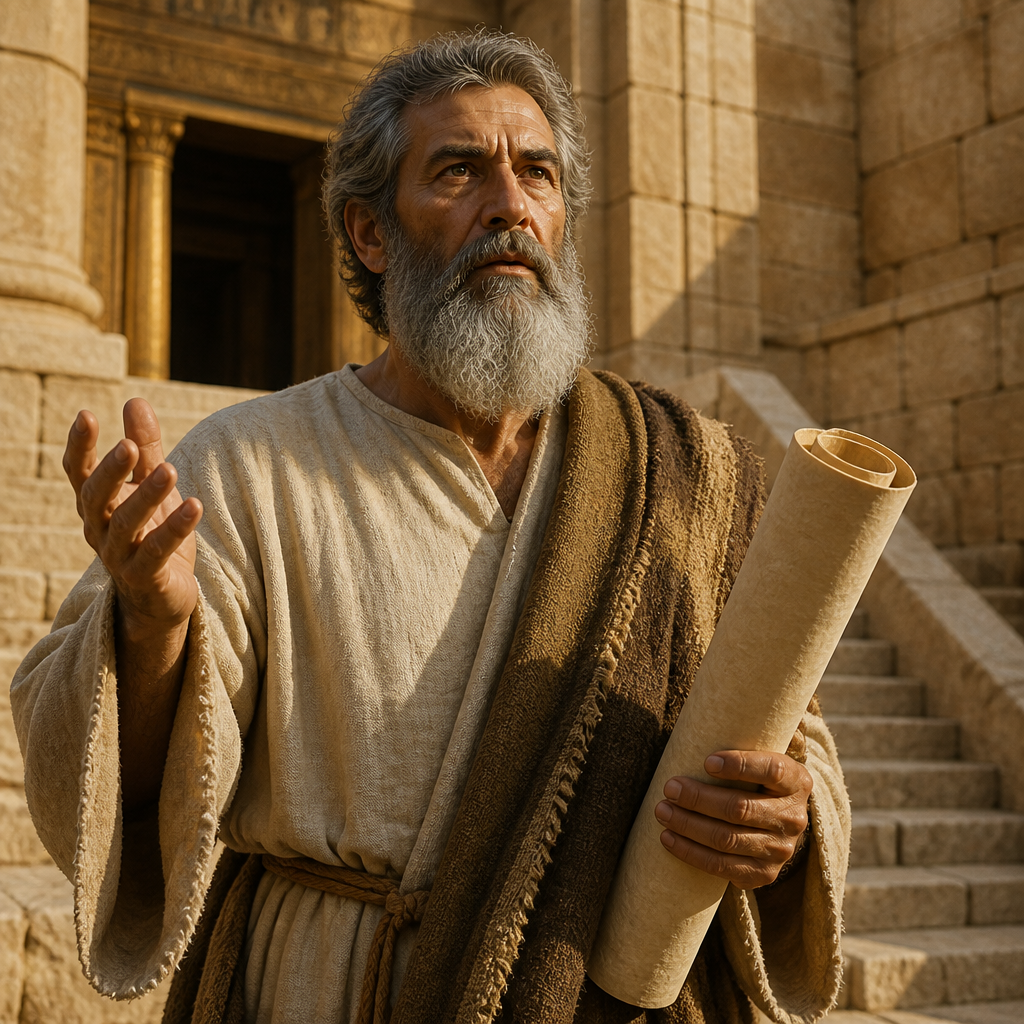
Jotham also lived during a time of intense prophetic activity. The books of Isaiah, Hosea, and Micah all identify Jotham’s reign as the starting point or early stage of their prophetic ministries (Isaiah 1:1, Hosea 1:1, Micah 1:1). While the biblical narrative does not record a direct interaction between Jotham and these prophets, his reign provided the political context for their warnings against the social and spiritual decay that persisted among the Judean population.
Spiritual Significance
Jotham serves as a model of consistency in the biblical narrative. He is one of the few kings of Judah about whom no specific sin or failure is recorded. The author of Kings notes that he did what was right in the eyes of the LORD, specifically following the good examples of his father Uzziah but avoiding Uzziah’s error of entering the Temple (2 Chronicles 27:2).
His legacy is one of "ordering one's ways." His strength was not merely the result of military strategy or economic planning, but a direct consequence of his spiritual alignment. Even so, his reign demonstrates the limitations of a righteous leader; while he himself was faithful, he could not unilaterally turn the hearts of the people back to God, setting the stage for the judgments that the prophets would later proclaim during the reigns of his descendants. Jotham is also preserved in the genealogy of Jesus Christ (Matthew 1:9), maintaining the messianic line through the turbulent years of the Divided Monarchy.
Spiritual Significance
Theologically, Jotham represents the principle that individual faithfulness leads to divine blessing and national strength. He is distinct among the kings of Judah for his steadfastness; the text highlights that he grew powerful specifically because he 'ordered his ways before the LORD.' His reign proves that it was possible to maintain the Davidic ideal even while surrounded by a corrupt populace and the rising threat of foreign powers like Aram and Israel.
Furthermore, Jotham acts as a bridge in the messianic lineage. By remaining faithful, he preserved the stability of the kingdom during a time when the Northern Kingdom was collapsing into chaos. His inclusion in the New Testament genealogy in Matthew 1:9 confirms his role as a link in the chain leading to the Messiah, demonstrating God's providence in keeping a 'lamp' for David in Jerusalem through righteous administrators.
Frequently Asked Questions
How long did Jotham reign?
Jotham reigned for sixteen years in Jerusalem, beginning at the age of twenty-five (2 Chronicles 27:1).
Why did Jotham become co-regent before his father died?
Jotham took over the governance of the land because his father, King Uzziah, was afflicted with leprosy after trying to burn incense in the Temple and was forced to live in isolation (2 Kings 15:5).
Which prophets were active during Jotham's reign?
The prophets Isaiah, Hosea, and Micah all began their ministries or were active during the time Jotham was king of Judah.
What military victories did Jotham achieve?
Jotham successfully defeated the Ammonites and forced them to pay a substantial tribute of silver, wheat, and barley for three years (2 Chronicles 27:5).
What were Jotham's major building projects?
He built the Upper Gate of the Temple, expanded the wall of Ophel, and established various cities, forts, and towers throughout the hill country and forests of Judah.
Connected Figures
Categories
Mentions by Book
- 2 Kings7
- 2 Chronicles6
- 1 Chronicles2
- Isaiah2
- Hosea1
- Matthew1
- Micah1
Family & Relationships
Child
2 Kings 15:5
Parent
2 Kings 15:33
Parent
2 Kings 14:21
Others Named Jotham
Jotham, Son of GideonJudges 9:5
The youngest of Gideon's seventy sons and the sole survivor of Abimelech's massacre, known for his prophetic parable against the leaders of Shechem.
Jotham, Son of Jahdai1 Chronicles 2:47
A member of the tribe of Judah and descendant of Caleb, listed as the second son of Jahdai in the genealogical records of the Divided Monarchy period.