Jerusha
Who was Jerusha in the Bible?
The daughter of Zadok, wife of King Uzziah, and mother of King Jotham, who served as Queen Mother during the Divided Monarchy of Judah.
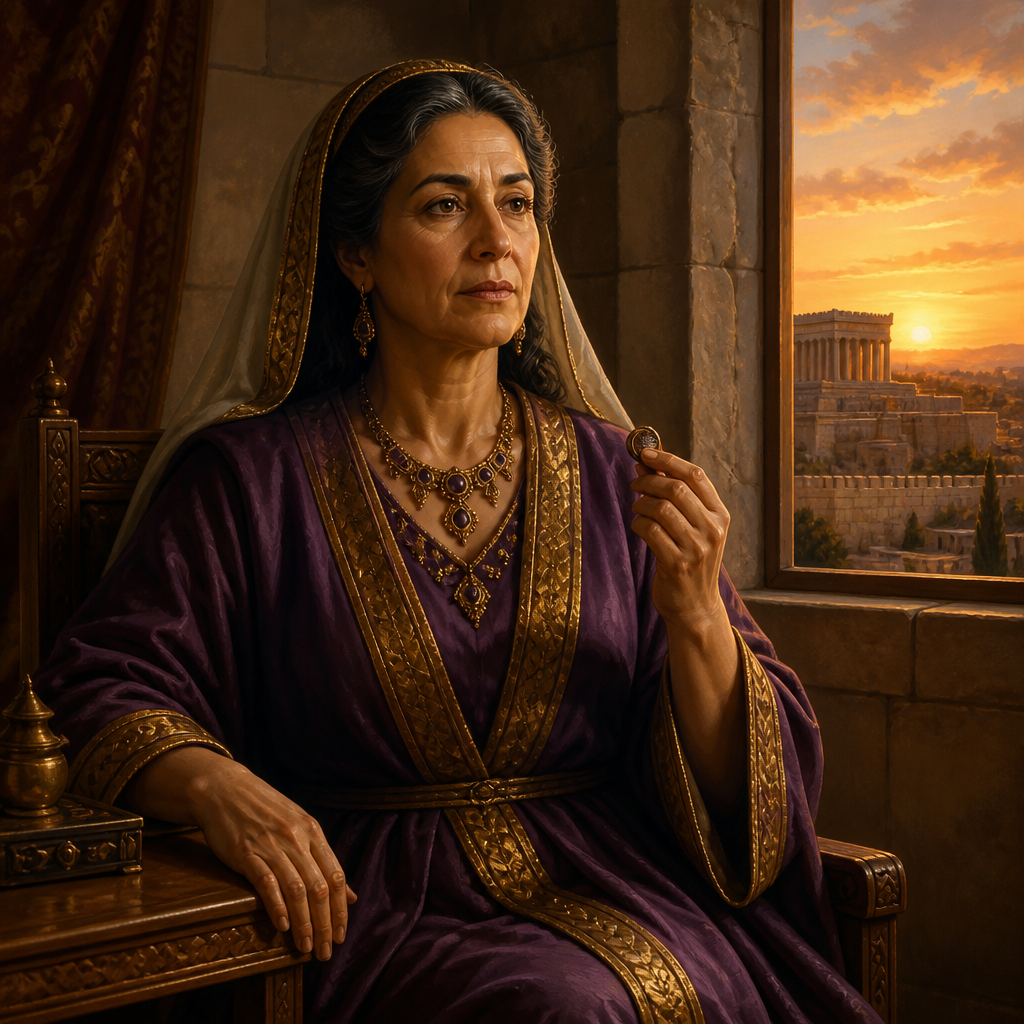
Jerusha (alternatively spelled Jerushah) was a significant female figure in the Davidic dynasty during the 8th century BC. As the wife of King Uzziah and the mother of King Jotham, she occupied a central position within the royal household of Judah during a period of transition and political stability. Her identity is preserved in the official annals of the Judean kings, specifically within the summary reports of Jotham’s ascension to the throne.
While the biblical record provides only brief mentions of her name and parentage, her inclusion in both the Books of Kings and Chronicles underscores her importance in establishing the legitimacy and lineage of King Jotham. In the context of the Divided Monarchy, the mention of a king's mother was a standard formal practice, highlighting the Queen Mother's role in the dynastic succession and the preservation of the Davidic line.
Background and Family
Jerusha lived during the middle of the 8th century BC, a time when the Kingdom of Judah was experiencing a period of relative prosperity and military strength under the long reign of her husband, Uzziah (also known as Azariah). According to 2 Kings 15:33 and 2 Chronicles 27:1, Jerusha was the daughter of a man named Zadok.
While the text does not explicitly identify this Zadok as a member of the high-priestly family, the name Zadok was historically associated with the line of high priests serving in the Jerusalem Temple. If Jerusha was indeed from a priestly background, her marriage to King Uzziah would have represented a powerful union between the Davidic monarchy and the religious leadership of Jerusalem. Such a connection would have been particularly relevant given Uzziah’s later conflict with the priesthood regarding his attempt to offer incense in the Temple (2 Chronicles 26:16-20).
Major Life Events
No specific biographical events are recorded for Jerusha beyond her role in the royal succession. However, her tenure as the wife of Uzziah would have coincided with one of the most stable periods in Judean history. Her son, Jotham, was twenty-five years old when he began his formal reign, which suggests Jerusha was present during the difficult years when Uzziah was afflicted with leprosy and Jotham served as regent over the palace and judge over the land (2 Kings 15:5).
Upon Jotham’s formal ascension to the throne following Uzziah’s death, Jerusha is officially named as the mother of the king. This title often conferred the status of Gebirah (Great Lady or Queen Mother), a position of significant influence in the Judean court. The mention of her name in 2 Chronicles 27:1 serves to validate Jotham’s credentials as a legitimate successor in the Davidic line.
Relationship to Other Biblical Figures
Jerusha’s primary significance in the biblical narrative is defined by her relationships to three men: her father Zadok, her husband Uzziah, and her son Jotham. Through these connections, she serves as a bridge between generations. By her husband Uzziah, she was part of a reign that saw the expansion of Judah's borders and the fortification of Jerusalem. Through her son Jotham, she is linked to a king who is described as doing "what was right in the eyes of the Lord" (2 Kings 15:34).
Notably, through her son Jotham, Jerusha is an ancestor to the subsequent kings of Judah, including Hezekiah and Josiah, and ultimately appears in the genealogical heritage that leads to the New Testament accounts of the lineage of Jesus Christ, although she is not mentioned by name in the Gospel genealogies.
Spiritual Significance
In the historiography of the Old Testament, the naming of the Queen Mother is rarely incidental. It serves to identify the lineage of the king and, in many cases, implies the influence the mother had on the king’s upbringing and his adherence to the covenant of Yahweh. Since Jotham is characterized as a righteous king who "ordered his ways before the Lord his God" (2 Chronicles 27:6), Jerusha is traditionally viewed by scholars as a figure who likely supported the religious traditions of her people, particularly if her father Zadok belonged to the priestly class.
While the biblical text remains silent on her personal character, her presence in the sacred record ensures that she is remembered as a vital link in the continuity of the Davidic promise during the Divided Monarchy.
Jerusha serves as a genealogical anchor for the Davidic line during the 8th century BC. Her inclusion in the regnal summaries of 2 Kings and 2 Chronicles highlights the importance of maternal lineage in the Judean monarchy, confirming the legitimacy of King Jotham. Her presence indicates the ongoing fulfillment of the Davidic covenant through successive generations.
Theologically, as the mother of a king noted for his righteousness, Jerusha represents the silent but essential role of the family structure in the spiritual health of the nation's leadership. Her identification as the daughter of Zadok further suggests a potential integration of priestly and royal influences within the household of Judah.
Frequently Asked Questions
Who was Jerusha's husband?
Jerusha was the wife of King Uzziah (also known as Azariah) of Judah.
Which king was the son of Jerusha?
Jerusha was the mother of King Jotham, who reigned over Judah for sixteen years.
Who was Jerusha's father?
Jerusha's father was a man named Zadok, who may have been related to the priestly line.
In which books of the Bible is Jerusha mentioned?
Jerusha is mentioned in 2 Kings 15:33 and 2 Chronicles 27:1.
What does the name Jerusha mean?
The name Jerusha (יְרוּשָׁא) is derived from the Hebrew root meaning 'possession' or 'inheritance'.
Family & Relationships
Parents
 Zadok, Grandfather of King JothamFather2 Kings 15:33Stated
 Uzziah, King of JudahHusband2 Kings 15:30
Inferred
No verse names Jerusha and Uzziah together; the husband link is carried from the surrounding genealogy and is not stated in Scripture.Evidence: 2 Kings 15:30; 2 Kings 15:32; 1 Chronicles 3:12; 2 Chronicles 27:1; Isaiah 7:1
 JerushaThis page
Children
 Jotham, King of JudahSon2 Chronicles 27:1Stated
Connected Figures
Family
Father · 2 Kings 15:33
Zadok was a man of the Divided Monarchy whose daughter, Jerusha, married King Uzziah and became the mother of King Jotham of Judah.
Husband · 2 Kings 15:30
The tenth king of Judah who enjoyed a long, prosperous reign marked by military success and agricultural growth, ended by his divine punishment with leprosy for usurping priestly duties.
Divided MonarchyFirst: 2 Kings 14:2136 versesKing of JudahJudah
Son · 2 Chronicles 27:1
A righteous king of Judah who reigned for sixteen years, known for his building projects and for growing powerful by ordering his ways before the LORD.
Divided MonarchyFirst: 2 Kings 15:522 versesKing of JudahJudah
Categories
Mentions by Book
- 2 Kings2
- 2 Chronicles1
Scripture References
All 3 indexed verses, in canonical order, from the Berean Standard Bible.
2 Kings · 2
- 2 Kings 14:21Partial
Then all the people of Judah took Azariah, who was sixteen years old, and made him king in place of his father Amaziah.
Cited as evidence on a family card; added so References, Key Verses and Mentions by Book share one index.
- 2 Kings 15:33
He was twenty-five years old when he became king, and he reigned in Jerusalem sixteen years. His mother’s name was Jerusha daughter of Zadok.
2 Chronicles · 1
- 2 Chronicles 27:1
Jotham was twenty-five years old when he became king, and he reigned in Jerusalem sixteen years. His mother’s name was Jerushah daughter of Zadok.