Achbor, Official of King Josiah
A high-ranking royal official and son of Micaiah who served under King Josiah of Judah during the discovery of the Book of the Law.
Achbor, son of Micaiah, was a prominent official in the royal court of Judah during the late seventh century BC. He served during the reign of King Josiah (reigned c. 640–609 BC), a period marked by significant religious reform and the geopolitical decline of the Assyrian Empire. Achbor is best known for his inclusion in the select delegation sent by the king to consult the prophetess Huldah following the discovery of the Book of the Law in the Temple.
While his own direct actions are limited in the biblical narrative to this specific diplomatic mission, his family’s influence extended into the following generation. Through his son, Elnathan, the house of Achbor remained at the center of Judean political life during the turbulent reigns of Jehoiakim and Zedekiah, eventually witnessing the final collapse of the Kingdom of Judah.
Background and Family
Achbor appears in the biblical record as the son of Micaiah (2 Kings 22:12). While the tribe of Achbor is not explicitly stated in the text, his high standing in the Jerusalem court suggests he belonged to the Judean aristocracy. In the parallel account found in 2 Chronicles 34:20, he is referred to as "Abdon son of Micah," though most scholars consider "Achbor" to be the primary historical rendering, supported by the genealogical references in the Book of Jeremiah.
Achbor’s status is evidenced by the prominence of his son, Elnathan. During the reign of King Jehoiakim (c. 609–598 BC), Elnathan served as a royal official who was dispatched to Egypt to extradite the prophet Uriah (Jeremiah 26:22) and was later among the officials who pleaded with the king not to burn the scroll of Jeremiah’s prophecies (Jeremiah 36:12, 25).
Major Life Events
The defining moment of Achbor’s career occurred in the eighteenth year of King Josiah’s reign (c. 622 BC). During renovations of the Temple of Solomon, the High Priest Hilkiah discovered a scroll identified as the "Book of the Law." When the contents were read to Josiah, the king tore his clothes in mourning, fearing the divine wrath incurred by generations of Judean disobedience.
Josiah immediately appointed a five-man commission to "inquire of the Lord" regarding the words of the scroll. Achbor was named alongside Hilkiah the priest, Ahikam son of Shaphan, Shaphan the scribe, and Asaiah the king’s servant. This delegation sought out the prophetess Huldah, who resided in the Second District of Jerusalem. Achbor was present as Huldah delivered a dual prophecy: an announcement of inevitable judgment upon Judah for its idolatry, followed by a promise of peace for Josiah because of his repentant heart.
Relationship to Other Biblical Figures
Achbor’s primary associations are with the circle of reformers surrounding Josiah. He worked closely with Shaphan the scribe and his son Ahikam. This specific network of families—the houses of Shaphan and Achbor—appears to have formed a pro-reform, and later pro-Jeremiah, faction within the Judean government. While Achbor’s son Elnathan was involved in the arrest of one prophet, he also showed restraint and counsel toward the word of God in the presence of Jehoiakim, suggesting a complex legacy of the family’s proximity to the throne.
Spiritual Significance
In the narrative of 2 Kings and 2 Chronicles, Achbor represents the administrative arm of Josiah's religious revival. His inclusion in the embassy to Huldah highlights the cooperation between the crown and the prophetic office. For the biblical authors, Achbor is a witness to the rediscovery of the covenantal foundations of Israel. His presence underscores that the reforms of Josiah were not merely personal pietism but were supported by the highest levels of the Judean state apparatus.
Spiritual Significance
Achbor serves as a historical marker of the administrative support behind the Josian reforms. His role in the delegation to Huldah validates the urgency with which the Judean leadership treated the rediscovered Law, bridging the gap between the discovery of the text and its implementation as national policy. Furthermore, his lineage provides a genealogical link to the later officials mentioned in Jeremiah, illustrating the continuity of the Judean court during the kingdom's final decades.
Frequently Asked Questions
What does the name Achbor mean?
The name Achbor (עַכְבּוֹר) translates literally to 'mouse' or 'rushing' in Hebrew.
Was Achbor a priest?
No, Achbor was a royal official or courtier. While he worked alongside Hilkiah the High Priest, the text identifies him by his father Micaiah and his service to King Josiah, not by priestly lineage.
Is Achbor mentioned in books other than Kings?
Yes, he is mentioned in 2 Chronicles (where he is called Abdon) and twice in the Book of Jeremiah in reference to his son, Elnathan.
Why did Josiah send Achbor to Huldah?
Josiah sent Achbor as part of a high-level delegation to verify the spiritual implications of the newly found 'Book of the Law' and to seek divine guidance for the nation.
Connected Figures
Josiah
King he served
Micaiah
Father
Elnathan
Son
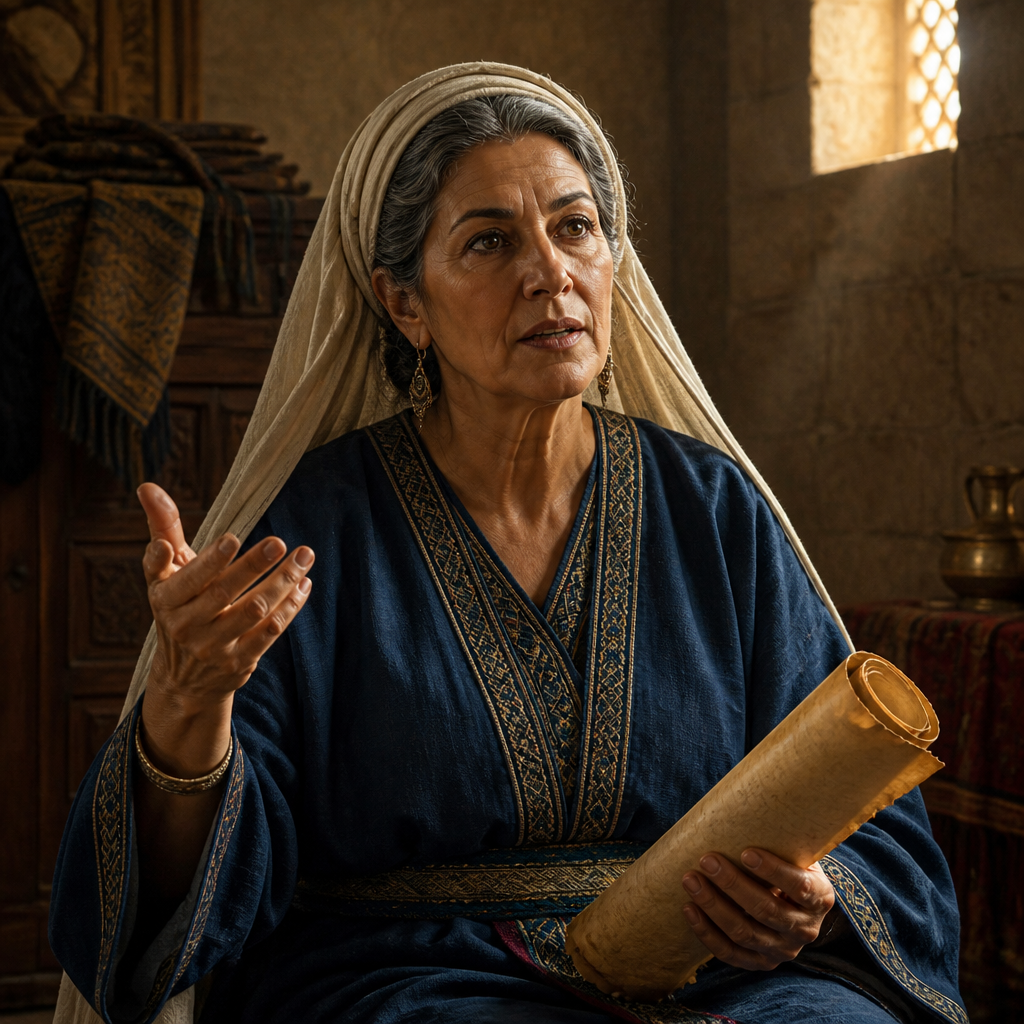
Huldah
Prophetess he consulted
Hilkiah
Associate and High Priest
Categories
Mentions by Book
- 2 Kings2
- Jeremiah2
- 2 Chronicles1
Family & Relationships
Child
2 Kings 22:12
Parent
2 Kings 22:12
Others Named Achbor
Achbor, Father of Baal-hananGenesis 36:38
Achbor was an Edomite patriarch whose son, Baal-hanan, served as the seventh recorded king of Edom during the pre-Israelite monarchical period.