Abijah, King of Judah
The second king of the Southern Kingdom of Judah who famously defeated Jeroboam I on Mount Zemaraim to reclaim territory for the Davidic line.
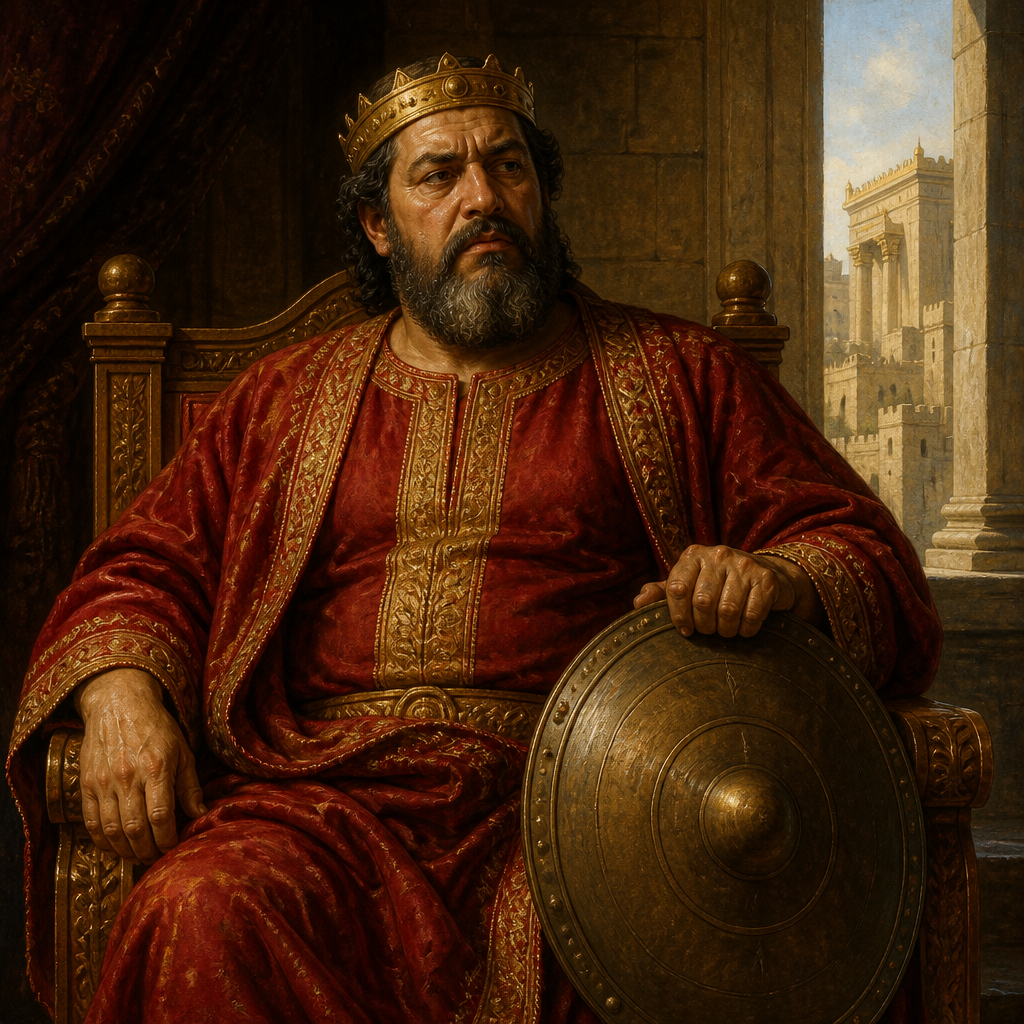
Abijah, also referred to in the Book of Kings as Abijam, was the second monarch of the Kingdom of Judah following the division of the United Monarchy. He was the son of Rehoboam and the grandson of Solomon, placing him directly in the royal Davidic lineage. His reign, though brief—lasting only three years from approximately 913 BC to 911 BC—was marked by a significant military victory over the Northern Kingdom of Israel and a fervent defense of the Temple worship established in Jerusalem.
Despite the brevity of his rule, the biblical record highlights Abijah as a pivotal figure who attempted to reunify the fractured tribes under the banner of the Davidic covenant. While the author of Kings offers a nuanced view of his spiritual life, the chronicler provides a detailed account of his military prowess and his reliance on the Lord during a time of existential threat from the larger northern forces led by Jeroboam I.
Background and Family
Abijah was born into the royal house of Judah during the volatile period following the death of Solomon. His father was Rehoboam, the first king of the Divided Monarchy, and his mother was Maacah (also called Micaiah), the daughter of Absalom (or Uriel of Gibeah). The biblical record in 2 Chronicles 11:21-22 notes that Abijah was the favorite son of Rehoboam. Despite having eighteen wives and sixty concubines, Rehoboam loved Maacah more than all others and specifically appointed Abijah as the "chief prince" among his brothers, signaling his intention to make him king above his siblings Attai, Ziza, Shelomith, Jeush, Shemariah, and Zaham.
Abijah's upbringing was likely characterized by the religious syncretism that plagued his father's reign, yet he remained focused on the political and religious legitimacy of the Jerusalem throne. He eventualy married fourteen wives and fathered twenty-two sons and sixteen daughters, ensuring the continuation of the Davidic line.
Major Life Events
Abijah ascended to the throne in the eighteenth year of King Jeroboam I of Israel. His reign was defined by the ongoing conflict between the two Hebrew kingdoms. The most significant event recorded is the Battle of Mount Zemaraim. Abijah led an army of 400,000 men against Jeroboam’s force of 800,000.
Before the battle commenced, Abijah stood on the heights of Mount Zemaraim and delivered a powerful oration to the northern tribes. He argued for the divine right of the Davidic dynasty, citing a "covenant of salt"—an irrevocable, perpetual agreement made by God with David. He contrasted Judah’s adherence to the Levitical priesthood and the daily sacrifices in the Temple with Israel’s golden calves and the appointment of non-Levitical priests.
"But as for us, the LORD is our God, and we have not forsaken Him... for we keep the charge of the LORD our God, but you have forsaken Him." (2 Chronicles 13:10-11)
During the speech, Jeroboam attempted a pincer movement, sending an ambush behind the Judean lines. Finding themselves surrounded, the men of Judah cried out to the Lord, and the priests sounded the trumpets. The record states that God routed Jeroboam, resulting in a staggering loss of 500,000 Israelite soldiers. This victory allowed Abijah to capture several key northern cities, including Bethel, Jeshanah, and Ephron, significantly weakening Jeroboam's influence for the remainder of Abijah’s life.
Relationship to Other Biblical Figures
Abijah’s primary relationships were defined by his ancestry and his rivalry. As the son of Rehoboam, he inherited a kingdom diminished by the Egyptian invasion of Shishak and the secession of the ten tribes. His relationship with his son and successor, Asa, is noted for the transition of power; while Abijah secured the borders through war, his son Asa inherited a land that was at peace for ten years following Abijah’s death.
His antagonistic relationship with Jeroboam I served as the catalyst for his most famous deeds. By challenging Jeroboam not just on military grounds but on theological ones, Abijah positioned himself as the defender of the orthodox worship of Yahweh against the innovations of the northern king.
Spiritual Significance
The spiritual evaluation of Abijah differs between the books of Kings and Chronicles. 1 Kings 15:3 offers a critical view, stating that his heart was not fully devoted to the Lord his God, as the heart of David his father had been. However, 2 Chronicles emphasizes his public commitment to the Law and the Temple during the crisis of battle.
Theologically, Abijah represents the preservation of the Messianic line. His inclusion in the genealogy of Jesus Christ (Matthew 1:7) underscores the continuity of God’s promise to David despite the personal failings of individual kings. His victory on Mount Zemaraim is often cited as a testament to the efficacy of corporate prayer and reliance on God’s covenant when facing overwhelming odds.
Spiritual Significance
Abijah serves as a vital link in the Davidic dynasty, bridging the gap between the erratic reign of Rehoboam and the reforms of Asa. His speech on Mount Zemaraim is one of the most significant theological defenses of the Davidic covenant in the Old Testament, articulating the distinction between the divinely sanctioned priesthood in Jerusalem and the unauthorized worship practices of the Northern Kingdom.
Furthermore, Abijah is significant for his inclusion in the Gospel of Matthew’s genealogy of Jesus. This confirms that despite his short reign and mixed spiritual legacy, he was an essential part of the lineage leading to the Messiah. His life illustrates the biblical theme that God can use the political and military actions of kings to preserve His covenantal purposes for the nation of Israel and the world.
Frequently Asked Questions
Was Abijah the same person as Abijam?
Yes. In the Book of 1 Kings, he is referred to as Abijam, while the Book of 2 Chronicles and the Gospel of Matthew use the name Abijah.
How long did Abijah reign over Judah?
Abijah had a very short reign of only three years, from the 18th to the 20th year of King Jeroboam I of Israel (c. 913–911 BC).
Who was Abijah’s mother?
His mother is identified as Maacah (or Micaiah), the daughter of Absalom or Uriel of Gibeah. She was the favorite wife of King Rehoboam.
What major battle did Abijah win?
He won the Battle of Mount Zemaraim against Jeroboam I of Israel, where his army of 400,000 defeated an army of 800,000 through divine intervention.
Is Abijah mentioned in the New Testament?
Yes, Abijah is listed in the genealogy of Jesus Christ found in Matthew 1:7.
Connected Figures
Categories
Mentions by Book
- 2 Chronicles14
- 1 Kings4
- 1 Chronicles1
- Matthew1
Family & Relationships
Child
1 Kings 14:31
Sibling
1 Kings 14:31
Sibling
1 Kings 14:31
Sibling
1 Kings 14:31
Sibling
1 Kings 14:31
Sibling
1 Kings 14:31
Sibling
1 Kings 14:31
Parent
1 Kings 11:43
Parent
1 Kings 15:2
Sibling
2 Chronicles 11:20
Sibling
2 Chronicles 11:19
Sibling
2 Chronicles 11:20
Sibling
2 Chronicles 11:19
Sibling
2 Chronicles 11:19
Sibling
2 Chronicles 11:20
Others Named Abijah
Abijah, Priest of the RestorationNehemiah 10:7
A prominent priest who returned from the Babylonian exile and signed the solemn covenant to observe God's law under Nehemiah.
Abijah, Son of Jeroboam1 Kings 14:1
The young son of King Jeroboam I of Israel whose illness and subsequent death served as a divine judgment against his father's dynasty.
Abijah, Son of Becher1 Chronicles 7:8
A grandson of the patriarch Benjamin and son of Becher, recognized in the biblical genealogies as a head of a family within the tribe of Benjamin during the era of the Egyptian sojourn.
Abijah, Priest of the Divided Monarchy1 Chronicles 24:10
A descendant of Aaron through Eleazar whose priestly course served as a foundational division for Temple service from the era of David through the first century AD.
Abijah, Son of Samuel1 Samuel 8:2
Abijah was the second son of the prophet Samuel and served as a judge in Beersheba during the final years of the United Monarchy's transition.