Abijah, Priest of the Divided Monarchy
A descendant of Aaron through Eleazar whose priestly course served as a foundational division for Temple service from the era of David through the first century AD.
Abijah (also rendered Abia in some translations) was a priest of Israel whose significance lies primarily in his role as the head of the eighth priestly division established during the Divided Monarchy period. As a descendant of Aaron, Abijah was part of the organizational restructuring of the Levitical priesthood intended to ensure orderly and perpetual service within the Tabernacle and, subsequently, the Temple in Jerusalem.
While the biblical record provides no details regarding his personal life, family, or specific deeds, his name remains immortalized through the 'Division of Abijah.' This organizational unit became a permanent fixture in the religious life of Israel, maintaining its identity even through the Babylonian exile and into the New Testament era, where it served to identify the lineage of significant figures in the life of Christ.
Background and Family
The biblical record for this specific Abijah begins in the genealogical and organizational records of 1 Chronicles. As a member of the tribe of Levi and the line of Aaron, Abijah was a priest by birthright. During the late stages of King David’s reign and the transition into the Divided Monarchy, the priesthood was organized into twenty-four distinct courses or divisions. This was necessitated by the sheer number of priests available for service, which far exceeded the daily requirements of the sanctuary.
According to 1 Chronicles 24, these divisions were determined by lot to prevent favoritism and to ensure that all descendants of Aaron’s sons, Eleazar and Ithamar, had an equitable opportunity to serve. Abijah was selected by lot for the eighth course.
The seventh to Hakkoz, the eighth to Abijah (1 Chronicles 24:10)
Major Life Events
There are no specific biographical events recorded for Abijah himself. His importance is entirely functional and representative. As the head of the eighth division, he was responsible for leading a specific group of priests who would travel to Jerusalem twice a year to perform the sacred duties of the Temple for one week at a time.
These duties included the offering of daily sacrifices, the maintenance of the lampstand, the burning of incense, and the management of the Showbread. The establishment of his division ensured that the worship of Yahweh remained constant and orderly, a hallmark of the liturgical reforms that characterized the peak of the Israelite monarchy.
Relationship to Other Biblical Figures
While Abijah lived during the Old Testament period, his most significant connection in the biblical narrative appears centuries later in the Gospel of Luke. The text identifies Zechariah, the father of John the Baptist, as a member of the "priestly division of Abijah" (Luke 1:5).
In the time of Herod king of Judea there was a priest named Zechariah, who belonged to the priestly division of Abijah; and his wife Elizabeth was also a descendant of Aaron. (Luke 1:5)
This connection demonstrates the longevity and continuity of the division Abijah founded. Despite the political upheavals, the destruction of the First Temple, and the subsequent return from exile, the lineage and the specific course of Abijah remained a recognized and vital part of Jewish identity and Temple service up until the time of Herod the Great.
Spiritual Significance
The spiritual significance of Abijah lies in the concept of divine order and the preservation of the priesthood. The division of Abijah represents the faithfulness of God in maintaining the sacrificial system across generations. By tracing Zechariah’s lineage back to the course of Abijah, the New Testament authors validate the legitimacy of John the Baptist’s priestly heritage. It serves as a bridge between the ancient Davidic organization of the Divided Monarchy and the beginning of the Messianic age, showing that God works through established covenants and historical structures to bring about His plan of redemption.
Spiritual Significance
Abijah’s primary theological importance is his role in the continuity of the Aaronic priesthood. As the head of the eighth course of priests, he represents the orderly administration of God's house. His inclusion in the New Testament record via Zechariah underscores the historical reliability of the biblical narrative, linking the Old Testament liturgical laws directly to the events surrounding the birth of Christ.
Frequently Asked Questions
What was the 'division of Abijah'?
It was the eighth of twenty-four groups of priests who served in the Temple on a rotating basis. Each division served for one week, twice a year.
Who was the most famous member of Abijah's division?
Zechariah, the father of John the Baptist, is the most famous member mentioned in the Bible.
How was Abijah chosen for his position?
He was chosen by lot during the organization of the priesthood under the administration of King David and the high priests Zadok and Ahimelek.
Why is Abijah mentioned in the New Testament?
He is mentioned in Luke 1:5 to identify the priestly lineage and legitimate service of Zechariah, the father of John the Baptist.
Connected Figures
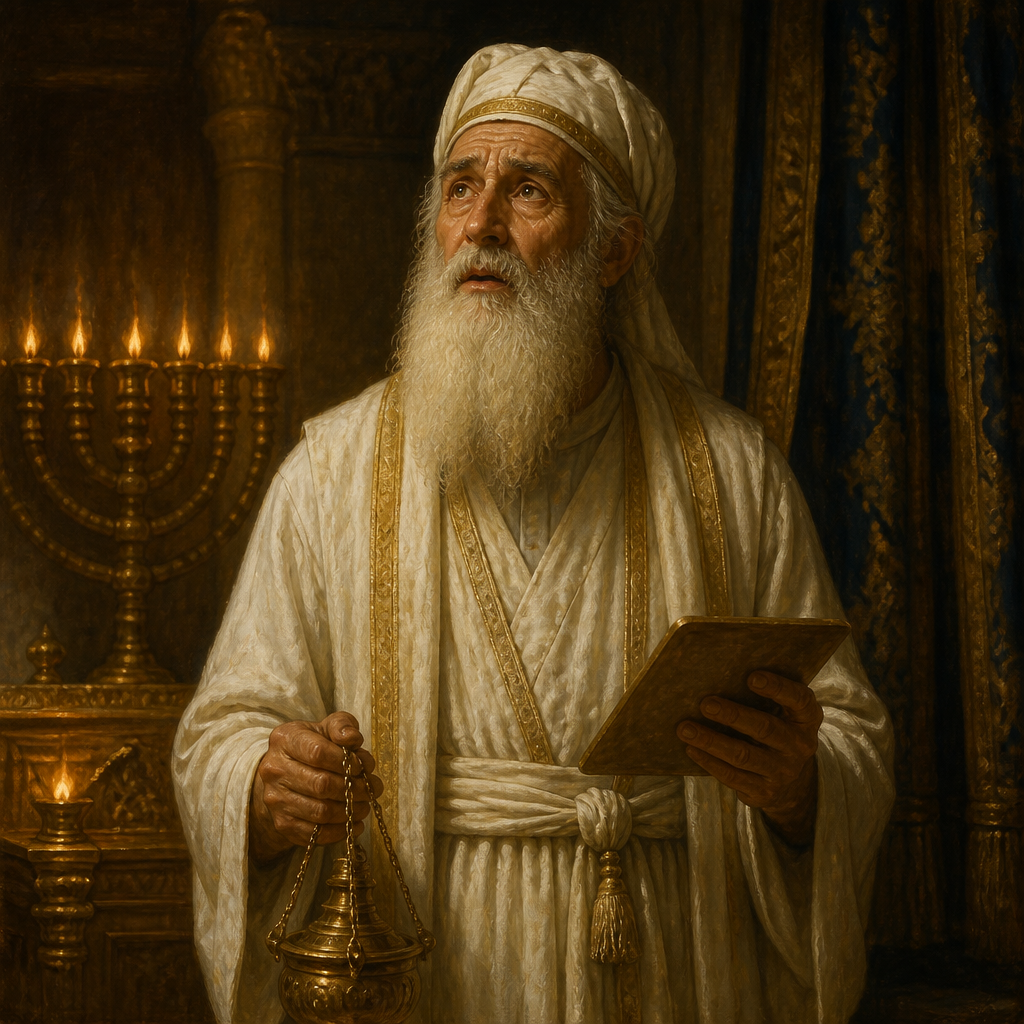
Zechariah, Father of John the Baptist
Descendant/Member of his priestly division
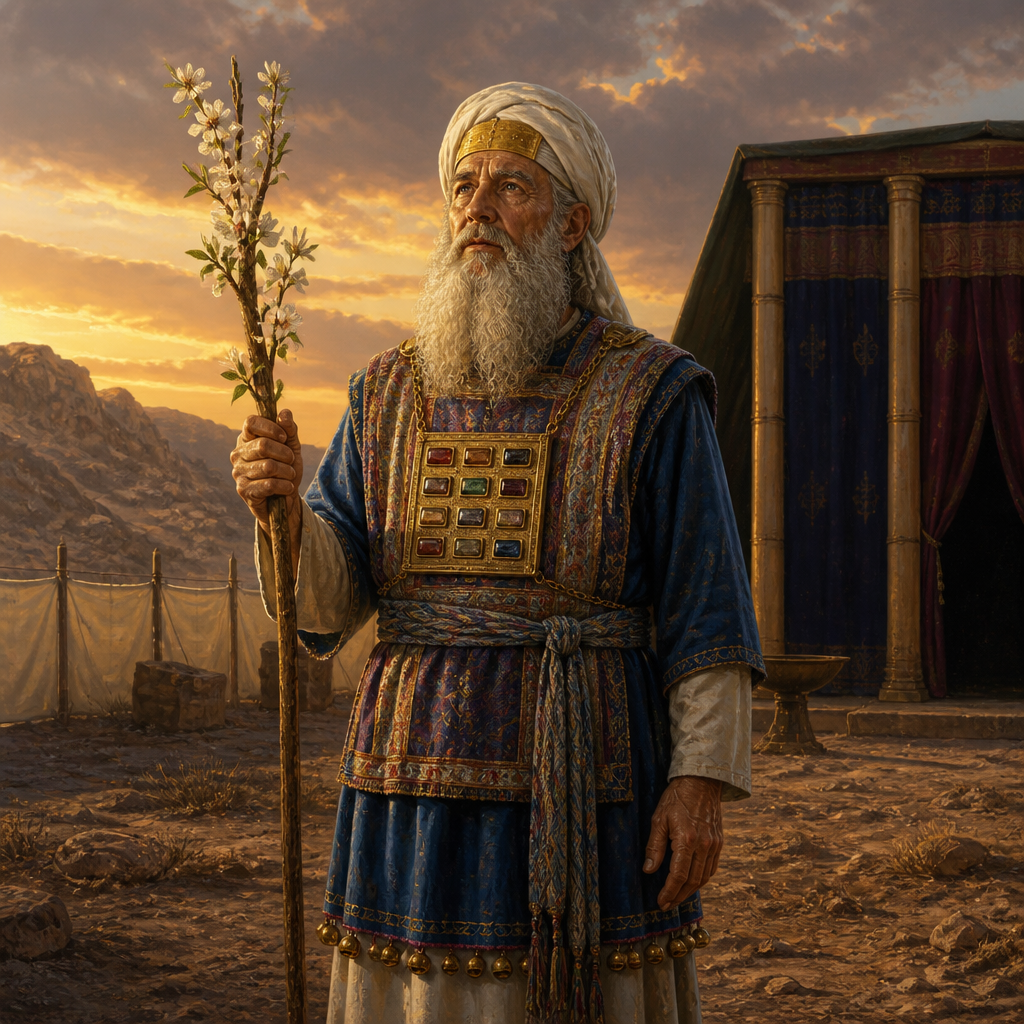
Aaron
Ancestral patriarch of his line
Eleazar
Ancestor through whom his lineage was traced
Categories
Mentions by Book
- 1 Chronicles1
- Luke1
Others Named Abijah
Abijah, Priest of the RestorationNehemiah 10:7
A prominent priest who returned from the Babylonian exile and signed the solemn covenant to observe God's law under Nehemiah.
Abijah, Son of Jeroboam1 Kings 14:1
The young son of King Jeroboam I of Israel whose illness and subsequent death served as a divine judgment against his father's dynasty.
Abijah, Son of Becher1 Chronicles 7:8
A grandson of the patriarch Benjamin and son of Becher, recognized in the biblical genealogies as a head of a family within the tribe of Benjamin during the era of the Egyptian sojourn.
Abijah, King of Judah1 Chronicles 3:10
The second king of the Southern Kingdom of Judah who famously defeated Jeroboam I on Mount Zemaraim to reclaim territory for the Davidic line.
Abijah, Son of Samuel1 Samuel 8:2
Abijah was the second son of the prophet Samuel and served as a judge in Beersheba during the final years of the United Monarchy's transition.