Abijah, Son of Becher
Who was Abijah, Son of Becher, in the Bible?
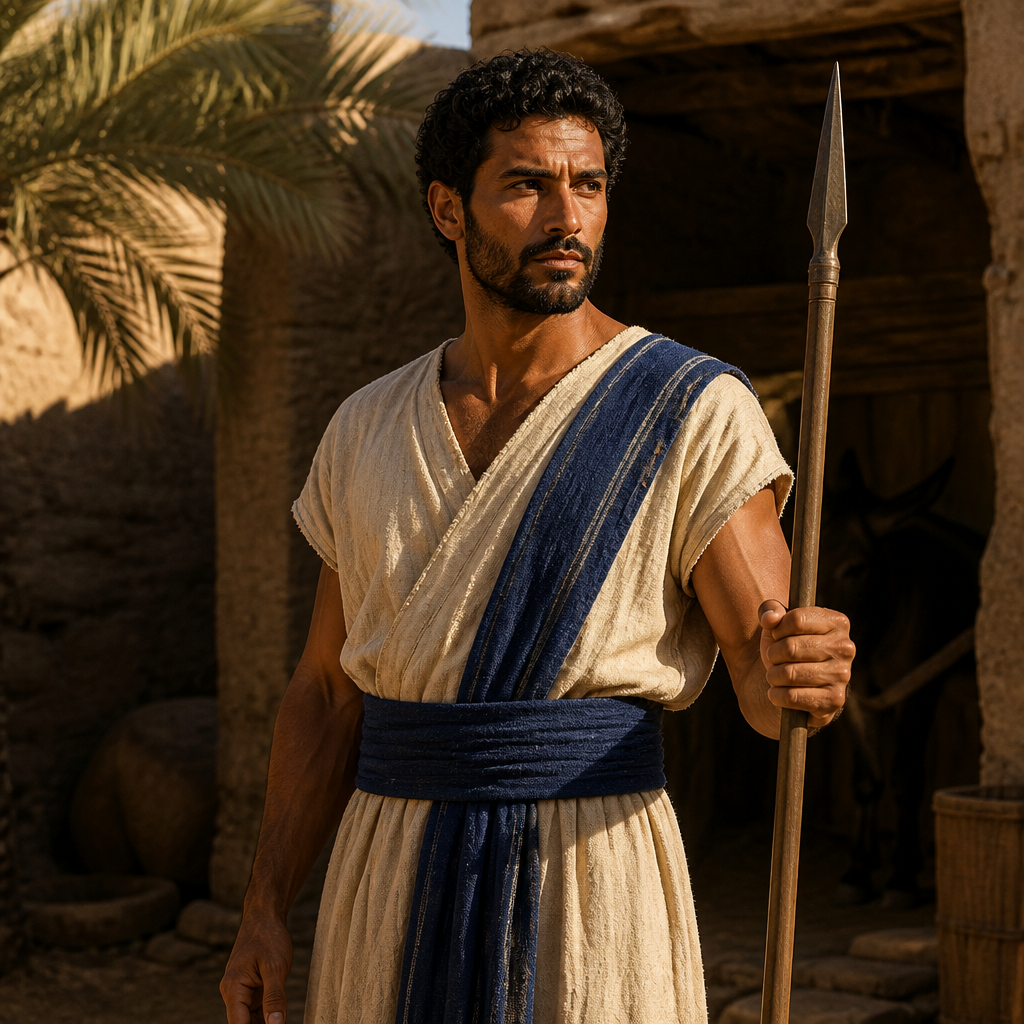
A grandson of the patriarch Benjamin and son of Becher, recognized in the biblical genealogies as a head of a family within the tribe of Benjamin during the era of the Egyptian sojourn.
This is one of 6 people named Abijah in the Bible. See all 6 →
Abijah was a member of the tribe of Benjamin during the formative years of the Israelite nation. He is identified specifically as one of the nine sons of Becher, who was himself the second son of the patriarch Benjamin. This placement within the genealogy suggests that Abijah lived during the period when the descendants of Jacob were multiplying within the land of Egypt and preparing for the eventual exodus to the Promised Land.
While personal details regarding his individual deeds are absent from the text, Abijah’s inclusion in the record of 1 Chronicles 7 serves a vital role in establishing the lineage and strength of the Benjamite clans. As a son of Becher, he contributed to a family line that was later characterized as consisting of 'mighty men of valor,' a designation that highlights the martial reputation and social standing of his immediate household.
Background and Family
Abijah appears in the biblical record within the specific genealogical framework of the tribe of Benjamin. According to 1 Chronicles 7:8, he was the son of Becher. Becher is listed as the second son of Benjamin, the youngest son of the patriarch Jacob and Rachel. Abijah was part of a large household; he is listed alongside eight brothers: Zemirah, Joash, Eliezer, Elioenai, Omri, Jeremoth, Anathoth, and Alemeth.
The timeline for Abijah’s life corresponds to the Egyptian Sojourn. As the grandson of Benjamin, he represents the third generation of Israelites living in Egypt. During this era, the family of Jacob transitioned from a nomadic clan into a burgeoning nation. The chronicler notes that the sons of Becher were considered heads of their fathers' houses and were counted by their genealogies as 'mighty men of valor' (1 Chronicles 7:9). This suggests that Abijah was not merely a passive descendant but part of a structured, influential family unit within the tribal hierarchy.
Major Life Events
The biblical text does not record specific narrative events, speeches, or geographical movements for Abijah beyond his inclusion in the tribal lists. His primary 'event' is his identification as a foundational member of the Becherite branch of Benjamin. In the context of 1 Chronicles, which was written to restore the identity of the Israelite people after the Babylonian exile, the mention of Abijah serves to document the preservation of the Benjamite line through the centuries of Egyptian residence.
Relationship to Other Biblical Figures
Abijah’s identity is defined entirely through his kinship. He is the grandson of the patriarch Benjamin, linking him directly to the twelve tribes of Israel. His father, Becher, is a significant figure whose name means 'firstborn' or 'young camel,' and who is noted for having a large and resilient progeny. Abijah’s siblings—specifically Anathoth and Alemeth—are unique in that their names are also preserved as names of Levite cities within the territory of Benjamin, suggesting a long-lasting geographical legacy for this specific branch of the family.
Spiritual Significance
The spiritual significance of Abijah lies in the concept of divine remembrance and the fulfillment of the Abrahamic covenant. In the genealogical lists of the Old Testament, the naming of individuals like Abijah reinforces the theme that God knows his people by name, even those who do not perform grand miracles or lead armies.
Furthermore, the description of his family as 'mighty men of valor' indicates a legacy of strength and readiness. Abijah represents the early roots of this tribal tenacity. His name, which translates to 'the LORD is my father,' is also noteworthy as one of the earliest instances of a theophoric name (containing a form of the name of God, the LORD) appearing in the tribal lineages, signaling a recognition of God's sovereignty even during the years of residence in Egypt.
Abijah serves as a genealogical link in the tribe of Benjamin, ensuring the continuity of the covenant line from the patriarchs to the eventual establishment of the nation in Canaan. His inclusion among the 'mighty men of valor' highlights the early development of Benjamin's reputation for military strength.
Theologically, Abijah's name—'the LORD is my Father'—points to an early tribal acknowledgement of God's paternal relationship with Israel. Though he is a minor figure, his place in the sacred record emphasizes that every member of the covenant community, regardless of their individual fame, is essential to the historical unfolding of God's plan.
Frequently Asked Questions
Who was Abijah's father?
Abijah was the son of Becher, who was the son of Benjamin.
Which tribe did Abijah belong to?
Abijah belonged to the tribe of Benjamin.
How many brothers did Abijah have?
Abijah had eight brothers listed in the Bible: Zemirah, Joash, Eliezer, Elioenai, Omri, Jeremoth, Anathoth, and Alemeth.
What does the name Abijah mean?
The name Abijah (אֲבִיָּה) means 'Yahweh is my father' or 'My father is Yahweh'.
In which book of the Bible is this Abijah mentioned?
This specific Abijah is mentioned only in 1 Chronicles 7:8.
Family & Relationships
Parents
 Becher, Son of BenjaminFather1 Chronicles 7:8Stated
 Abijah, Son of BecherThis page
 Alemeth, Son of BecherBrother1 Chronicles 7:8Stated
 Anathoth, Son of BecherBrother1 Chronicles 7:8Stated
 Eliezer, Son of BecherBrother1 Chronicles 7:8Stated
 Elioenai, Son of BecherBrother1 Chronicles 7:8Stated
 Jeremoth, Son of BecherBrother1 Chronicles 7:8Stated
 Joash, Son of BecherBrother1 Chronicles 7:8Stated
 Omri, Son of BecherBrother1 Chronicles 7:8Stated
 ZemirahBrother1 Chronicles 7:8Stated
Connected Figures
Family
Father · 1 Chronicles 7:8
Becher was a son of the patriarch Benjamin who migrated to Egypt with his family and became a foundational ancestor of a major Benjamite clan.
Brother · 1 Chronicles 7:8
Alemeth was a prominent descendant of Benjamin and a son of Becher, listed among the heads of families during the Egyptian sojourn and wilderness era.
Brother · 1 Chronicles 7:8
Anathoth was a descendant of Benjamin through Becher, listed as a prominent head of a household during the Israelite sojourn in Egypt and the Wilderness.
Egypt and WildernessFirst: 1 Chronicles 7:81 versesHead of a tribal householdBenjamin
Brother · 1 Chronicles 7:8
Eliezer was a descendant of the tribe of Benjamin, specifically the third named son of Becher.
Egypt and WildernessFirst: 1 Chronicles 7:81 versesmighty man of valorBenjamin
Brother · 1 Chronicles 7:8
A Benjamite descendant and son of Becher, recorded in the genealogies of 1 Chronicles during the Egyptian Sojourn and Wilderness era.
Brother · 1 Chronicles 7:8
A Benjamite descendant and son of Becher recorded in the genealogical records of the tribe of Benjamin during the era of Egypt and the Wilderness.
Egypt and WildernessFirst: 1 Chronicles 7:81 versesHead of a paternal houseBenjamin
Brother · 1 Chronicles 7:8
Joash was a son of Becher and a grandson of the patriarch Benjamin, recorded as a tribal leader and head of a father's house during the Egyptian sojourn.
Brother · 1 Chronicles 7:8
A Benjamite listed in the genealogies of 1 Chronicles, identified as a son of Becher and a descendant of the patriarch Jacob.
Egypt and WildernessFirst: 1 Chronicles 7:81 verseswarriorBenjamin
Brother · 1 Chronicles 7:8
Zemirah was the firstborn son of Becher and a grandson of the patriarch Benjamin, listed in the tribal genealogies of 1 Chronicles.
Categories
Mentions by Book
- 1 Chronicles1
Scripture References
All 1 indexed verse, in canonical order, from the Berean Standard Bible.
1 Chronicles · 1
- 1 Chronicles 7:8
The sons of Becher: Zemirah, Joash, Eliezer, Elioenai, Omri, Jeremoth, Abijah, Anathoth, and Alemeth; all these were Becher’s sons.
Others Named Abijah
Compare all 6 bearers →Abijah, Priest of the RestorationNehemiah 10:7
A prominent priest who returned from the Babylonian exile and signed the solemn covenant to observe God's law under Nehemiah.
Abijah, Son of Jeroboam1 Kings 14:1
The young son of King Jeroboam I of Israel whose illness and subsequent death served as a divine judgment against his father's dynasty.
Abijah, King of Judah1 Kings 15:3
The second king of the Southern Kingdom of Judah who famously defeated Jeroboam I on Mount Zemaraim to reclaim territory for the Davidic line.
Abijah, Priest of the United Monarchy1 Chronicles 24:10
A descendant of Aaron through Eleazar whose priestly course served as a foundational division for Temple service from the era of David through the first century AD.
Abijah, Son of Samuel1 Samuel 8:2
Abijah was the second son of the prophet Samuel and served as a judge in Beersheba during the final years of the era of the conquest and the judges's transition.