Abimelech, Son of Gideon
A son of Gideon who usurped power as a king in Shechem after murdering his brothers, only to die in battle when a woman dropped a millstone on his head.
Abimelech, the son of the judge Gideon (also known as Jerubbaal) and a concubine from Shechem, is a central figure in the transitional period of the Judges. Unlike his father, who famously refused the offer of a hereditary monarchy by stating that the Lord alone should rule over Israel, Abimelech actively sought political power and kingship. His brief and bloody three-year reign represents the first attempt to establish a localized monarchy in the history of Israel, albeit one founded on fratricide and regional factionalism rather than divine appointment.
His story is primarily chronicled in the ninth chapter of the Book of Judges, serving as a cautionary tale regarding the dangers of unholy ambition and the consequences of rejecting the theocratic structure established under the early Judges. Abimelech's rise to power was facilitated by the citizens of Shechem, his mother’s kin, but his rule ended in a violent collapse that saw the destruction of his supporters and his own ignominious death at the hands of an unnamed woman during a siege.
Background and Family
Abimelech was born into the large household of Gideon, a hero and judge who had delivered Israel from the Midianites. According to Judges 8:31, Abimelech was the son of Gideon’s concubine who lived in Shechem. This background placed him in a lower social status compared to the seventy legitimate sons born to Gideon’s wives. His name, which means "My father is king," is highly ironic given Gideon’s explicit refusal to take the title of king during his lifetime. This nomenclature suggests either an early ambition within Gideon’s household or a later aspiration adopted by Abimelech himself.
Following Gideon's death, the political vacuum in Israel allowed Abimelech to exploit his maternal connections in Shechem. He appealed to the leaders of the city, emphasizing their shared bloodline—"I am your bone and your flesh"—to persuade them that a single ruler from their own clan was preferable to being ruled by the seventy sons of Jerubbaal (Gideon).
Major Life Events
The Massacre at Ophrah
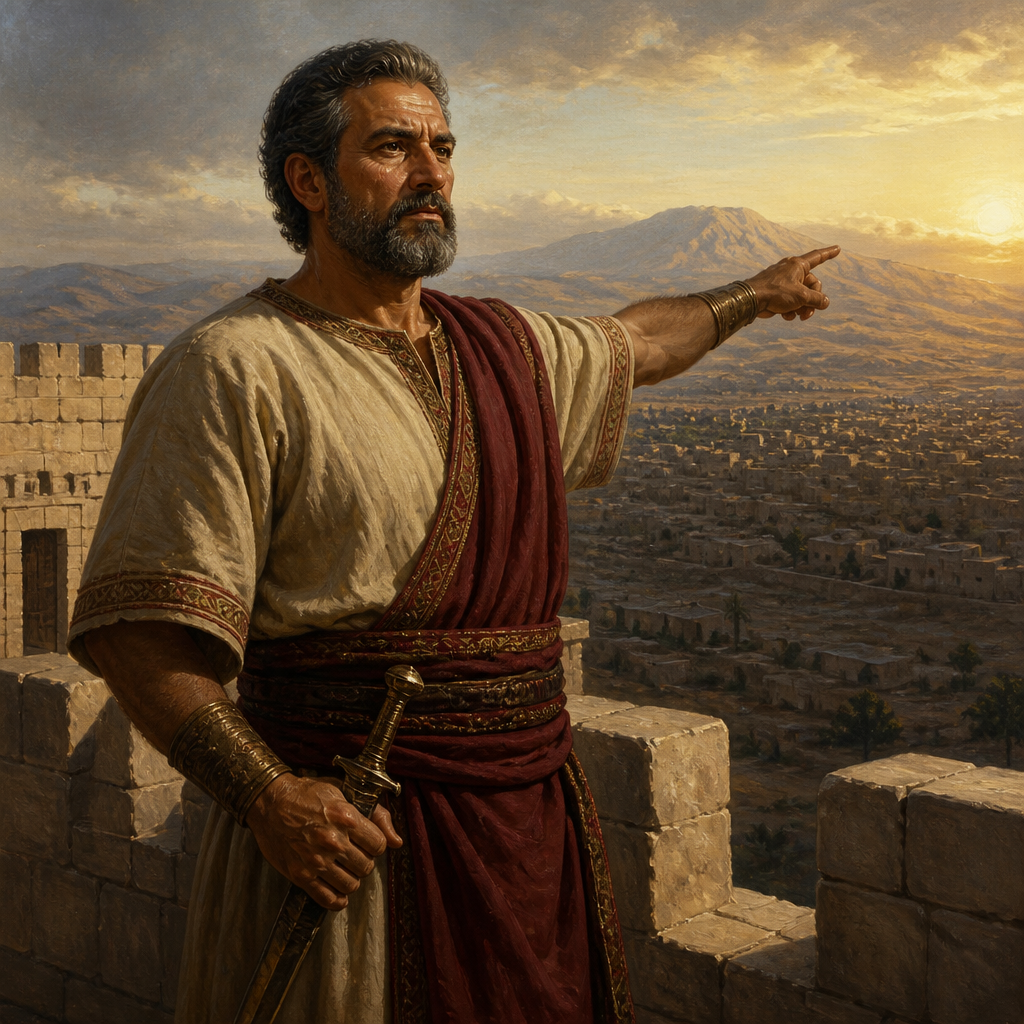
With the support of the leaders of Shechem and a sum of seventy shekels of silver taken from the temple of Baal-berith, Abimelech hired a group of "worthless and reckless men" to assist him. He traveled to his father’s house at Ophrah and systematically murdered his seventy brothers on a single stone. Only Jotham, the youngest son, managed to escape the slaughter. Following this act of fratricide, the leaders of Shechem and Beth-millo gathered at the oak at the pillar in Shechem to officially proclaim Abimelech king.
Jotham’s Fable
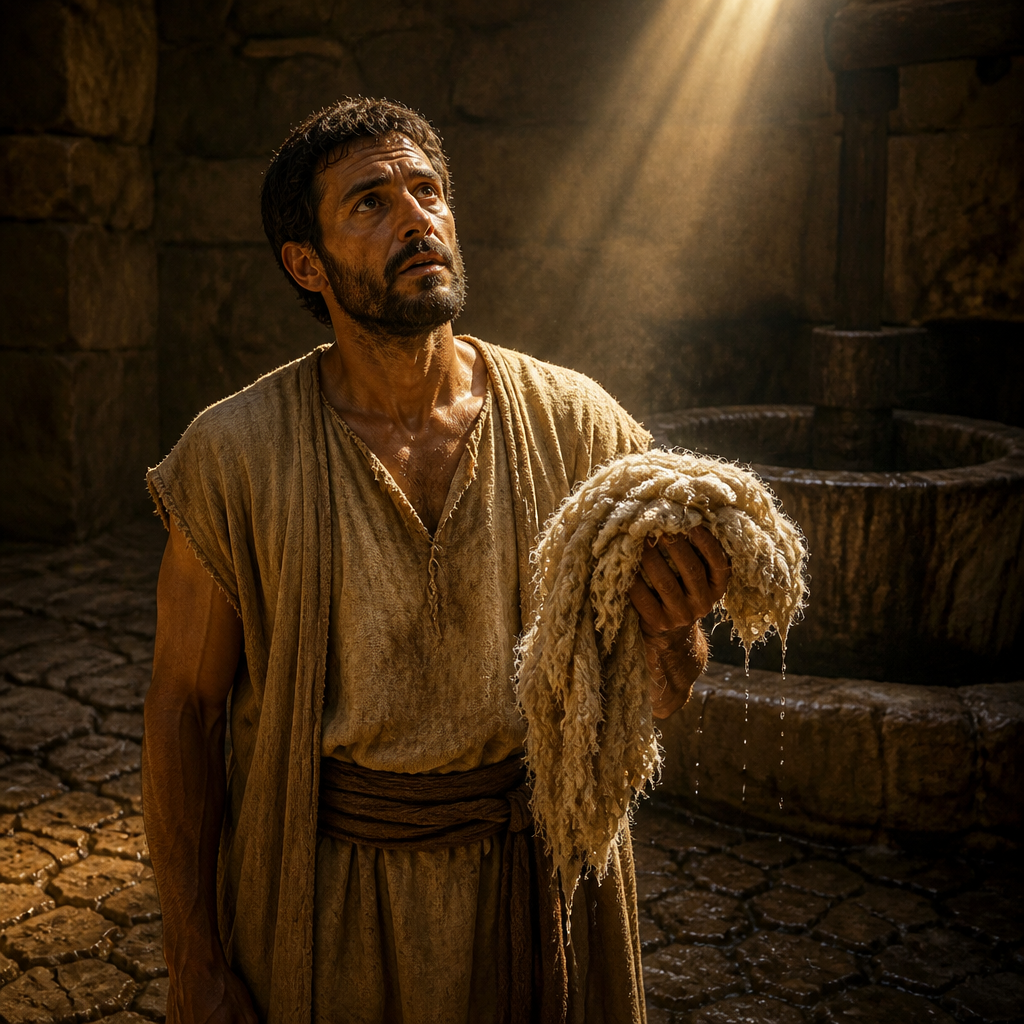
When Jotham heard of the coronation, he stood on the top of Mount Gerizim and delivered a scathing parable to the people of Shechem. In this fable, the productive trees (the olive, fig, and vine) refuse to leave their useful work to rule over others. Only the bramble—a useless, thorny plant—accepts the position, threatening to burn those who do not submit. Jotham’s prophecy was a curse: if the people had not acted in good faith toward Gideon’s house, fire would come from Abimelech to consume Shechem, and fire from Shechem would consume Abimelech.
Conflict and Downfall
Abimelech reigned for three years before the alliance between him and the Shechemites fractured. The biblical text attributes this to God sending a "spirit of animosity" between them to avenge the blood of Gideon’s sons. The leaders of Shechem began to ambush Abimelech’s interests and eventually rallied behind a man named Gaal son of Ebed, who openly mocked Abimelech’s authority.
Learning of the rebellion through his deputy Zebul, Abimelech led a series of brutal military strikes. He defeated Gaal, destroyed the city of Shechem, and sowed it with salt—a symbolic act of permanent desolation. When the survivors fled to the tower of Shechem (the temple of El-berith), Abimelech and his men set the tower on fire, killing approximately one thousand people.
The Siege of Thebez and Death
Seeking to consolidate his victory, Abimelech moved to capture the nearby city of Thebez. As he approached the city's inner tower to set it on fire, a woman on the roof dropped an upper millstone on his head, crushing his skull. In a final act of pride, Abimelech ordered his armor-bearer to kill him with a sword so that it would not be said a woman had killed him. The biblical narrative concludes that this was God's repayment for Abimelech's wickedness against his father and brothers.
Relationship to Other Biblical Figures
Abimelech’s primary relationships were defined by conflict and betrayal. As the son of Gideon (Jerubbaal), he stood as the antithesis of his father’s earlier faithfulness, replacing God’s sovereignty with personal tyranny. His relationship with his brothers, particularly Jotham and Jether, was one of predatory violence. Jotham serves as the prophetic voice of conscience in the narrative, while the seventy unnamed brothers represent the victims of Abimelech’s political purge. Later, in 2 Samuel 11:21, Joab references Abimelech’s death as a tactical lesson in warfare, illustrating that Abimelech’s shameful end remained a part of Israel's military and cultural memory for generations.
Spiritual Significance
The life of Abimelech serves as a profound theological critique of self-appointed kingship. In the Book of Judges, the cycle of apostasy and deliverance usually involves a divinely chosen leader. Abimelech, however, is a leader chosen by men through violence and pagan wealth. His reign illustrates the chaos that ensues when the people of Israel abandon the covenant and seek to imitate the political structures of the surrounding Canaanite nations.
Ultimately, the story emphasizes divine justice. The narrative frame (Judges 9:23-24 and 9:56-57) makes it clear that while Abimelech acted with free will, the disastrous outcome was a form of retributive justice ordained by God. His death was not merely a tactical error but a fulfillment of the curse of Jotham, proving that power seized through wickedness is inherently unstable and subject to divine judgment.
Spiritual Significance
Abimelech represents the first failed attempt at monarchy in Israel, standing in sharp contrast to the later Davidic covenant. His narrative highlights the corruption of the period of the Judges, where personal ambition and local alliances replaced national unity under God. The story is a cautionary tale regarding the 'bramble' king—one who offers no fruit or shade, only the threat of fire and destruction.
Theologically, Abimelech's downfall reinforces the theme of sovereign retribution. The text meticulously notes that God 'repaid' the wickedness of Abimelech and the leaders of Shechem, ensuring that the blood of the innocent seventy sons did not go unavenged. This serves to reassure the reader that even in a time of lawlessness where 'every man did what was right in his own eyes,' God remained the ultimate Judge over the affairs of men.
Frequently Asked Questions
Who was Abimelech's father?
Abimelech was the son of Gideon (also known as Jerubbaal), a famous judge of Israel who defeated the Midianites.
How did Abimelech become king?
He persuaded his mother's relatives in Shechem to support him, used silver from a pagan temple to hire mercenaries, and murdered seventy of his brothers to eliminate competition.
What was the 'Parable of the Bramble'?
It was a prophetic fable told by Jotham, Abimelech's youngest brother, which characterized Abimelech as a useless and dangerous thornbush that would eventually destroy those who chose it as king.
How did Abimelech die?
During the siege of Thebez, a woman dropped a heavy millstone from a wall onto his head, crushing his skull. He then had his armor-bearer kill him with a sword to avoid the shame of being killed by a woman.
Why is Abimelech mentioned in 2 Samuel?
General Joab mentions him to explain the tactical danger of getting too close to a city wall during a siege, referencing the millstone incident as a well-known historical lesson.
Connected Figures

Categories
Mentions by Book
- Judges36
- 2 Samuel1
Family & Relationships
Sibling
Judges 8:31
Sibling
Judges 8:31
Parent
Judges 6:11
Sibling
Judges 8:20
Sibling
Judges 9:5
Others Named Abimelech
Abimelech, King of GerarGenesis 20:2
A Philistine ruler of Gerar who interacted with the patriarchs Abraham and Isaac, establishing early covenants and demonstrating a fear of God.