Nereus
A 1st-century Roman Christian who received personal greetings from the Apostle Paul in his Epistle to the Romans.
Nereus was a member of the early Christian community in Rome during the mid-1st century AD. He is known exclusively through the final chapter of Paul’s Epistle to the Romans, where the apostle sends specific greetings to various individuals who contributed to the vitality of the Roman church. Though the biblical text provides minimal personal details, his inclusion in this list signifies his status as a recognized and valued member of the primitive church.
In the context of Romans 16, Nereus is mentioned alongside his sister and several other believers. The grouping of these names suggests that Nereus may have been part of a specific house church or a smaller fellowship group within the larger Christian population of the imperial capital. His Greek name, which originates from Greek mythology (the 'Old Man of the Sea'), was a common name among the slave and freedman classes in Rome during this period.
Background and Family
The biblical record concerning Nereus is limited to a single verse in the New Testament: Romans 16:15. While his specific ethnic origin is not stated, his name, Nereus, is Greek. In the socio-cultural landscape of 1st-century Rome, such names were frequently held by enslaved individuals or those who had been manumitted (freed). This suggests that Nereus likely belonged to the lower social strata of the Roman Empire, which was the primary demographic of the early Christian movement in the city.
The scripture identifies one specific relative: an unnamed sister. The text reads, "Greet Philologus and Julia, Nereus and his sister..." (Romans 16:15). The fact that his sister is mentioned without a name may imply she was well-known to the community simply by her relation to Nereus, or perhaps her name was omitted for brevity. There are no recorded details regarding his parents, spouse, or other lineage.
Major Life Events
There are no specific biographical events or actions recorded for Nereus in the biblical canon. His "major life event" in a scriptural sense is his inclusion in the apostolic greetings of Paul. Writing from Corinth around 57 AD, Paul had not yet visited Rome but was intimately aware of the key figures sustaining the faith there. Nereus’s presence in this list indicates that he was an active participant in the Roman church prior to Paul's arrival as a prisoner.
Relationship to Other Biblical Figures
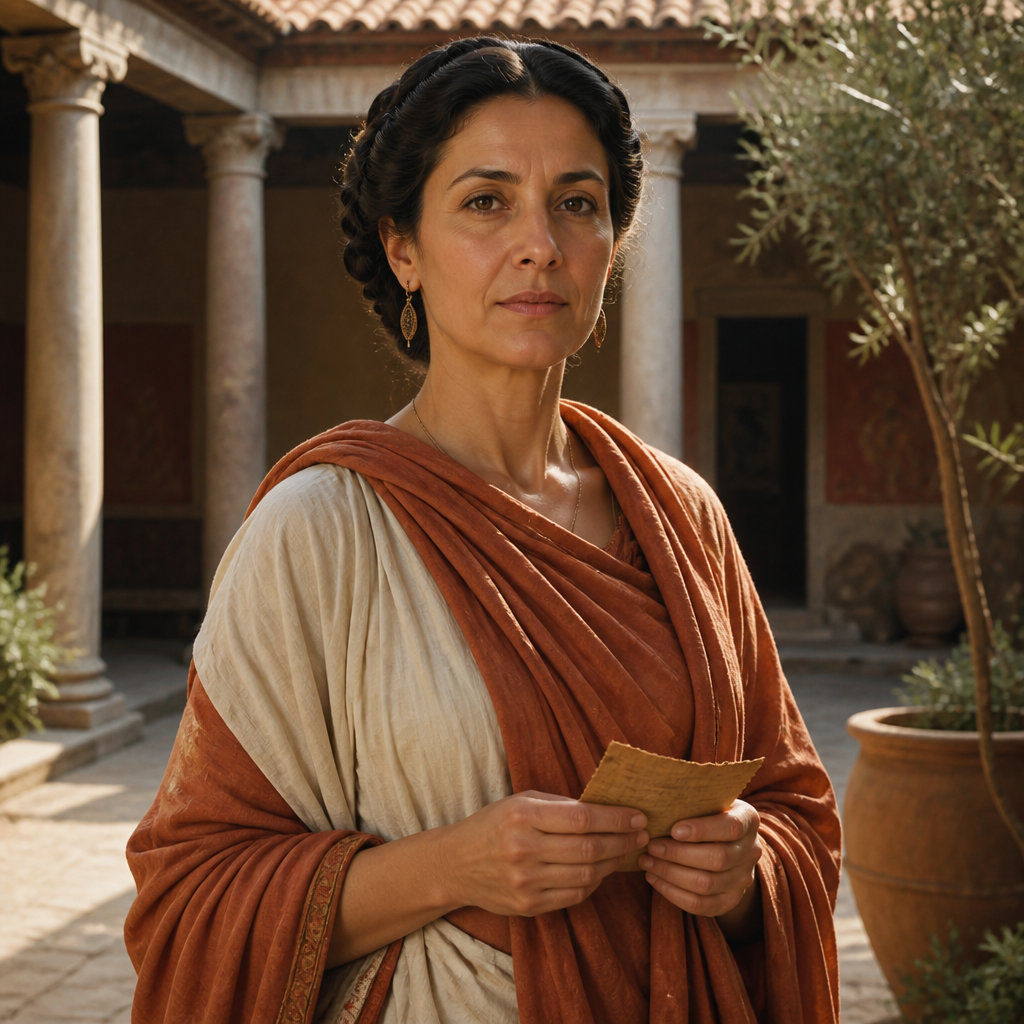
Nereus is grouped with four other named individuals: Philologus, Julia, his sister, and Olympas. The Apostle Paul instructs the Roman readers to greet these individuals and "all the saints with them." This phrasing is significant to scholars of the New Testament, as it likely denotes a specific house church. In the 1st century AD, Christians did not have dedicated church buildings; instead, they met in the private residences of members. Nereus was evidently a core member of the assembly that gathered with Philologus and Julia.
Spiritual Significance
The spiritual significance of Nereus lies in his representation of the "ordinary" saint. While he performed no recorded miracles and held no mentioned office like deacon or overseer, he was known by name to the greatest missionary of the early church. His life serves as a testament to the communal nature of the early faith, where every member, regardless of social standing or gender, was considered a "saint" (set apart for God). The greeting confirms that Nereus was steadfast in his faith during a period when being a Christian in the capital of the Empire carried significant social and legal risks.
Spiritual Significance
Nereus represents the quiet, faithful contingent of the early church. His inclusion in Romans 16 highlights the diversity of the Roman congregation and the importance Paul placed on individual believers within the body of Christ. The mention of 'his sister' also underscores the family-centric growth of the early gospel, where entire households or sibling groups converted and served together.
Theologically, Nereus is a primary example of the 'saints' mentioned in the Epistles—individuals who lived out their faith in the mundane reality of the Roman Empire. His Greek name in a Latin-speaking capital further illustrates the ethnic melting pot of the early Christian community, fulfilling the Pauline vision that there is neither Greek nor Jew in Christ.
Frequently Asked Questions
Where is Nereus mentioned in the Bible?
What does the name Nereus mean?
Nereus is a Greek name meaning 'water' or 'liquid.' In Greek mythology, Nereus was a sea god, but by the 1st century AD, it was a common name among commoners and slaves.
Was Nereus an official in the church?
The Bible does not assign him a specific title like Elder or Deacon. He is simply greeted as one of the 'saints.'
Who was Nereus's sister?
The Bible does not provide her name, referring to her only as 'his sister' in Romans 16:15.
Did Paul know Nereus personally?
It is debated; Paul had not yet visited Rome when he wrote the letter, but he clearly knew of Nereus's reputation and work within the Roman church.
Connected Figures
Paul the Apostle
Author of the letter greeting him

Philologus
Associate in the Roman church
Julia
Associate in the Roman church

Olympas
Associate in the Roman church
Categories
Mentions by Book
- Romans1