Rephael
Who was Rephael in the Bible?
Rephael was a Levite gatekeeper and the son of Shemaiah.
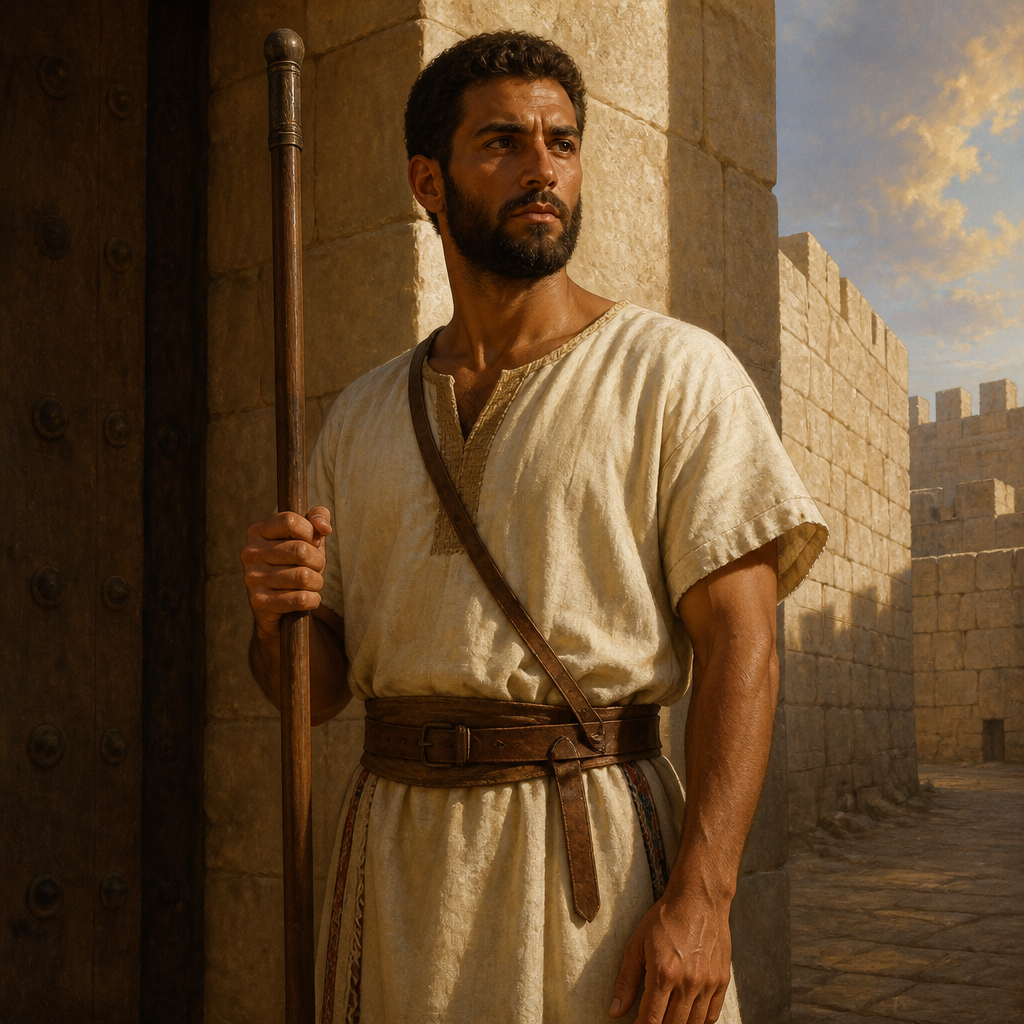
Rephael was a member of the tribe of Levi who served as a gatekeeper during the United Monarchy. He was one of the many sons of Shemaiah and a grandson of the prominent gatekeeper Obed-edom. The biblical record places Rephael within the specialized ranks of the Temple administration, specifically within the division of the Korahites, who were tasked with the security and maintenance of the sanctity of the sanctuary.
His mention in the genealogical records of 1 Chronicles highlights his standing as a man of capability and strength. Rephael functioned as part of a larger family unit dedicated to the logistical and protective operations of the house of God, ensuring that only those who were ceremonially clean and authorized could enter the sacred precincts.
Background and Family
Rephael was born into the Levitical line of Korah, specifically within the family of Obed-edom. His father was Shemaiah, who is described in scripture as a man of significant standing whose sons ruled over their father’s house because they were "capable men" (1 Chronicles 26:6). Rephael was one of six brothers mentioned in the record, including Othni, Obed, Elzabad, Elihu, and Semachiah.
The family heritage of Rephael is particularly noteworthy because of his grandfather, Obed-edom. The Bible records that God blessed the household of Obed-edom because the Ark of the Covenant remained in his home for three months during the reign of David. This blessing manifested in a large and capable progeny, of which Rephael was a third-generation recipient. The chronicler emphasizes that these men were not merely assigned roles by birth but were selected for their physical and moral aptitude to handle the rigorous duties of the Temple.
Major Life Events
Because Rephael is mentioned exclusively in the genealogical and vocational lists of 1 Chronicles 26, his specific life events are tied to his professional duties as a gatekeeper. During the United Monarchy, the role of a gatekeeper (Hebrew: shoer) was a position of high trust and responsibility. Rephael would have been stationed at one of the entrances to the Temple complex.
His duties involved more than simply opening doors; he was responsible for guarding the Temple treasuries, preventing the entry of anyone who was ritually unclean, and maintaining order among the throngs of worshippers. The record characterizes Rephael and his kin as "able men with strength for the service," suggesting that his daily life involved physical vigilance and a disciplined adherence to the Law of Moses regarding the sanctity of the Temple.
Relationship to Other Biblical Figures
Rephael’s primary relationships are defined by his immediate family and his tribal affiliation. He worked alongside his brothers Othni, Obed, and Elzabad. The text also notes that two of his brothers (or close kinsmen), Elihu and Semachiah, were particularly distinguished as "capable men."
This collective family unit represents the transition of service from the era of David into the ongoing administration of the Temple during the United Monarchy. Rephael’s identity is inseparable from the house of Shemaiah; he served not as an isolated individual but as a vital link in a multi-generational chain of Levitical servants who considered the protection of the Temple their primary calling.
Spiritual Significance
While Rephael’s biblical footprint is brief, his presence in the canon underscores the importance of every role within the religious life of Israel. The name Rephael translates to "God has healed," reflecting a personal or familial testimony of divine restoration.
His inclusion in the sacred text serves as a reminder that the spiritual health of the nation depended not only on the high priests and kings but also on the faithful execution of duty by those in the "support" roles. By guarding the gates, Rephael ensured the distinction between the holy and the profane was maintained, a task that carried immense theological weight in the Israelite cultic system.
Rephael represents the vital 'unseen' workers of the biblical narrative whose service allowed the Temple system to function. His inclusion in the genealogical record of 1 Chronicles 26 affirms that God values the specific, assigned duties of individuals within the larger community of faith. As a descendant of Obed-edom, he also serves as a testament to the enduring nature of divine blessing across generations.
Theological reflection on figures like Rephael emphasizes that faithfulness in administrative and security roles is considered 'strength for the service' by the biblical authors. His life points to the necessity of order, vigilance, and ritual purity in the presence of God.
Frequently Asked Questions
Who was Rephael's father?
Rephael was the son of Shemaiah, who was a leader among the Levites and the son of Obed-edom.
What was Rephael's tribe?
Rephael belonged to the Tribe of Levi, specifically the branch of the Korahites.
What job did Rephael hold in the Bible?
He was a gatekeeper (or porter) for the house of God, a role that involved guarding the Temple entrances and treasuries.
Where is Rephael mentioned in the Bible?
Rephael is mentioned in 1 Chronicles 26:7.
What does the name Rephael mean?
The name Rephael is of Hebrew origin and means 'God has healed' or 'Healed of God'.
Family & Relationships
Parents
 Shemaiah, Son of Obed-edomFather1 Chronicles 26:7
Inferred
1 Chronicles 26:7 names Rephael and Shemaiah in the same verse but does not state a father tie between them; the link rests on the surrounding narrative.Evidence: 1 Chronicles 26:7
 RephaelThis page
 Elihu, Levite of the United MonarchyBrother1 Chronicles 26:7Stated
 Elzabad, Levite of the United MonarchyBrother1 Chronicles 26:7Stated
 Obed, Son of ShemaiahBrother1 Chronicles 26:7Stated
 OthniBrother1 Chronicles 26:7Stated
 SemachiahBrother1 Chronicles 26:7Stated
Extended family
 Obed-edomGrandfather1 Chronicles 26:7
Inferred
Reconstructed through Shemaiah: 1 Chronicles 26:4 ties Obed-edom to Shemaiah; 1 Chronicles 26:7 ties Shemaiah to Rephael (itself an inferred link). No verse states the grandson link between Obed-edom and Rephael directly.Evidence: 1 Chronicles 26:7
Connected Figures
Family
Father · 1 Chronicles 26:7
The firstborn son of Obed-edom and a Levite gatekeeper known for his great strength and the leadership of his capable family during the United Monarchy.
United MonarchyFirst: 1 Chronicles 26:44 versesGatekeeper and Levitical LeaderLevi
Brother · 1 Chronicles 26:7
A Levite gatekeeper and son of Shemaiah, noted for his capability and strength in the service of the Tabernacle during the United Monarchy.
United MonarchyFirst: 1 Chronicles 26:72 versesGatekeeperLevi
Brother · 1 Chronicles 26:7
A Levite gatekeeper and son of Shemaiah, noted for his capability and service in the Tabernacle or Temple administration during the United Monarchy.
United MonarchyFirst: 1 Chronicles 26:72 versesGatekeeper of the SanctuaryLevi
Brother · 1 Chronicles 26:7
Obed was a Levite gatekeeper of the United Monarchy, noted for his capability and service within the Korahite division of the temple guard.
United MonarchyFirst: 1 Chronicles 26:72 versesGatekeeperLevi
Brother · 1 Chronicles 26:7
Othni was a Levite gatekeeper of the Korahite family during the United Monarchy, noted for his capability and service in the house of the Lord.
United MonarchyFirst: 1 Chronicles 26:72 versesGatekeeperLevi
Brother · 1 Chronicles 26:7
A Levite during the United Monarchy and son of Shemaiah, noted for his capability as a gatekeeper in the Tabernacle or Temple administration.
United MonarchyFirst: 1 Chronicles 26:72 versesGatekeeper / LeviteLevi
Grandfather · 1 Chronicles 26:7
A Levite during the United Monarchy who hosted the Ark of the Covenant and served as a musician and gatekeeper in the Tabernacle.
United MonarchyFirst: 2 Samuel 6:1019 versesGatekeeper, Musician, and Guardian of the ArkLevi
Mentions by Book
- 1 Chronicles2
Scripture References
All 2 indexed verses, in canonical order, from the Berean Standard Bible.
1 Chronicles · 2
- 1 Chronicles 26:7
Shemaiah’s sons were Othni, Rephael, Obed, and Elzabad; his brothers were Elihu and Semachiah, also capable men.
- 1 Chronicles 26:8Partial
All these were descendants of Obed-edom; they and their sons and brothers were capable men with strength to do the work—62 in all from Obed-edom.
Cited as evidence on a family card; added so References, Key Verses and Mentions by Book share one index.