Othni
Who was Othni in the Bible?
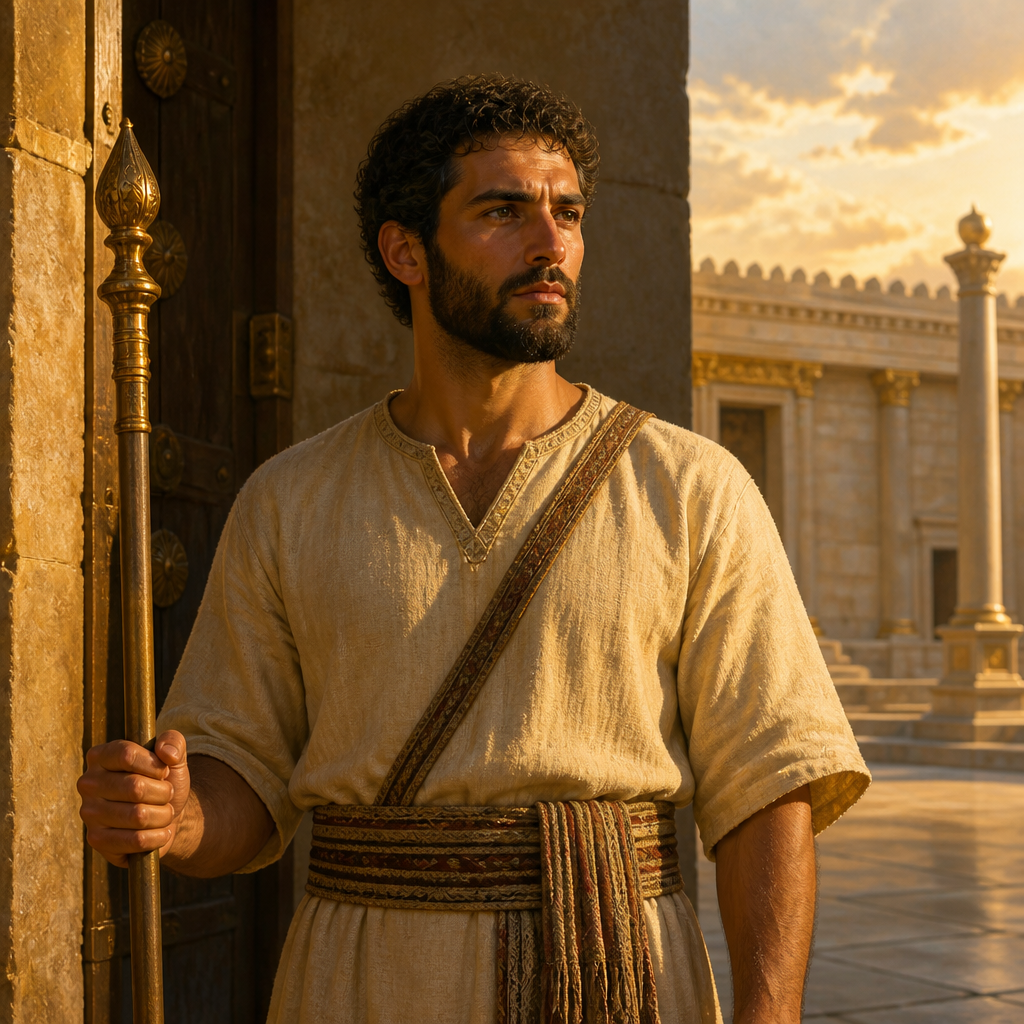
Othni was a Levite gatekeeper of the Korahite family during the United Monarchy, noted for his capability and service in the house of the Lord.
Othni was a Levite who served during the United Monarchy. He was a member of the Korahite family, a lineage traditionally tasked with various duties within the Tabernacle and later the Temple in Jerusalem. According to the genealogical records in the book of Chronicles, he was the firstborn son of Shemaiah and a grandson of the famous gatekeeper Obed-edom.
His role was specifically tied to the organization of the sanctuary established by King David and maintained by his successors. Othni is described alongside his brothers as a 'capable man,' a term suggesting both physical strength and organizational competence required for the protection and maintenance of the sacred precincts.
Background and Family
Othni appears in the biblical record within the post-exilic genealogical reflections of 1 Chronicles, specifically during the United Monarchy's administrative organization. He was a member of the tribe of Levi, the tribe set apart for the service of God. His immediate family line is traced through the Korahites, one of the primary divisions of Levite gatekeepers.
Othni was the eldest son of Shemaiah. His grandfather was Obed-edom, a figure noted for his faithfulness when he sheltered the Ark of the Covenant during the reign of David. The lineage of Othni was prolific and significant; he is listed alongside five brothers: Rephael, Obed, Elzabad, Elihu, and Semachiah. The biblical text highlights that his father, Shemaiah, had sons who 'ruled over the house of their father,' indicating a position of leadership and hereditary responsibility within the Levite order.
Major Life Events
The biblical record for Othni is confined to a single, albeit descriptive, mention in 1 Chronicles 26:7. While there are no specific narrative events or recorded dialogues attributed to him, his inclusion in the roster of gatekeepers signifies his formal appointment to a position of trust. During the United Monarchy, the gatekeepers were responsible for more than just standing at doors; they managed the storehouses, guarded the entrances to ensure ritual purity was maintained, and protected the temple treasures. Othni was part of this specialized class of 'mighty men of valor' who provided security for the central place of worship in Israel.
Relationship to Other Biblical Figures
Othni is defined primarily by his relationship to his father, Shemaiah, and his brothers. The text notes that Othni, Rephael, Obed, and Elzabad were sons of Shemaiah, while Elihu and Semachiah are identified as 'his brothers' (likely Shemaiah’s brothers or Othni’s brothers, though the syntax links them all as capable men within the same family unit). All of these men were descendants of Obed-edom. This family was renowned for their strength; 1 Chronicles 26:8 notes that the descendants of Obed-edom totaled sixty-two capable men with the strength to do the work.
Spiritual Significance
The significance of Othni lies in the biblical theme of delegated service and the importance of every role within the religious community. Though he is a minor figure in terms of narrative space, Othni represents the continuity of the Levite service during the United Monarchy. The description of Othni and his kin as 'capable men' (Hebrew: gibbor) underscores that the service of God required not only spiritual devotion but also physical readiness and administrative excellence. His life serves as a testament to the biblical value placed on those who serve 'behind the scenes' to facilitate the worship of others.
Othni's significance is found in his status as a 'capable man' within the Levite tribe. His placement in the permanent record of 1 Chronicles serves to validate the legitimacy of his family's service in the Temple. In the broader context of the United Monarchy, figures like Othni provided the structural stability needed to maintain the worship of the LORD amidst shifting political climates.
Theologically, Othni embodies the principle that even roles that seem mundane, such as guarding a gate, are considered vital service to God. By recording his name, the chronicler ensures that Othni's contribution to the sanctity and security of the house of God is remembered as an act of faithfulness.
Frequently Asked Questions
What does the name Othni mean?
The name Othni (עׇתְנִי) is generally understood to mean 'lion-like' or 'my time,' derived from Hebrew roots suggesting strength or duration.
Which tribe did Othni belong to?
Othni belonged to the tribe of Levi, specifically the Korahite clan of gatekeepers.
Who was Othni's father?
Othni was the son of Shemaiah and the grandson of Obed-edom.
What was Othni's specific role in the Bible?
He was a gatekeeper, a role that involved guarding the Temple entrances, protecting the treasury, and maintaining order within the sanctuary.
How many times is Othni mentioned in the Bible?
Othni is mentioned exactly one time, in 1 Chronicles 26:7.
Family & Relationships
Parents
 Shemaiah, Son of Obed-edomFather1 Chronicles 26:7
Inferred
1 Chronicles 26:7 names Othni and Shemaiah in the same verse but does not state a father tie between them; the link rests on the surrounding narrative.Evidence: 1 Chronicles 26:7
 OthniThis page
 Elihu, Levite of the United MonarchyBrother1 Chronicles 26:7Stated
 Elzabad, Levite of the United MonarchyBrother1 Chronicles 26:7Stated
 Obed, Son of ShemaiahBrother1 Chronicles 26:7Stated
 RephaelBrother1 Chronicles 26:7Stated
 SemachiahBrother1 Chronicles 26:7Stated
Extended family
 Obed-edomGrandfather1 Chronicles 26:7
Inferred
Reconstructed through Shemaiah: 1 Chronicles 26:4 ties Obed-edom to Shemaiah; 1 Chronicles 26:7 ties Shemaiah to Othni (itself an inferred link). No verse states the grandson link between Obed-edom and Othni directly.Evidence: 1 Chronicles 26:7
Connected Figures
Family
Father · 1 Chronicles 26:7
The firstborn son of Obed-edom and a Levite gatekeeper known for his great strength and the leadership of his capable family during the United Monarchy.
United MonarchyFirst: 1 Chronicles 26:44 versesGatekeeper and Levitical LeaderLevi
Brother · 1 Chronicles 26:7
A Levite gatekeeper and son of Shemaiah, noted for his capability and strength in the service of the Tabernacle during the United Monarchy.
United MonarchyFirst: 1 Chronicles 26:72 versesGatekeeperLevi
Brother · 1 Chronicles 26:7
A Levite gatekeeper and son of Shemaiah, noted for his capability and service in the Tabernacle or Temple administration during the United Monarchy.
United MonarchyFirst: 1 Chronicles 26:72 versesGatekeeper of the SanctuaryLevi
Brother · 1 Chronicles 26:7
Obed was a Levite gatekeeper of the United Monarchy, noted for his capability and service within the Korahite division of the temple guard.
United MonarchyFirst: 1 Chronicles 26:72 versesGatekeeperLevi
Brother · 1 Chronicles 26:7
Rephael was a Levite gatekeeper and the son of Shemaiah.
United MonarchyFirst: 1 Chronicles 26:72 versesTemple GatekeeperLevi
Brother · 1 Chronicles 26:7
A Levite during the United Monarchy and son of Shemaiah, noted for his capability as a gatekeeper in the Tabernacle or Temple administration.
United MonarchyFirst: 1 Chronicles 26:72 versesGatekeeper / LeviteLevi
Grandfather · 1 Chronicles 26:7
A Levite during the United Monarchy who hosted the Ark of the Covenant and served as a musician and gatekeeper in the Tabernacle.
United MonarchyFirst: 2 Samuel 6:1019 versesGatekeeper, Musician, and Guardian of the ArkLevi
Mentions by Book
- 1 Chronicles2
Scripture References
All 2 indexed verses, in canonical order, from the Berean Standard Bible.
1 Chronicles · 2
- 1 Chronicles 26:7
Shemaiah’s sons were Othni, Rephael, Obed, and Elzabad; his brothers were Elihu and Semachiah, also capable men.
- 1 Chronicles 26:8Partial
All these were descendants of Obed-edom; they and their sons and brothers were capable men with strength to do the work—62 in all from Obed-edom.
Cited as evidence on a family card; added so References, Key Verses and Mentions by Book share one index.