Nahash, Parent of Shobi
An Ammonite man from Rabbah whose son, Shobi, provided essential food and supplies to King David during the rebellion of Absalom.
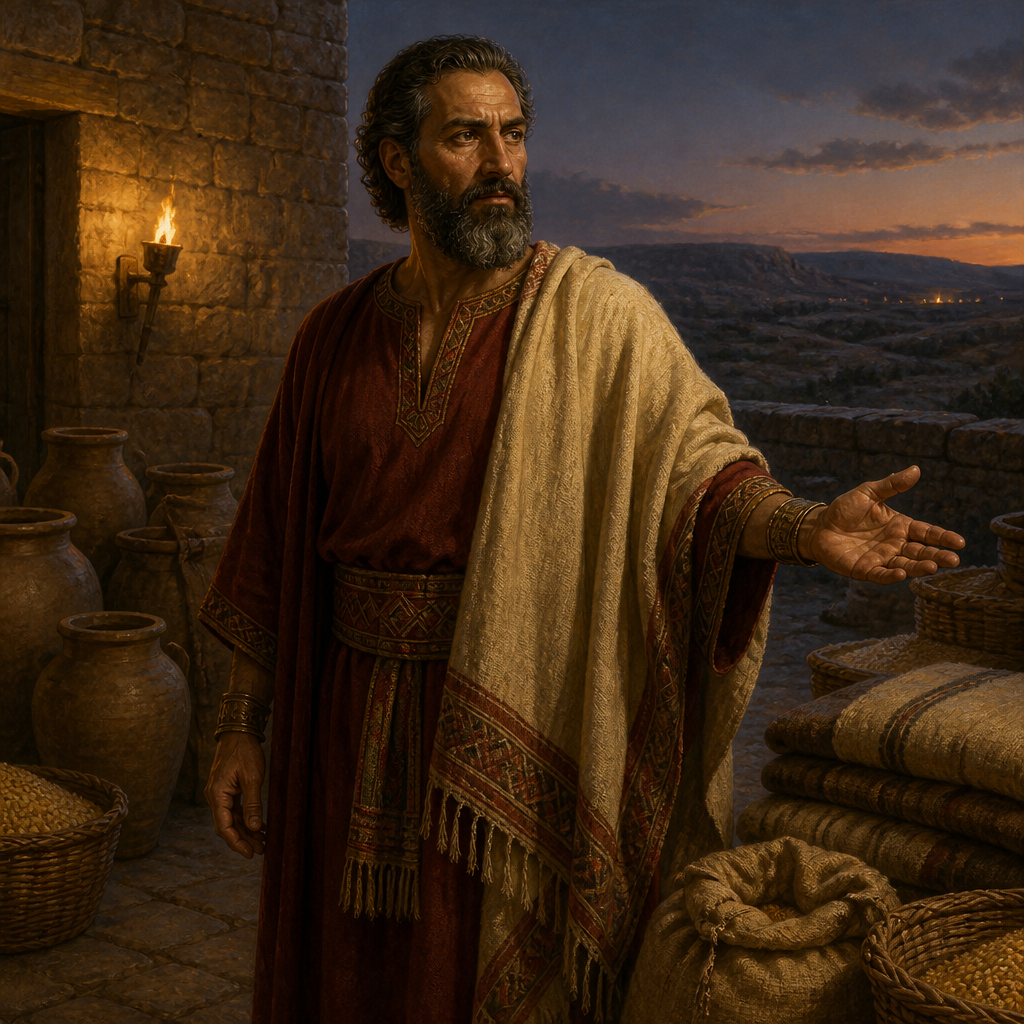
Nahash is a figure belonging to the period of the United Monarchy, specifically identified as an inhabitant of Rabbah, the capital city of the Ammonites. While the biblical text provides a single reference to him, his identity is preserved through the actions of his son, Shobi. During a time of significant political instability for the throne of Israel, Nahash's lineage is connected to an act of loyalty and hospitality toward the established king.
He is mentioned exclusively in the context of the Davidic narrative in 2 Samuel, where he is identified as the father of one of David’s primary supporters during the king's flight to Mahanaim. Although his own life is not detailed, his familial ties position him within the broader history of the interactions between Israel and the neighboring Ammonite nation.
Background and Family
Nahash was a resident of Rabbah, the royal city of the Ammonites, located east of the Jordan River. The biblical record in 2 Samuel 17:27 identifies him solely as the father of Shobi. The name Nahash translates from Hebrew as "serpent," a common name in the Semitic world during the Iron Age. As a citizen or notable figure of Rabbah, Nahash belonged to the Ammonite people, a group often in conflict with Israel, yet his family demonstrates a unique instance of diplomatic or personal friendship with the house of Jesse.
Major Life Events
There are no recorded life events for Nahash himself within the biblical canon. The significance of his name in the text is purely genealogical, serving to identify Shobi as a man of Ammonite noble or significant birth. The timing of this reference occurs during the United Monarchy, specifically while King David was fleeing from his son Absalom. When David reached Mahanaim, Shobi (the son of Nahash) arrived with beds, basins, pottery, and food supplies to sustain the king's exhausted troops.
Relationship to Other Biblical Figures
Nahash’s primary relationship is that of a father to Shobi. Through his son, Nahash is indirectly linked to two other prominent men of the trans-Jordan region: Machir son of Ammiel from Lo-debar and Barzillai the Gileadite. These three men formed a coalition of support for King David at one of the lowest points of his reign. Because Shobi is identified as being "from Rabbah of the Ammonites," it is clear that Nahash’s household maintained a presence in the Ammonite capital even as they extended grace to the Israelite monarch.
Spiritual Significance
The presence of Nahash’s name in the list of David’s supporters (via his son) highlights a theme found throughout the United Monarchy period: the unexpected loyalty of non-Israelites to the anointed king of Israel. While the Ammonites were frequently cited as enemies of Israel, the line of Nahash provided a remnant of kindness. The brief mention of Nahash serves to validate the social standing and origin of Shobi, ensuring that the historical record accurately reflects the diverse group of individuals who remained faithful to the Davidic covenant during the internal strife of the Israelite civil war.
Spiritual Significance
Nahash’s significance lies in his role as the progenitor of Shobi, a man who demonstrated remarkable hospitality and loyalty to King David during the Absalom crisis. By documenting Nahash’s name and location (Rabbah), the biblical text emphasizes that God provided for David through the hands of a foreigner, illustrating that the king's support base extended beyond the borders of the twelve tribes.
Furthermore, the mention of Nahash serves as a vital genealogical marker. In the ancient Near East, a man’s identity was deeply rooted in his father’s house; by naming Nahash, the author of 2 Samuel provides historical credibility to the narrative of Shobi’s intervention, rooting the story in the specific geopolitical landscape of the Ammonite capital.
Frequently Asked Questions
What does the name Nahash mean?
The name Nahash (נָחָשׁ) in Hebrew means 'serpent'.
Where did Nahash live?
He lived in Rabbah, which was the capital city of the Ammonites.
Who was Nahash's son?
His son was Shobi, who is recorded in 2 Samuel 17:27 as providing supplies to King David.
Was Nahash an Israelite?
No, Nahash was an Ammonite, belonging to the nation located east of the Jordan River.
How many times is this specific Nahash mentioned?
He is mentioned only once in the Bible, in 2 Samuel 17:27.
Connected Figures

Categories
Mentions by Book
- 2 Samuel1
Family & Relationships
Child
2 Samuel 17:27
Others Named Nahash
Nahash, Parent of Abigail2 Samuel 17:25
A figure mentioned in the genealogy of King David’s family, identified as the parent of Abigail and Zeruiah.
Nahash, Father of Hanun2 Samuel 10:2
Nahash was a King of the Ammonites during the United Monarchy who showed kindness to King David and was the father of Hanun.
Nahash the Ammonite (1 Samuel 11)1 Samuel 11:1
An Ammonite king whose cruel siege of Jabesh-gilead served as the catalyst for the consolidation of Saul’s kingship over Israel.