Kish, Father of King Saul
A wealthy and influential Benjamite landowner best known as the father of Saul, the first king of Israel.
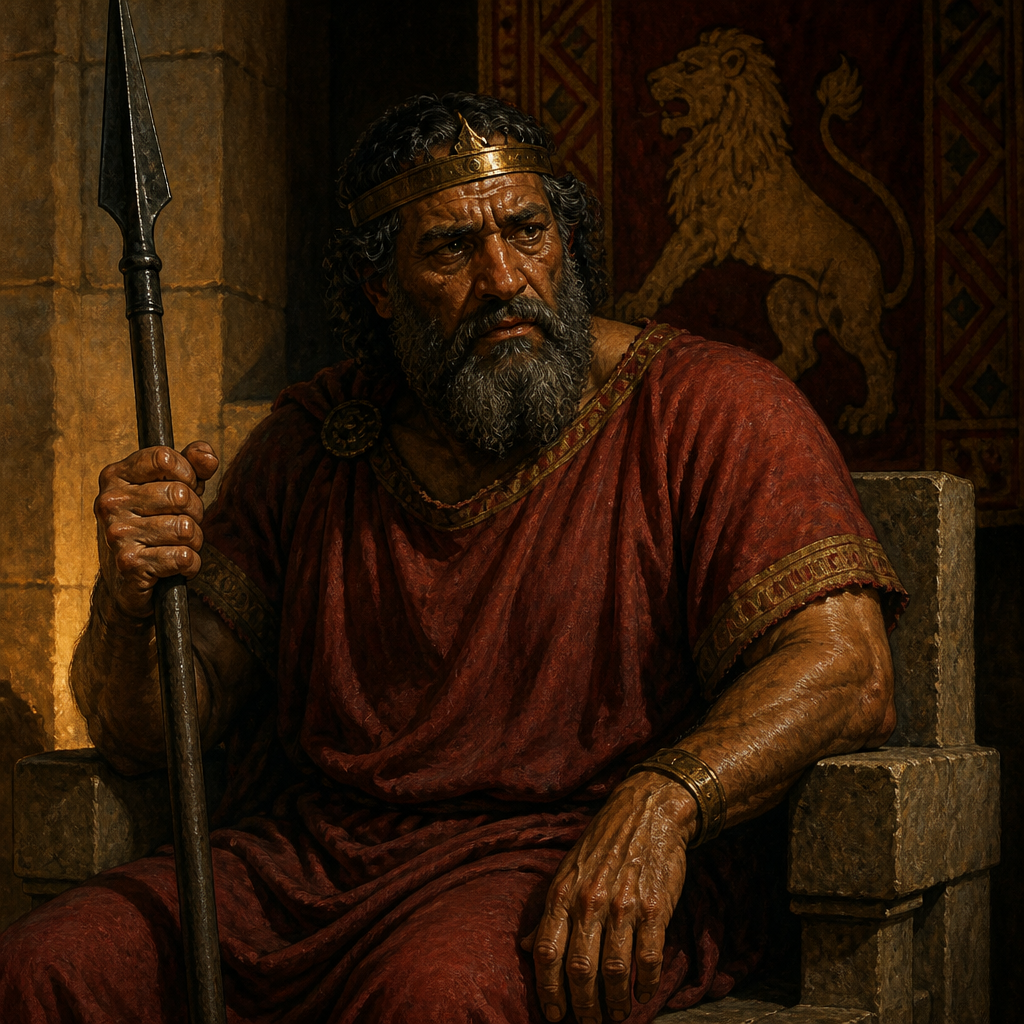
Kish was a prominent member of the tribe of Benjamin during the late period of the Judges and the dawn of the United Monarchy in Israel. Described in the biblical text as a 'powerful man' or a man of standing, Kish belonged to the clan of Matri. He resided in the territory of Benjamin, specifically in or near Gibeah, where his family held significant land and influence. While Kish himself did not hold a royal title, his status as a wealthy landowner provided the social and economic foundation from which his son, Saul, would eventually emerge as the nation's first monarch.
His role in the biblical narrative is primarily foundational and genealogical. He is the catalyst for the events that lead to Saul’s encounter with the prophet Samuel; it is the loss of Kish's livestock that sends Saul on the journey where he is ultimately anointed. Throughout the historical books of 1 Samuel and 1 Chronicles, Kish is consistently used as a patronymic identifier for Saul, cementing his legacy as the progenitor of Israel’s first royal house.
Background and Family
The genealogical record of Kish is detailed across several books of the Bible, though it presents the complexities common in ancient Near Eastern tribal records. According to 1 Samuel 9:1, Kish was the son of Abiel, the son of Zeror, the son of Becorath, the son of Aphiah of Benjamin. However, the records in 1 Chronicles 8:33 and 9:39 state that 'Ner was the father of Kish.' This apparent discrepancy is often resolved by scholars through the understanding that 'father' can denote a grandfather or a legal ancestor in Hebrew genealogies, or that Kish and Ner were brothers who were both sons of Abiel, with one potentially adopting the other's lineage for legal or inheritance purposes.
Kish was part of a large and influential family. His siblings included Abdon, Zur, Baal, Nadab, Gedor, Ahio, Zecher, and Mikloth. His mother is identified as Maacah (1 Chronicles 9:35-36). The family was rooted in Gibeon and later Zela, where the family tomb was located. The biblical description of Kish as a 'powerful man' (gibbor chayil) suggests not only physical strength but also wealth, social status, and perhaps military valor, indicating that Saul was born into a family of the Benjamite aristocracy.
Major Life Events
Kish’s most significant appearance in the narrative occurs in 1 Samuel 9. The text notes that the donkeys belonging to Kish had wandered off. In a move that demonstrates his authority and his reliance on his son, Kish commanded Saul: "Take one of the servants and go look for the donkeys" (1 Samuel 9:3). This mundane task of animal husbandry served as the providential catalyst for the transition of Israel’s government from a confederation of tribes to a centralized monarchy.
While Kish remains in the background during Saul’s rise to power, his influence is felt through his son’s identity. Even after Saul became king, he was frequently referred to as "Saul son of Kish," a title that appears even in the New Testament (Acts 13:21). This suggests that Kish’s reputation remained a point of reference for Saul’s legitimacy and tribal roots.
After his death, Kish was buried in the family sepulcher in Zela. The importance of this family site is underscored in 2 Samuel 21:14, where the bones of Saul and Jonathan were eventually returned to be buried alongside Kish. This act of returning the fallen king to his father’s tomb was seen as a necessary step to restore divine favor to the land of Israel during a time of famine.
Relationship to Other Biblical Figures
Kish’s primary relationship is with his son, Saul. The interaction between them in 1 Samuel 9 suggests a traditional patriarchal structure where the son remained under the father’s authority despite being a young man of impressive stature. Kish also had a significant relationship with Abner, the commander of Saul’s army. Depending on the interpretation of the genealogy in 1 Samuel 14:51, Abner was either Kish’s nephew or his brother, making the military leadership of the early United Monarchy a tightly knit family affair.
Furthermore, Kish is linked to the transition of the priesthood and the early prophetic movement. 1 Chronicles 26:28 mentions that Kish’s son Saul dedicated spoils of war to the sanctuary, placing the family in the company of Samuel the seer and Joab, David’s general, in terms of their contributions to Israel’s religious life.
Spiritual Significance
Theologically, Kish represents the intersection of the ordinary and the divine. The search for Kish’s lost donkeys is a classic biblical example of divine providence—where a routine domestic chore is used by God to bring about a monumental shift in redemptive history. Kish’s role highlights that God’s choice of a king for Israel was not drawn from a vacuum but was rooted in an existing tribal structure and a specific family line.
In the New Testament, St. Paul’s sermon at Antioch in Pisidia mentions Kish by name: "God gave them forty years under Saul son of Kish, from the tribe of Benjamin" (Acts 13:21). By including Kish’s name, the apostle emphasizes the historical reality and specific lineage of the first king, contrasting the human origin of Saul’s house with the eternal nature of the Davidic line that led to Jesus Christ.
Spiritual Significance
Kish serves as a vital genealogical link in the history of Israel’s monarchy. As a 'powerful man' of Benjamin, he provided the social and economic status necessary for his son Saul to be recognized as a viable leader. His presence in the text ensures that the first king of Israel is seen not as an isolated figure, but as the product of a specific, honorable Benjamite household.
Theologically, the story of Kish’s lost donkeys illustrates the biblical theme of God working through the mundane. The search for a father’s property led to the anointing of a nation's king, demonstrating that in the biblical worldview, no event is too small to be outside the scope of God’s sovereign plan for His people.
Frequently Asked Questions
Who was the father of Kish?
According to 1 Samuel 9:1, his father was Abiel. However, 1 Chronicles 8:33 and 9:39 state that Ner was the father of Kish. This is often explained by the use of 'father' to mean ancestor or through a complex family tree where Ner and Abiel are both prominent ancestors.
What tribe did Kish belong to?
Kish belonged to the tribe of Benjamin, specifically the clan of Matri.
How is Kish described in the Bible?
He is described in 1 Samuel 9:1 as a 'powerful man' (or 'man of standing'), indicating he was wealthy and influential within his tribe.
Where was Kish buried?
Kish was buried in a family tomb in Zela, in the land of Benjamin (2 Samuel 21:14).
Does Kish appear in the New Testament?
Yes, Kish is mentioned by name in Acts 13:21 during a speech by the Apostle Paul regarding the history of Israel.
Connected Figures

Categories
Mentions by Book
- 1 Chronicles6
- 1 Samuel5
- 2 Samuel1
- Acts1
Family & Relationships
Child
1 Samuel 9:1
Sibling
1 Samuel 9:1
Sibling
1 Samuel 9:1
Sibling
1 Samuel 9:1
Sibling
Baal, Benjaminite of the United Monarchy
1 Samuel 9:1
Sibling
1 Samuel 9:1
Sibling
1 Samuel 9:1
Sibling
1 Samuel 9:1
Sibling
1 Samuel 9:1
Sibling
Mikloth, Benjaminite of the United Monarchy
1 Samuel 9:1
Sibling
1 Chronicles 8:30
Parent
1 Samuel 9:1
Sibling
1 Chronicles 8:31
Sibling
Baal, Benjaminite of the United Monarchy
1 Chronicles 8:30
Sibling
1 Chronicles 8:31
Parent
1 Chronicles 8:29
Sibling
Mikloth, Benjaminite of the United Monarchy
1 Chronicles 8:32
Sibling
1 Chronicles 8:30
Sibling
1 Samuel 14:50
Sibling
1 Chronicles 8:31
Sibling
1 Chronicles 8:30
Others Named Kish
Kish, Son of Mahli1 Chronicles 23:21
A Levite of the Merarite clan during the era of Egypt and the Wilderness whose sons preserved the lineage of his brother Eleazar.
Kish, Great-grandfather of MordecaiEsther 2:5
A Benjamite man whose lineage in the Persian diaspora led to the prominent Jewish official Mordecai.
Kish, Son of Abdi2 Chronicles 29:12
A Merarite Levite during the reign of King Hezekiah who assisted in the sanctification of the Temple in Jerusalem.