Joah, Son of Obed-edom
Who was Joah, Son of Obed-edom, in the Bible?
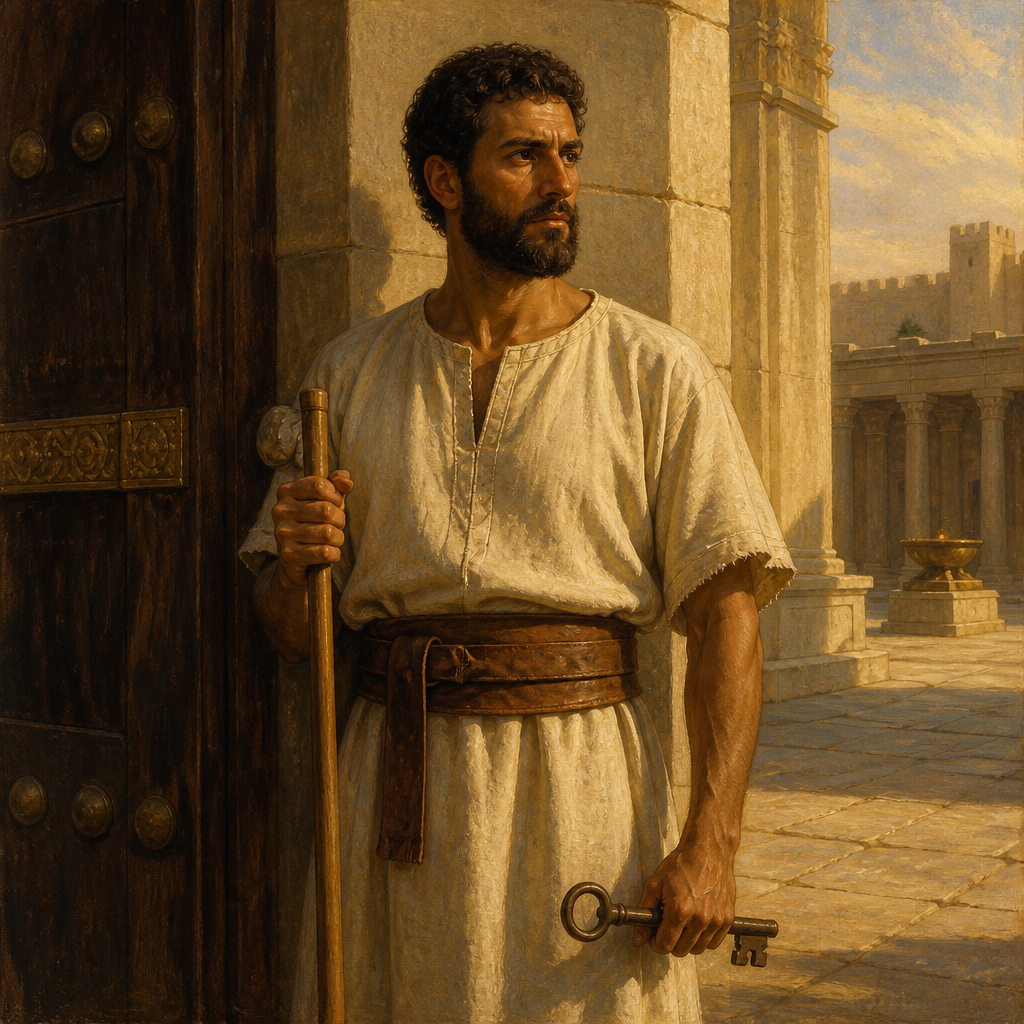
A Levite gatekeeper and the third son of Obed-edom, appointed to service during the United Monarchy under King David.
This is one of 5 people named Joah in the Bible. See all 5 →
Joah was a Levite of the United Monarchy period, recognized primarily for his genealogical placement and his role as a gatekeeper in the service of the Tabernacle and the planned Temple of Jerusalem. As the third son of Obed-edom, he belonged to a family specifically noted for their divine blessing and their dedication to guarding the sacred precincts of Israel's worship center.
The biblical record concerning Joah is found within the liturgical and administrative lists of 1 Chronicles. During the reign of King David (c. 1010–970 BC), the king organized the Levites into specific divisions to ensure the orderly conduct of religious duties. Joah was counted among these divisions, serving as part of a family unit that historical and biblical scholars identify as essential to the security and sanctity of the Ark of the Covenant.
Background and Family
Joah appears in the biblical record within the context of the Levite genealogies of the Tribe of Levi. Specifically, he is identified as the third son of Obed-edom. The family of Obed-edom rose to prominence during the United Monarchy, particularly after the Ark of the Covenant was temporarily housed in Obed-edom’s home. The biblical text in 1 Chronicles 26:4-5 emphasizes that God blessed Obed-edom with eight sons, of which Joah was the third, reflecting the divine favor bestowed upon his household.
His brothers included Shemaiah (the firstborn), Jehozabad, Sachar, Nethanel, Ammiel, Issachar, and Peullethai. Collectively, this family was known for being "capable men with the strength to do the work" (1 Chronicles 26:8), a description that highlights their physical and spiritual fitness for the demanding task of guarding the Temple thresholds.
Major Life Events
The specific actions of Joah are not recorded in detail; rather, his significance is tied to his appointment and his family’s legacy. During the late years of King David’s reign, David organized the Levites into divisions for singers, gatekeepers, and treasurers. Joah was assigned to the division of gatekeepers.
As a gatekeeper, Joah’s primary responsibility would have been to monitor the entrances to the sanctuary, ensuring that only those who were ritually clean and authorized could enter. This role was not merely one of physical security but was a position of high trust, as the gatekeepers were responsible for protecting the sacred vessels and the integrity of the worship space.
Relationship to Other Biblical Figures
Joah’s most significant relationship is his patrilineal connection to Obed-edom. Obed-edom is famous for hosting the Ark of the Covenant after the death of Uzzah, during which time his entire household was blessed. Joah is essentially a direct recipient and participant in that legacy of blessing. As one of eight brothers, he served alongside his siblings in the Davidic administration, contributing to the institutionalization of Israelite worship that would eventually transition from the Tabernacle to Solomon’s Temple.
Spiritual Significance
Though Joah is mentioned in only one verse, his inclusion in the chronicler’s record serves a specific theological purpose. In the book of 1 Chronicles, genealogies are used to demonstrate the continuity of God’s covenant with Israel and the importance of every individual role within the community of faith. Joah represents the "third generation" of those who responded to the presence of the Ark. His life illustrates the biblical theme that service to God is often a multi-generational calling, where the faithfulness of a father (Obed-edom) opens doors for the service and blessing of his children (Joah and his brothers).
Joah is significant as a representative of the Levitical gatekeepers during the transition from the Tabernacle to the First Temple. His existence within the biblical record validates the organized nature of Davidic worship and the fulfillment of the blessing promised to the house of Obed-edom. Theologically, Joah represents the principle that every member of the community, even those whose names appear briefly, is vital to the preservation of the sacred and the functioning of the covenant community.
Frequently Asked Questions
Who was Joah's father?
Joah was the son of Obed-edom, a Levite who famously housed the Ark of the Covenant.
What was Joah's role in the Bible?
Joah was a Levite gatekeeper appointed during the reign of King David to guard the sanctuary.
Which tribe did Joah belong to?
Joah belonged to the Tribe of Levi, the tribe designated for priestly and sanctuary service in Israel.
How many brothers did Joah have?
Joah had seven brothers: Shemaiah, Jehozabad, Sachar, Nethanel, Ammiel, Issachar, and Peullethai.
Where is Joah mentioned in the Bible?
Joah is mentioned in 1 Chronicles 26:4 in the list of the sons of Obed-edom.
Family & Relationships
Parents
 Obed-edomFather1 Chronicles 26:4Stated
 Joah, Son of Obed-edomThis page
 Ammiel, Son of Obed-edomBrother1 Chronicles 26:4–5Stated
 Issachar, Son of Obed-edomBrother1 Chronicles 26:4–5Stated
 Jehozabad, Son of Obed-edomBrother1 Chronicles 26:4Stated
 Nethanel, Son of Obed-edomBrother1 Chronicles 26:4Stated
 PeullethaiBrother1 Chronicles 26:4–5Stated
 SacharBrother1 Chronicles 26:4Stated
 Shemaiah, Son of Obed-edomBrother1 Chronicles 26:4Stated
Connected Figures
Family
Father · 1 Chronicles 26:4
A Levite during the United Monarchy who hosted the Ark of the Covenant and served as a musician and gatekeeper in the Tabernacle.
United MonarchyFirst: 2 Samuel 6:1019 versesGatekeeper, Musician, and Guardian of the ArkLevi
Brother · 1 Chronicles 26:4–5
Ammiel was a Levite gatekeeper during the United Monarchy, serving as the sixth son of Obed-edom within the temple ministry.
United MonarchyFirst: 1 Chronicles 26:52 versesGatekeeperLevi
Brother · 1 Chronicles 26:4–5
Issachar was a Levite gatekeeper of the Korahite clan who served in the tabernacle during the reign of King David.
United MonarchyFirst: 1 Chronicles 26:52 versesGatekeeper of the TabernacleLevi
Brother · 1 Chronicles 26:4
A Levite gatekeeper and the second son of Obed-edom, appointed to service at the Tabernacle during the reign of King David.
United MonarchyFirst: 1 Chronicles 26:42 versesLevitical GatekeeperLevi
Brother · 1 Chronicles 26:4
Nethanel was a Levite and the fifth son of Obed-edom, serving as a gatekeeper for the Tabernacle during the reign of King David.
United MonarchyFirst: 1 Chronicles 26:42 versesLevitical GatekeeperLevi
Brother · 1 Chronicles 26:4–5
The eighth son of Obed-edom and a Levite gatekeeper assigned to the sanctuary during the reign of King David.
United MonarchyFirst: 1 Chronicles 26:52 versesLevite gatekeeperLevi
Brother · 1 Chronicles 26:4
Sachar was a Levite gatekeeper during the United Monarchy, identified as the fourth son of Obed-edom.
United MonarchyFirst: 1 Chronicles 26:42 versesGatekeeperLevi
Brother · 1 Chronicles 26:4
The firstborn son of Obed-edom and a Levite gatekeeper known for his great strength and the leadership of his capable family during the United Monarchy.
United MonarchyFirst: 1 Chronicles 26:44 versesGatekeeper and Levitical LeaderLevi
Categories
Mentions by Book
- 1 Chronicles2
Scripture References
All 2 indexed verses, in canonical order, from the Berean Standard Bible.
1 Chronicles · 2
- 1 Chronicles 26:4
And Obed-edom also had sons: Shemaiah the firstborn, Jehozabad the second, Joah the third, Sachar the fourth, Nethanel the fifth,
- 1 Chronicles 26:5Partial
Ammiel the sixth, Issachar the seventh, and Peullethai the eighth. For God had blessed Obed-edom.
Cited as evidence on a family card; added so References, Key Verses and Mentions by Book share one index.
Others Named Joah
Compare all 5 bearers →Joah, Recorder to King Josiah2 Chronicles 34:8
A high-ranking royal official and 'recorder' who served King Josiah during the 7th-century BC reforms and the restoration of the Temple in Jerusalem.
Joah, Son of Zimmah1 Chronicles 6:21
A Levite of the Gershonite line during the Divided Monarchy, recorded in the ancestral genealogies of 1 Chronicles.
Joah, Son of Zimmah and Father of Eden2 Chronicles 29:12
A Gershonite Levite during the Divided Monarchy who assisted in the sanctification of the temple under King Hezekiah.
Joah, Recorder to King Hezekiah2 Kings 18:18
A high-ranking royal official and 'recorder' who served King Hezekiah during the Assyrian siege of Jerusalem in the 8th century BC.