Joah, Son of Zimmah and Father of Eden
Who was Joah, Son of Zimmah and Father of Eden, in the Bible?
A Gershonite Levite during the Divided Monarchy who assisted in the sanctification of the temple under King Hezekiah.
This is one of 5 people named Joah in the Bible. See all 5 →
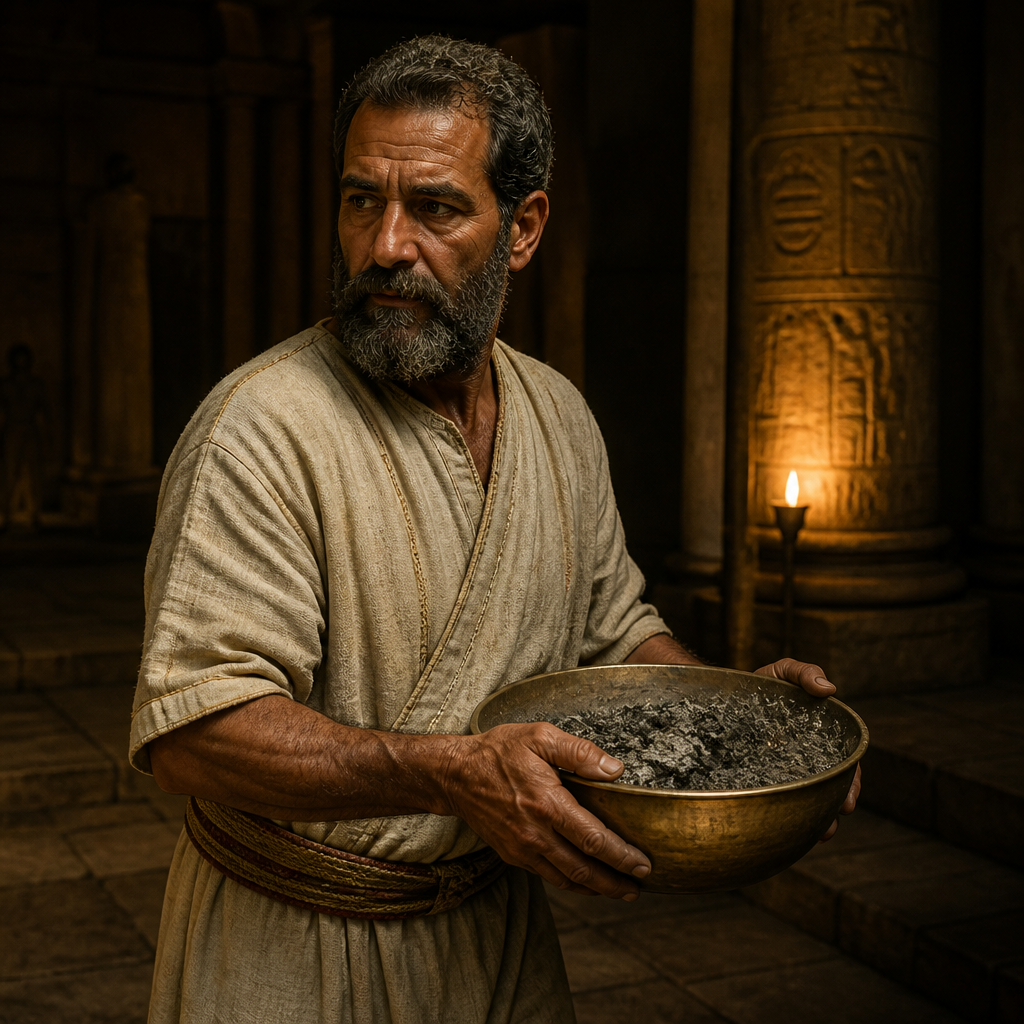
Joah, the son of Zimmah, was a member of the tribe of Levi who lived during the late 8th century BC in the Southern Kingdom of Judah. He is specifically identified as belonging to the Gershonite line, one of the three major ancestral divisions of the Levites responsible for the maintenance and service of the tabernacle and later the temple in Jerusalem.
His primary historical contribution occurs during the first year of the reign of King Hezekiah of Judah. Following a period of spiritual decline and temple neglect under Hezekiah’s predecessor, Ahaz, Joah was among the selected Levites who answered the royal call to cleanse the House of the Lord, signaling a national return to Mosaic worship standards.
Background and Family
Joah appears in the biblical record as a descendant of Gershon (or Gershom), the eldest son of Levi. According to 2 Chronicles 29:12, he was the son of Zimmah. The text further identifies him as the father of another Levite named Eden. This specific lineage underscores his inherited status and responsibility within the religious infrastructure of Judah during the Divided Monarchy. As a Gershonite, Joah would have been part of a class historically tasked with the care of the temple coverings, curtains, and external structures, though by the time of the monarchy, their roles had evolved into general temple service, including singing and maintenance.
Major Life Events
The single recorded event of Joah’s life takes place in the first month of King Hezekiah’s reign (c. 715 BC). Hezekiah initiated a massive religious reformation to reverse the idolatry of his father, Ahaz, who had closed the doors of the temple. Joah was one of two representatives from the Gershonites—alongside his son Eden—who rose to meet the king's command to "consecrate yourselves now and consecrate the house of the Lord, the God of your fathers."
Joah and his fellow Levites gathered their brothers and underwent a process of ritual purification before entering the inner parts of the temple. Their task was to remove the "uncleanness" (idolatrous items and accumulated filth) that had defiled the sanctuary. This labor was not merely physical but highly ceremonial, requiring strict adherence to the Law of Moses to ensure the temple was fit for the resumption of the daily sacrifices and the Passover.
Relationship to Other Biblical Figures
Joah’s most significant contemporary relationship was with King Hezekiah, whose decree mobilized Joah into service. Within the Levitical ranks, he worked alongside representatives from the other clans: Mahath and Joel of the Kohathites, and Kish and Azariah of the Merarites. The inclusion of his son, Eden, in the same verse suggests a multi-generational commitment to the temple restoration project, highlighting the role of the family unit in maintaining the Levitical covenant.
Spiritual Significance
Though his mention is brief, Joah represents the essential role of the secondary leadership in biblical history. While Hezekiah provided the vision for reform, it was men like Joah who executed the difficult, manual labor of purification. In the context of 2 Chronicles, Joah serves as a model of immediate obedience. The text notes that the Levites "set to work" as soon as the call was issued, illustrating the readiness required for spiritual renewal. His participation ensured that the physical space of the temple reflected the spiritual state of the people, facilitating the restoration of the broken covenant between Yahweh and Judah.
Joah’s significance lies in his role as a functional agent of revival. In the Chronicler’s history, the Levites are portrayed as the backbone of the nation's spiritual health. By listing Joah by name and lineage, the biblical text validates the importance of individual service in collective national reform. He exemplifies the Gershonite commitment to the sanctity of the temple during a critical transition period in the Divided Monarchy.
His presence in the text also highlights the continuity of the Levitical service. Despite the apostasy of the previous generation, Joah and his son Eden maintained their identity and were ready to serve when the opportunity for restoration arose. This suggests a subterranean faithfulness among some Levites even during the darkest years of the Divided Monarchy.
Frequently Asked Questions
What tribe did Joah belong to?
Joah belonged to the tribe of Levi, specifically the Gershonite clan.
During which king's reign did Joah live?
Joah lived and served during the reign of King Hezekiah of Judah in the 8th century BC.
Who was Joah's father?
According to 2 Chronicles 29:12, Joah was the son of Zimmah.
What specific task did Joah perform in the Bible?
He was one of the Levites who cleansed and sanctified the temple in Jerusalem after it had been defiled and closed under King Ahaz.
Does Joah have any children mentioned in the text?
Yes, 2 Chronicles 29:12 mentions his son, Eden, who served alongside him in the temple purification.
Family & Relationships
Parents
 Zimmah, Levite of the Divided MonarchyFather2 Chronicles 29:12Stated
 Joah, Son of Zimmah and Father of EdenThis page
Children
 Eden, Assistant of KoreSon2 Chronicles 29:12Stated
Connected Figures
Family
Father · 2 Chronicles 29:12
A Gershonite Levite during the reign of King Hezekiah whose lineage was instrumental in the purification of the Temple.
Son · 2 Chronicles 29:12
Eden was a Levite official appointed to faithfully distribute consecrated offerings to priests in the cities of Judah during the reign of King Hezekiah.
Divided MonarchyFirst: 2 Chronicles 31:152 versesLevite administrator and distributor of offeringsLevi
Categories
Mentions by Book
- 2 Chronicles1
Scripture References
All 1 indexed verse, in canonical order, from the Berean Standard Bible.
2 Chronicles · 1
- 2 Chronicles 29:12Partial
Then the Levites set to work: Mahath son of Amasai and Joel son of Azariah from the Kohathites; Kish son of Abdi and Azariah son of Jehallelel from the Merarites; Joah son of Zimmah and Eden son of Joah from the Gershonites;
Others Named Joah
Compare all 5 bearers →Joah, Recorder to King Josiah2 Chronicles 34:8
A high-ranking royal official and 'recorder' who served King Josiah during the 7th-century BC reforms and the restoration of the Temple in Jerusalem.
Joah, Son of Obed-edom1 Chronicles 26:4
A Levite gatekeeper and the third son of Obed-edom, appointed to service during the United Monarchy under King David.
Joah, Son of Zimmah1 Chronicles 6:21
A Levite of the Gershonite line during the Divided Monarchy, recorded in the ancestral genealogies of 1 Chronicles.
Joah, Recorder to King Hezekiah2 Kings 18:18
A high-ranking royal official and 'recorder' who served King Hezekiah during the Assyrian siege of Jerusalem in the 8th century BC.