Baanah, Son of Rimmon
A Benjamite leader of raiding parties who assassinated King Ish-bosheth during the United Monarchy, expecting a reward from King David but receiving execution instead.
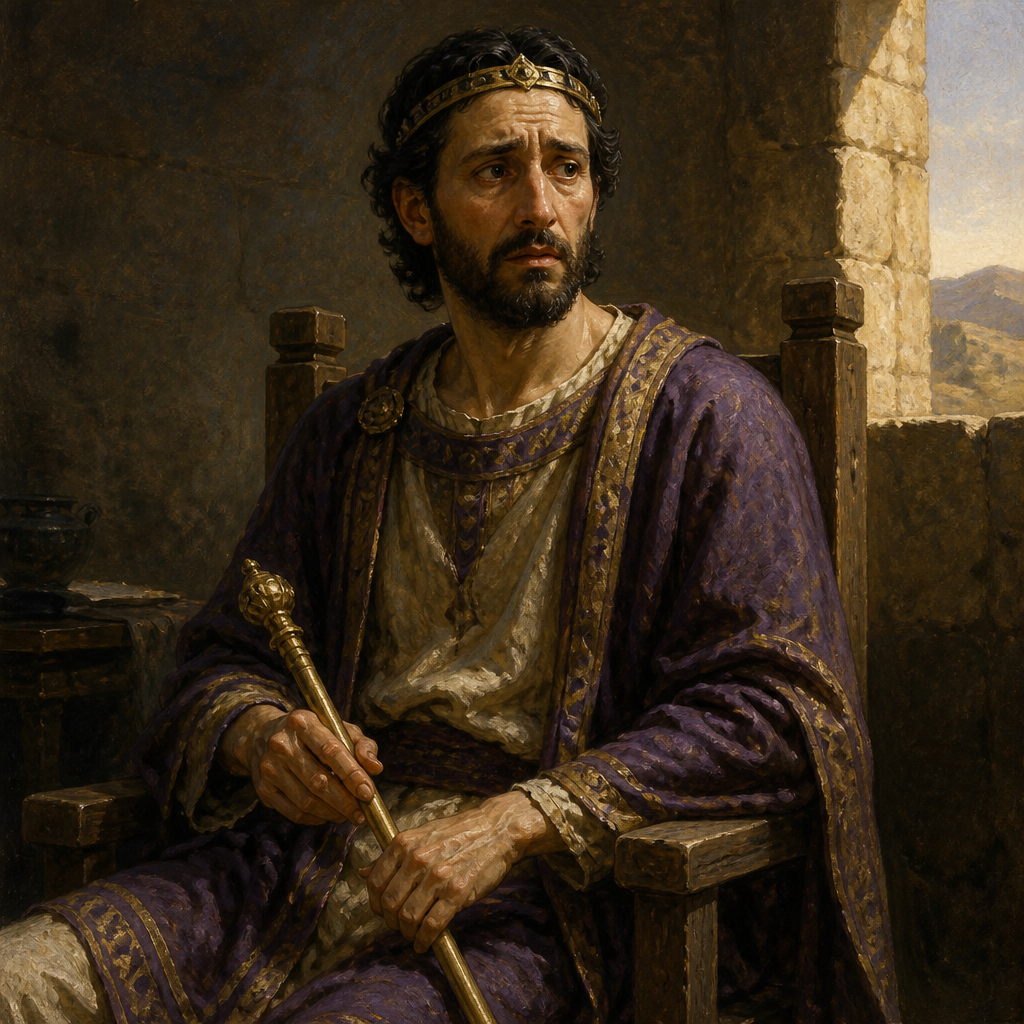
Baanah was a military leader during the turbulent transition of power in Israel following the death of King Saul. A member of the tribe of Benjamin, specifically from the town of Beeroth, Baanah served under Saul’s son and successor, Ish-bosheth. Along with his brother Rechab, Baanah commanded raiding parties that fought on behalf of the house of Saul against the rising influence of David.
His role in biblical history is defined by a singular, violent act of betrayal. Believing that the tide of history had turned irrevocably toward David, Baanah and his brother opted to assassinate their own sovereign, Ish-bosheth, in hopes of securing favor and political standing within the new Davidic administration. This event serves as a stark narrative lesson in the early books of the Kings regarding David’s commitment to justice and his refusal to sanction treachery, even when it benefited his own claim to the throne.
Background and Family
Baanah was a son of Rimmon the Beerothite, belonging to the tribe of Benjamin. The biblical record specifically notes in 2 Samuel 4:2 that Beeroth was considered part of Benjamin, likely to clarify the tribal identity of these men despite the town's earlier Gibeonite associations. Baanah and his brother, Rechab, held positions of significant authority as leaders of raiding parties (gedudim). Their military status suggests they were experienced in tactical warfare and small-unit operations, which they eventually used to facilitate their entry into the royal residence of Ish-bosheth.
Major Life Events
Following the death of Saul and his three sons at Mount Gilboa, the commander of Saul’s army, Abner, installed Saul’s remaining son, Ish-bosheth, as king over Israel. However, David had already been anointed king over Judah. As Ish-bosheth's kingdom weakened—especially after the death of Abner—Baanah and Rechab sensed an opportunity to pivot their allegiance.
During the heat of the day, while Ish-bosheth was taking a midday nap in his house, Baanah and Rechab entered the interior under the pretense of collecting wheat. Finding the king vulnerable, they stabbed him in the stomach. To ensure their reward, they decapitated the king and traveled through the Arabah all night to bring the head of Ish-bosheth to David at Hebron.
Upon arriving, they presented the head as evidence that God had avenged David against the house of Saul. However, David’s reaction was the opposite of what they anticipated. David recalled how he had executed the Amalekite who claimed to have killed Saul, and he condemned Baanah and Rechab for murdering an innocent man in his own bed.
Relationship to Other Biblical Figures
Baanah’s primary relationship was with his brother and partner in crime, Rechab. Together, they served Ish-bosheth, the son of Saul. Their actions brought them into direct contact with King David, though the encounter resulted in their deaths. David ordered his young men to execute the brothers; their hands and feet were cut off and their bodies hung by the pool in Hebron, while the head of Ish-bosheth was given a proper burial in the tomb of Abner.
Spiritual Significance
The account of Baanah is often cited by scholars as a demonstration of David’s integrity and the "sacredness of the Lord's anointed." Baanah acted out of political expediency and a mercenary spirit, assuming that David shared his ruthless pragmatism. By executing Baanah, David signaled that his kingdom would not be built on assassination or tribal betrayal, but on divine appointment and justice. Baanah serves as a biblical archetype of the opportunist who miscalculates the character of a righteous leader.
Spiritual Significance
Baanah’s narrative serves as a bridge between the fractured houses of Saul and David. His execution by David underscores a recurring theme in the United Monarchy: that David did not achieve the throne through his own violence or by encouraging the betrayal of his enemies. It reinforces the biblical principle that the ends do not justify the means, especially when the means involve the murder of an 'innocent man' (2 Samuel 4:11).
Furthermore, the mention of Baanah’s Benjamite lineage highlights the internal collapse of Saul’s own tribe. That men from Saul’s own tribe would be the ones to assassinate his son indicates the complete disintegration of the northern kingdom’s morale and loyalty before the unification under David.
Frequently Asked Questions
Who was Baanah’s father?
Baanah was the son of Rimmon the Beerothite, from the tribe of Benjamin.
What was Baanah’s role in Ish-bosheth’s army?
He and his brother Rechab were leaders of raiding parties (captains of bands) for the house of Saul.
How did Baanah die?
He was executed by King David's men as punishment for the murder of Ish-bosheth.
Why did Baanah kill Ish-bosheth?
He likely killed Ish-bosheth to gain favor with David, believing that removing the last rival to the throne would earn him a high reward.
What happened to Baanah's body after his death?
According to 2 Samuel 4:12, his hands and feet were cut off and his body was hung by the pool in Hebron.
Connected Figures
Rechab
Brother and accomplice
Ish-bosheth
King and victim

David
Judge and executioner
Rimmon the Beerothite
Father
Categories
Mentions by Book
- 2 Samuel4
Family & Relationships
Sibling
Rechab, Captain of the United Monarchy
2 Samuel 4:2
Parent
2 Samuel 4:2
Sibling
Rechab, Captain of the United Monarchy
2 Samuel 4:2
Others Named Baanah
Baanah, Signatory to the CovenantNehemiah 10:27
A Jewish leader who joined Nehemiah in signing the solemn covenant to observe God's law during the post-exilic return to Jerusalem.
Baanah, Father of Heled2 Samuel 23:29
A Netophathite from the tribe of Judah whose son, Heled, served as one of King David’s elite warriors and military commanders.
Baanah, Leader of the ReturnEzra 2:2
A prominent Jewish leader who accompanied Zerubbabel and Nehemiah in the first wave of exiles returning from Babylon to Jerusalem around 538 BC.