An Unnamed Ancestor of Abiathar
A Levite priest of the house of Eli whose lineage linked the judgments of the era of the Judges to the transition of the United Monarchy.
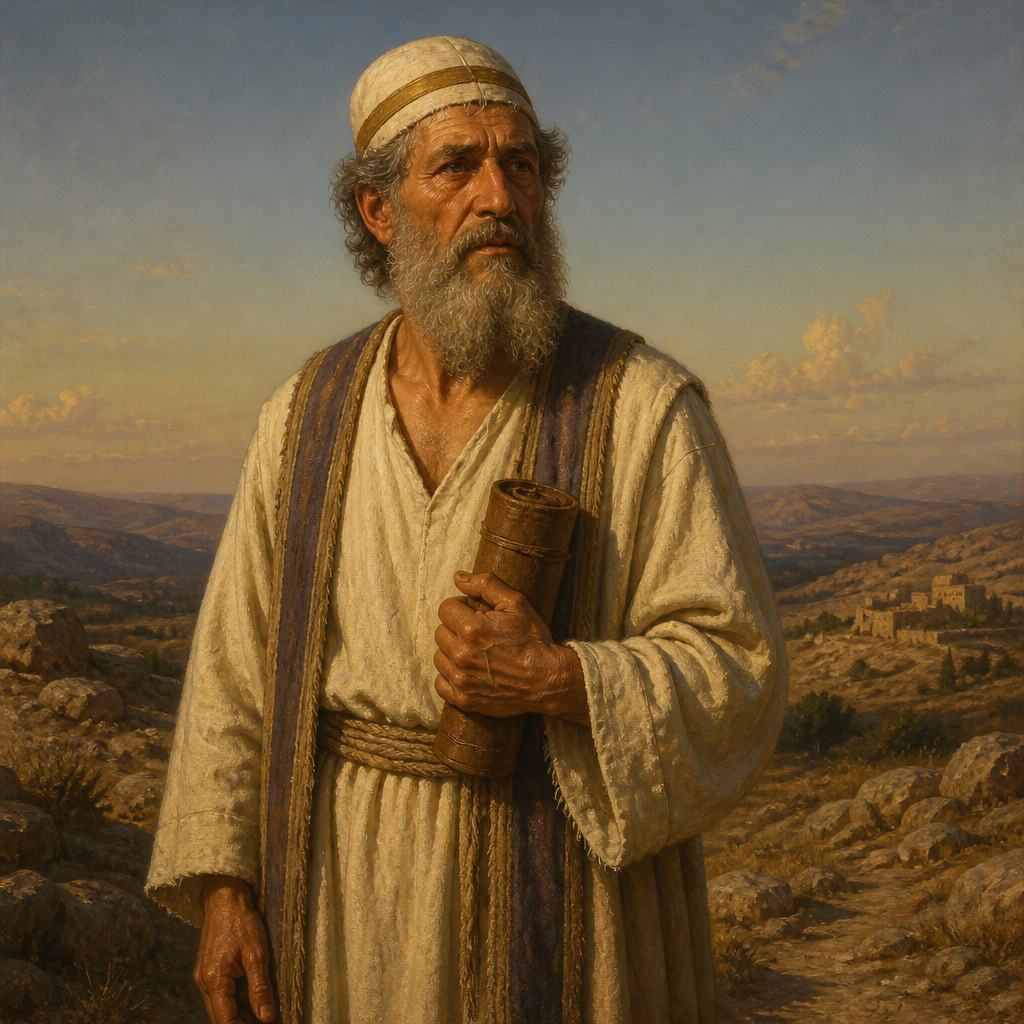
This unnamed figure is a member of the Tribe of Levi, specifically belonging to the ill-fated house of Eli. He serves as a critical genealogical link between the high priest Eli, who governed Israel during the late Period of the Judges, and Abiathar, the last high priest of that line who served under King David. His existence is verified through the fulfillment of prophecy regarding the displacement of Eli’s descendants from the priesthood.
While this individual is not mentioned by name, his identity is essential to the biblical narrative of divine judgment. He represents the continued presence of Eli's household in the tabernacle service at Shiloh and later Nob, maintaining the priestly function until the eventual banishment of his descendant by King Solomon. His life spans the volatile transition from the rule of the Judges to the establishment of the Israelite monarchy.
Background and Family
The unnamed ancestor belongs to the Tribe of Levi and the specific house of Eli. As a descendant of Eli, he was an inheritor of the high priestly line through Ithamar, the son of Aaron. However, this lineage was marked by the divine curse pronounced against Eli in 1 Samuel 2 due to the wickedness of Eli’s sons, Hophni and Phinehas. The biblical record establishes this figure as the child of a priest within Eli’s household and the father of the next generation that would eventually lead to Abiathar.
His family resided primarily in Shiloh, the religious center of Israel during the Conquest and Judges era, where the Tabernacle was stationed. The family’s identity was inextricably tied to the sanctuary, a role that defined their social and spiritual status within the tribal confederacy of Israel.
Major Life Events
Because this figure is identified primarily through his placement in a genealogical and prophetic succession, the specific details of his personal life remain largely unrecorded. However, his life was defined by the looming fulfillment of the prophecy against his house. He lived through the catastrophic loss of the Ark of the Covenant to the Philistines and the subsequent decline of Shiloh as a spiritual center.
As a priest, he would have been responsible for the ritual sacrifices and the maintenance of the Mosaic Law during a time of significant national transition. His role was to preserve the priestly functions even as the political landscape shifted from the leadership of Samuel to the reign of Saul.
Relationship to Other Biblical Figures
This individual stands as a bridge between the judgment of the past and the political shifts of the future. He is the child of a priest who served under Eli and is the father of the generation that would interact with the first kings of Israel. His most significant biblical connection is his descendant, Abiathar. In 1 Kings 2:27, the text notes that when Solomon removed Abiathar from the priesthood, it was the final act in fulfilling the word spoken against this man’s household at Shiloh.
"So Solomon banished Abiathar from the priesthood of the LORD and thus fulfilled the word that the LORD had spoken at Shiloh against the house of Eli."
Spiritual Significance
The primary significance of this unnamed priest lies in the concept of divine sovereignty and the certainty of God’s word. Though he may have served faithfully in his own right, he lived under the shadow of a generational judgment. His inclusion in the narrative—even by implication—underscores that God’s decrees are carried out across centuries and through multiple generations.
His life serves as a somber reminder of the consequences of ministerial failure. The transition of the priesthood from the house of Eli to the house of Zadok was a central theme in the early monarchy, signifying a purification of the office. This figure represents the endurance of a family line until the exact moment of its divinely appointed conclusion.
Spiritual Significance
The theological importance of this figure is rooted in the doctrine of God's faithfulness to His word, specifically regarding judgment. He illustrates that the 'house of Eli' remained active in Israel's cultic life for generations after the initial prophecy in 1 Samuel, showing that divine timing often operates on a longer horizon than human expectation. His existence ensures the continuity required for the prophecy to be fulfilled legally and historically during the reign of Solomon.
Furthermore, he represents the tragic nature of the Eliac line—a family chosen for holiness that lost its standing due to a failure to restrain evil. In the broader scope of biblical history, his role facilitates the transition from the old order of the Judges to the new order of the Monarchy, where the priesthood would eventually be reorganized under the Zadokite line.
Frequently Asked Questions
Who was the father of this unnamed priest?
He was the child of an unnamed priest who belonged to the household of Eli at Shiloh.
What tribe did he belong to?
He was a member of the Tribe of Levi, the tribe set apart for the service of the Lord and the priesthood.
In which book of the Bible is his household's end recorded?
The end of his priestly line is recorded in 1 Kings, specifically when King Solomon removes his descendant Abiathar from office.
What era did he live in?
He lived during the transition from the Period of the Judges to the early United Monarchy.
Connected Figures

Categories
Mentions by Book
- 1 Kings1
Family & Relationships
Child
1 Kings 2:27
Parent
An Unnamed Priest of Eli’s Household
1 Kings 2:27
Others Named An Unnamed Ancestor of Abiathar
Matthan, Ancestor of JesusMatthew 1:15
Matthan was the grandfather of Joseph and a direct paternal ancestor of Jesus Christ within the tribe of Judah during the Intertestamental Period.