Epher, Son of Midian
Epher was a son of Midian and a grandson of Abraham through his wife Keturah, recognized as a founding patriarch of a Midianite clan.
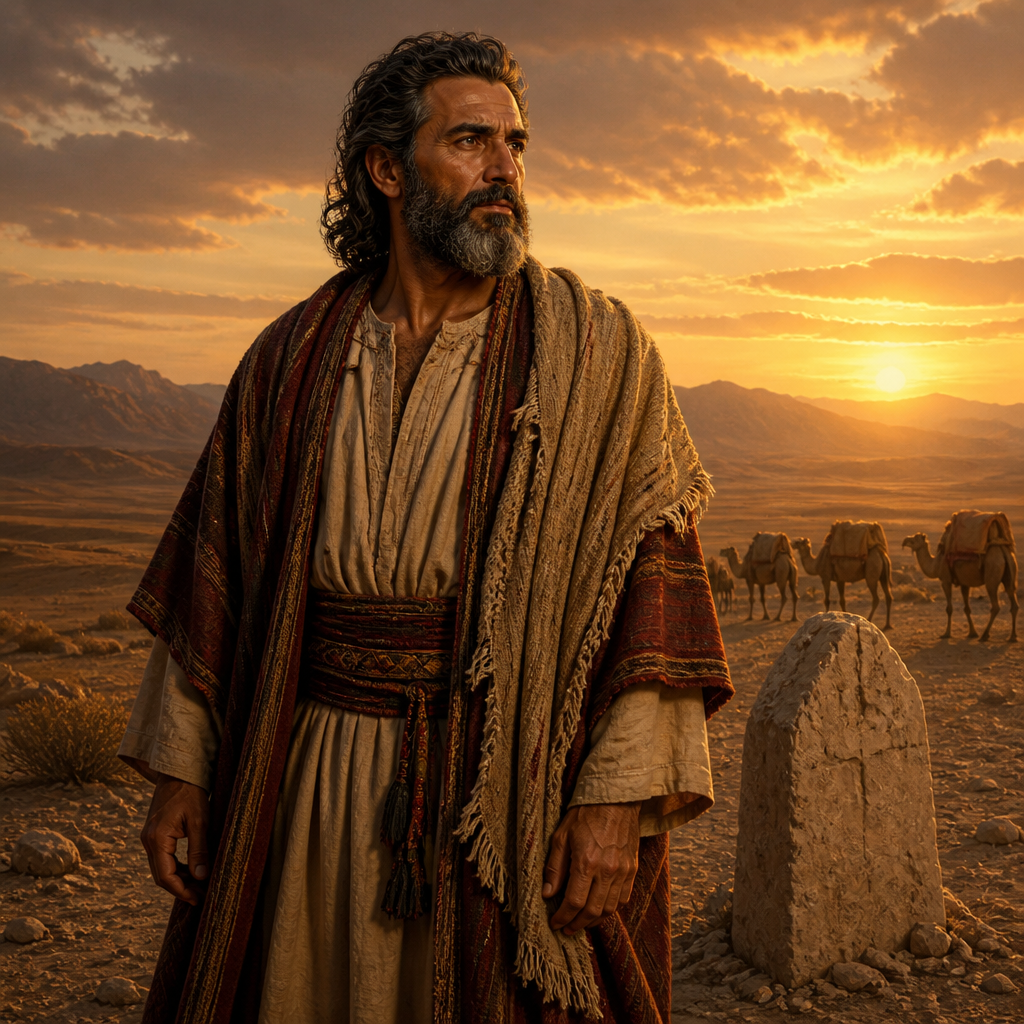
Epher is a figure appearing in the patriarchal genealogies of the Old Testament. He is identified as the second son of Midian, which places him in the third generation of descendants from the patriarch Abraham. His lineage is specifically traced through Keturah, the woman Abraham married following the death of Sarah. As a son of Midian, Epher represents one of the foundational branches of the Midianite people, a group that would play a significant role in the later history of Israel.
While the biblical record regarding Epher is brief, consisting primarily of genealogical listings, his inclusion serves to document the expansion of Abraham’s progeny in fulfillment of the divine promise that he would be the father of many nations. Epher is consistently grouped with his four brothers—Ephah, Hanoch, Abida, and Eldaah—forming the core leadership or ancestral heads of the Midianite tribes located in the regions surrounding the Sinai Peninsula and the Arabian desert.
Background and Family
Epher is situated within the genealogical records of the late Patriarchal Period. According to Genesis 25, after the death of Sarah, Abraham took another wife named Keturah. Keturah bore Abraham six sons: Zimran, Jokshan, Medan, Midian, Ishbak, and Shuah. Epher’s father was Midian, who became the progenitor of the Midianite people.
Epher was one of five brothers. The biblical text in Genesis 25:4 and 1 Chronicles 1:33 lists them as Ephah, Epher, Hanoch, Abida, and Eldaah. These five individuals are explicitly identified as the "sons of Midian" and the "descendants of Keturah." The mention of Keturah is significant in biblical historiography as it distinguishes these lineages from those of Isaac (the son of promise through Sarah) and Ishmael (the son through Hagar).
Major Life Events
The Bible does not record specific narrative events, speeches, or geographical movements for Epher individually. His primary role in the text is to serve as a link in the genealogical chain. In the cultural context of the ancient Near East, the listing of a son in this manner usually implies that Epher became the chieftain or eponymous ancestor of a specific clan within the Midianite confederation.
Before Abraham died, the scripture notes that he gave gifts to the sons of his concubines and sent them away from his son Isaac, eastward to the land of the East (Genesis 25:6). As a son of Midian, Epher would have been part of this migration, settling in the arid regions to the east and south of Canaan, likely in the northern Arabian Peninsula or the Sinai region.
Relationship to Other Biblical Figures
Epher’s identity is defined by his relationship to the great patriarch Abraham. As a grandson of Abraham, he is part of the broader family of the Hebrews, yet he stands outside the covenant line of Isaac. His relationship with his siblings—Ephah, Hanoch, Abida, and Eldaah—suggests a shared tribal identity. The Midianites, the descendants of Epher and his kin, would later encounter the Israelites during the Exodus and the Period of the Judges, sometimes as allies (such as Jethro, Moses’ father-in-law) and often as adversaries.
Spiritual Significance
The spiritual significance of Epher lies in the fulfillment of the Abrahamic Covenant. God promised Abraham in Genesis 17:5 that he would be the "father of a multitude of nations." The existence of Epher and the other sons of Keturah provides historical evidence within the text of the staggering growth of Abraham's biological family. Though Epher is not a recipient of the specific covenantal promises given to Isaac and Jacob, his presence in the record acknowledges the sovereignty of God over the various tribes and nations that emerged in the ancient Levant. The repetition of his name in the genealogical summary of 1 Chronicles 1:33 underscores the importance of tribal origins in the identity of the post-exilic community, reminding them of their ancestral connections to the surrounding peoples.
Spiritual Significance
Epher’s primary significance is genealogical and representative. As a grandson of Abraham through Keturah, he represents the expansion of the Abrahamic line beyond the chosen lineage of Isaac. His inclusion in the records of Genesis and 1 Chronicles serves to map the ethnography of the ancient Near East, specifically the origins of the Midianite tribes who inhabited the Sinai and Arabian deserts.
Theologically, Epher illustrates that God's involvement with Abraham resulted in a wide-reaching legacy that influenced many regional nations. While Epher remains a silent figure in the narrative, his place in the inspired text ensures that the full scope of Abraham’s progeny is documented, highlighting the historical reality of the 'many nations' that descended from the patriarch.
Frequently Asked Questions
Who was Epher’s father?
Epher’s father was Midian, who was one of the sons of Abraham and Keturah.
Which tribe or nation does Epher belong to?
Epher is an ancestor of the Midianites, a nomadic and semi-nomadic people living in the desert regions east of the Jordan River and the Red Sea.
Where is Epher mentioned in the Bible?
Epher is mentioned twice: once in the genealogy of Genesis 25:4 and again in the genealogical records of 1 Chronicles 1:33.
Was Epher a son of Sarah?
No, Epher was a grandson of Abraham through his second wife (or concubine) Keturah, not Sarah.
What does the name Epher mean?
In Hebrew, the name Epher (עֵפֶר) is often associated with the word for 'calf' or 'young gazelle,' or alternatively related to 'dust' or 'ore.'
Connected Figures

Categories
Mentions by Book
- 1 Chronicles1
- Genesis1
Family & Relationships
Sibling
Genesis 25:4
Sibling
Genesis 25:4
Sibling
Genesis 25:4
Sibling
Genesis 25:4
Sibling
Genesis 25:4
Sibling
Genesis 25:4
Sibling
Genesis 25:4
Parent
Genesis 25:2
Sibling
Genesis 25:4
Others Named Epher
Epher, Clan Head of Manasseh1 Chronicles 5:24
Epher was a prominent clan leader and warrior of the tribe of Manasseh during the era of the Divided Monarchy, noted for his status as a mighty man of valor.
Epher, son of Ezrah1 Chronicles 4:17
A descendant of Judah listed among the sons of Ezrah in the genealogical records of the Divided Monarchy.