Ephah, Son of Midian
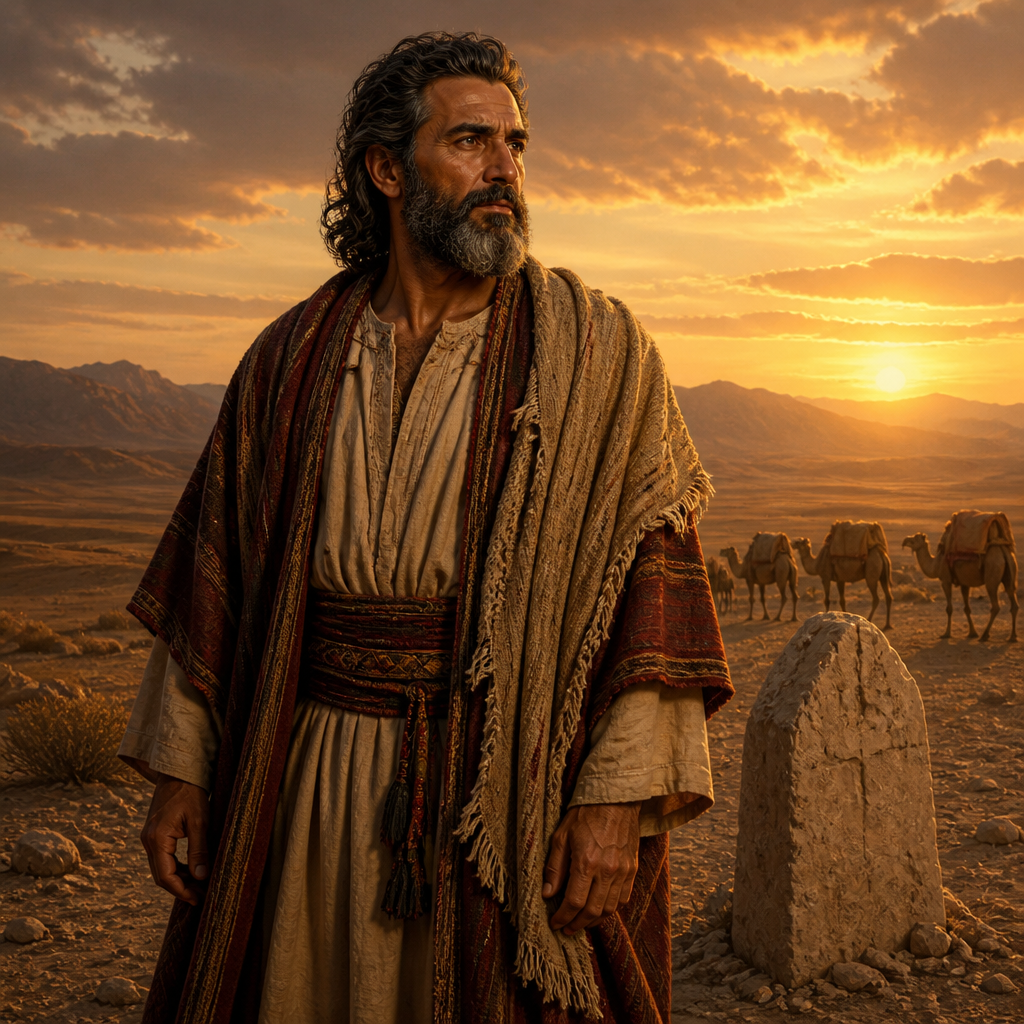
Ephah was the firstborn son of Midian and a grandson of Abraham through his wife Keturah, serving as a patriarchal figure in the Sinai region.
Ephah is a figure belonging to the patriarchal period of biblical history, identified in the genealogical records of Genesis and 1 Chronicles as a prominent descendant of Abraham. He was the first of five sons born to Midian, making him a grandson of Abraham and his second wife (or concubine), Keturah. The biblical record places Ephah within the broader narrative of Abraham’s later life, following the death of Sarah and the marriage of Isaac.
As a son of Midian, Ephah is a foundational figure for the Midianite tribes, a group of semi-nomadic people who inhabited the rugged desert regions of the Sinai Peninsula and the Transjordan. While his personal biography is not detailed in the biblical text, his inclusion in the sacred genealogies signifies his role as a tribal progenitor and a carrier of the Abrahamic lineage into the eastern and southern desert territories.
Background and Family
The biblical account of Ephah is found primarily within the genealogical lists that document the expansion of Abraham’s family tree. According to Genesis 25, after the passing of Sarah, Abraham took another wife named Keturah. Among the children born to them was Midian. Ephah is recorded as the eldest son of Midian, followed by his four brothers: Epher, Hanoch, Abida, and Eldaah.
The sons of Midian were Ephah, Epher, Hanoch, Abida, and Eldaah. All these were descendants of Keturah. (Genesis 25:4)
This lineage establishes Ephah as a part of the "Keturahite" branch of Abraham's descendants. Unlike Isaac, who remained the primary heir of the covenant promise and the land of Canaan, Ephah and his kin were sent away by Abraham toward the land of the East. This was a strategic move by the patriarch to ensure that Isaac remained the sole claimant to the central inheritance while providing for his other sons with gifts (Genesis 25:6).
Major Life Events
The Bible does not record specific narrative events, dialogues, or actions performed by Ephah as an individual. His historical footprint is strictly genealogical. However, his placement at the head of the list of Midian’s sons suggests his status as a firstborn and a primary tribal leader within the Midianite confederation.
As a patriarch of the Sinai region, Ephah would have been part of the migration southward and eastward. The Midianites, whom he helped establish, became a significant presence in biblical history, known for their skill in desert trade, metallurgy, and their eventually complex relationship with the Israelites during the Exodus and the Period of the Judges.
Relationship to Other Biblical Figures
Ephah’s primary identity is defined by his relationship to his father, Midian, and his grandfather, Abraham. He shared his upbringing and tribal formation with his four brothers—Epher, Hanoch, Abida, and Eldaah. While the biblical text provides no record of his interactions with his cousins (the descendants of Isaac or Ishmael), his identity as a "son of Midian" firmly connects him to the broader family of Abraham. The repetition of his genealogy in 1 Chronicles 1:33 serves to validate the continuity of the Abrahamic lines through the centuries, even into the post-exilic period when the Chronicler was active.
Spiritual Significance
In the context of the patriarchal period, Ephah represents the fulfillment of God's promise to Abraham that he would be the "father of many nations" (Genesis 17:4). While Ephah was not the child of the covenant promise like Isaac, he was nonetheless a recipient of the physical blessings bestowed upon Abraham’s household. His existence highlights the diversity of peoples emerging from the Abrahamic root and the geographic expansion of these tribes into the Arabian and Sinai wilderness. Scholars often view Ephah as a representative of the early nomadic chiefs who managed the trade routes of the ancient Near East, bridge-building between the settled populations of Canaan and the vast eastern deserts.
Spiritual Significance
Theologically, Ephah signifies the literal fulfillment of the divine promise to multiply Abraham’s descendants across the earth. His inclusion in the genealogies of both Genesis and 1 Chronicles emphasizes that no branch of the Abrahamic family was forgotten by the biblical record-keepers. He serves as a bridge between the central narrative of the patriarchs and the peripheral tribes of Midian that would later interact with figures like Moses and Gideon.
Frequently Asked Questions
Who was Ephah's father?
Ephah was the son of Midian, making him a grandson of Abraham.
Who was Ephah's grandmother?
His grandmother was Keturah, whom Abraham married after the death of Sarah.
Where did Ephah and his family live?
They were sent by Abraham toward the 'land of the East,' eventually settling in the regions associated with the Midianites, including the Sinai and Transjordan.
How many siblings did Ephah have?
The Bible mentions four brothers: Epher, Hanoch, Abida, and Eldaah.
Is Ephah mentioned in the New Testament?
No, Ephah is only mentioned in the genealogical records of Genesis and 1 Chronicles in the Old Testament.
Connected Figures

Categories
Mentions by Book
- 1 Chronicles1
- Genesis1
Family & Relationships
Sibling
Genesis 25:4
Sibling
Genesis 25:4
Sibling
Genesis 25:4
Sibling
Genesis 25:4
Sibling
Genesis 25:4
Sibling
Genesis 25:4
Parent
Genesis 25:2
Sibling
Genesis 25:4
Sibling
Genesis 25:4
Others Named Ephah
Ephah, Concubine of Caleb1 Chronicles 2:46
Ephah was a concubine of Caleb within the tribe of Judah who mothered three sons and contributed to the genealogical expansion of the Hezronite line.
Ephah, Son of Jahdai1 Chronicles 2:47
Ephah was a member of the tribe of Judah mentioned in the genealogical records of Caleb, specifically listed as one of the six sons of Jahdai.