Elihu, Son of Barachel
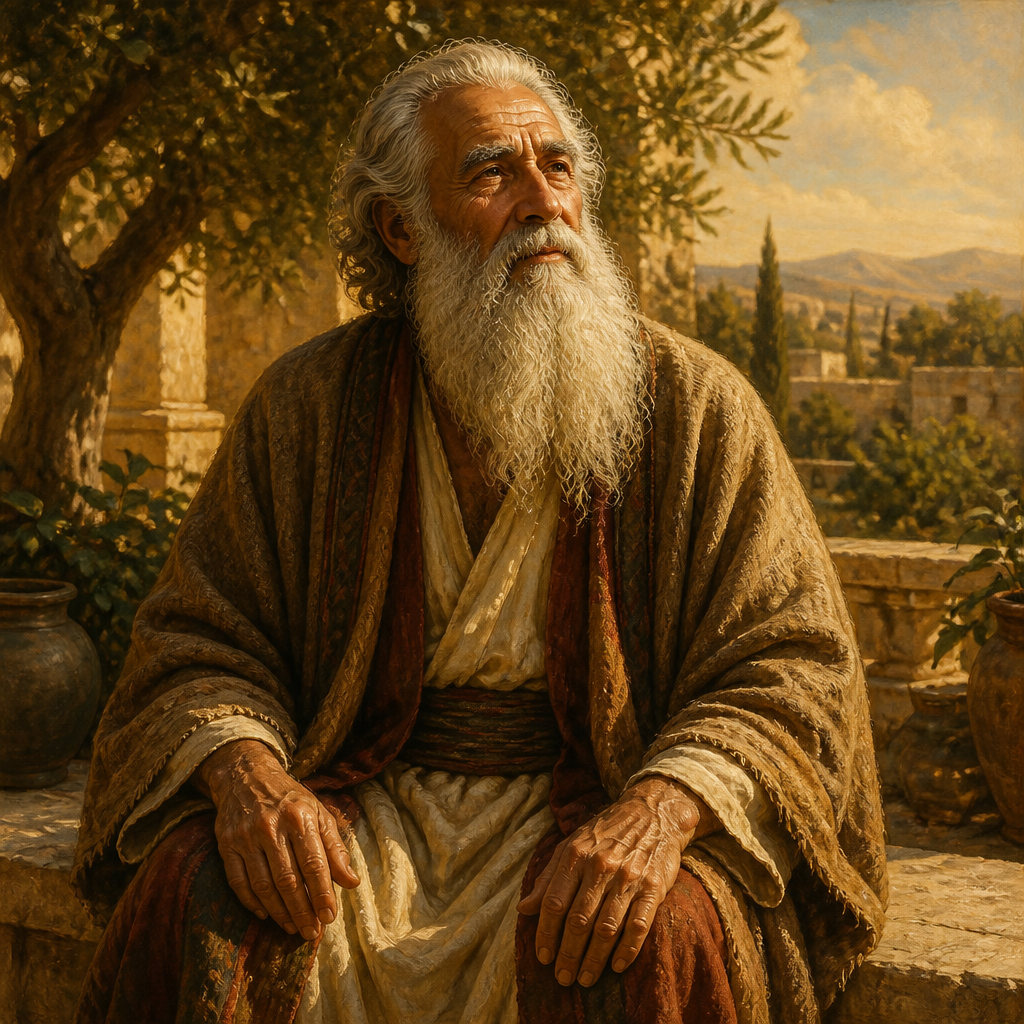
A young man who addressed Job and his friends during their debate, defending God’s justice and sovereignty with passionate theological arguments.
Elihu, son of Barachel the Buzite, is a pivotal figure in the Book of Job, appearing during the Patriarchal Period. He is introduced as a younger observer who listened intently to the lengthy dialogue between Job and his three elder friends—Eliphaz, Bildad, and Zophar. While not mentioned in the opening chapters, Elihu emerges in Job 32, moved by a profound sense of indignation after the three friends failed to provide a satisfactory answer to Job’s suffering and after Job appeared to justify himself over God.
His discourse is the longest uninterrupted speech by a human in the book, spanning several chapters. Elihu serves as a bridge between the human arguments of the friends and the climactic revelation of God from the whirlwind. His intervention is characterized by a balance of respect for his elders and a fervent, almost impatient, commitment to what he perceives as divine truth, emphasizing that wisdom is a gift of the Spirit rather than a mere byproduct of old age.
Background and Family
Elihu is identified specifically as the son of Barachel the Buzite, of the family of Ram (Job 32:2). This genealogical detail is significant, as it places him within a specific Semitic context. The designation "Buzite" likely links him to Buz, the son of Nahor and nephew of Abraham (Genesis 22:21), suggesting a heritage rooted in the early Patriarchal Period. His lineage from the "family of Ram" further anchors him in a historical, albeit ancient, tribal setting.
Unlike Job’s other three friends, who are introduced at the beginning of the narrative, Elihu is not mentioned until the debate has reached a stalemate. His youth is a defining characteristic; he explicitly states that he waited to speak because he deferred to the seniority of Eliphaz, Bildad, and Zophar. According to Job 32:4, "Elihu had waited to speak to Job because the others were older than he." However, his silence was eventually broken by a "kindled anger"—a phrase used repeatedly to describe his reaction to the circular and unproductive arguments he had witnessed.
Major Life Events
Elihu’s entire biblical footprint is contained within his single, extended intervention in the book of Job. After the three friends cease their efforts to silence Job, Elihu steps forward. His speech is divided into several distinct movements (Job 34:1, 35:1, 36:1), during which he addresses both Job and the silent elders.
His first primary action is the expression of his frustration. He declares that "it is the spirit in a person, the breath of the Almighty, that gives them understanding" (Job 32:8), arguing that wisdom is not exclusive to the aged. He then proceeds to dismantle Job’s claim of innocence, not by accusing Job of specific secret sins as the others had, but by rebuking Job’s attitude toward God during his suffering.
Throughout the chapters of his discourse, Elihu defends the character of God. He argues that God uses suffering as a means of discipline and refinement, rather than purely as a punitive measure. He paints a picture of a God who is both transcendent and sovereign, one who does not owe man an explanation but who is nonetheless just in all His dealings. His speech concludes with a magnificent description of God’s power in the natural world—storms, snow, and thunder—which serves as an immediate atmospheric precursor to the appearance of Yahweh.
Relationship to Other Biblical Figures
Elihu’s relationship with Job and his friends is one of respectful yet firm correction. He listens to Job’s three friends (Eliphaz, Bildad, and Zophar) but ultimately finds their logic flawed because they condemned Job without truly answering his arguments (Job 32:3). Conversely, he is angry with Job because Job "justified himself rather than God" (Job 32:2).
Interestingly, Elihu is the only figure in the dialogue who is not mentioned in the epilogue of the book. When God rebukes the three friends and commands them to offer sacrifices, Elihu is notably absent from the divine reprimand. This has led many scholars to conclude that while Elihu’s perspective was still limited compared to God’s, his motivations and theological direction were more aligned with the truth than those of the three elders.
Spiritual Significance
Elihu represents a "middle way" in theodicy—the vindication of God’s goodness in the face of evil. He moves the conversation away from the simple cause-and-effect theology of the three friends (who believed all suffering was a direct result of sin) toward a more nuanced understanding of God’s pedagogical use of pain.
His insistence that God is "greater than man" (Job 33:12) and that God speaks in ways humans often fail to perceive (Job 33:14) emphasizes divine sovereignty. Elihu’s role is that of a herald; he prepares the way for the Lord by shifting the focus from human suffering to divine majesty. His contribution highlights the biblical theme that while human wisdom is limited, the "breath of the Almighty" can provide insight to those who seek truth, regardless of their age or status.
Spiritual Significance
Elihu serves as a critical theological transition in the Book of Job. He breaks the deadlock between Job’s self-defense and the friends' accusations by introducing the concept of suffering as divine discipline and a means of grace. His speeches are significant because they uphold God's absolute justice and sovereignty without resorting to the simplistic, and ultimately incorrect, legalism of the three older friends.
Theologically, Elihu emphasizes the transcendence of God, arguing that God’s actions are not subject to human standard of judgment. Because he is spared the divine rebuke leveled at the other friends in the final chapter, many interpreters view him as a more reliable, though still humanly limited, witness to the nature of God’s providence during the Patriarchal era.
Frequently Asked Questions
Why was Elihu angry with Job?
Elihu was angry with Job because Job appeared to justify his own righteousness at the expense of God's justice, effectively blaming God for his unfair treatment.
Why did Elihu wait so long to speak?
As a younger man, Elihu followed the cultural custom of the Patriarchal Period by waiting for his elders to finish speaking first, believing that 'years should teach wisdom' (Job 32:7).
What was Elihu's main argument?
Elihu argued that God is sovereign and just, and that He uses suffering not just for punishment, but to discipline, warn, and refine human beings.
Was Elihu rebuked by God at the end of the Book of Job?
No, the biblical text only records God rebuking Eliphaz, Bildad, and Zophar. Elihu is not mentioned in the final judgment or the restoration of Job.
Who was Elihu’s father?
Elihu was the son of Barachel the Buzite, belonging to the family of Ram.
Connected Figures
Job
Subject of Elihu's discourse

Barachel
Father

Eliphaz the Temanite
Elder associate and debate participant
Bildad the Shuhite
Elder associate and debate participant

Zophar the Naamathite
Elder associate and debate participant
Categories
Mentions by Book
- Job7
Family & Relationships
Parent
Job 32:2
Others Named Elihu
Elihu, Great-grandfather of Samuel1 Samuel 1:1
A Levite of the United Monarchy period and the paternal great-grandfather of the prophet Samuel.
Elihu, Levite of the Divided Monarchy1 Chronicles 26:7
A Levite gatekeeper and son of Shemaiah, noted for his capability and strength in the service of the Tabernacle during the Divided Monarchy.
Elihu, Commander of Manasseh1 Chronicles 12:20
A high-ranking military chief from the tribe of Manasseh who defected to David at Ziklag during the Divided Monarchy era.
Elihu, Brother of David1 Chronicles 27:18
A son of Jesse and brother of King David who served as the tribal leader of Judah during the United Monarchy.