Job
Who was Job in the Bible?
A patriarch from the land of Uz renowned for his blameless character, immense suffering, and unwavering perseverance in his relationship with God.
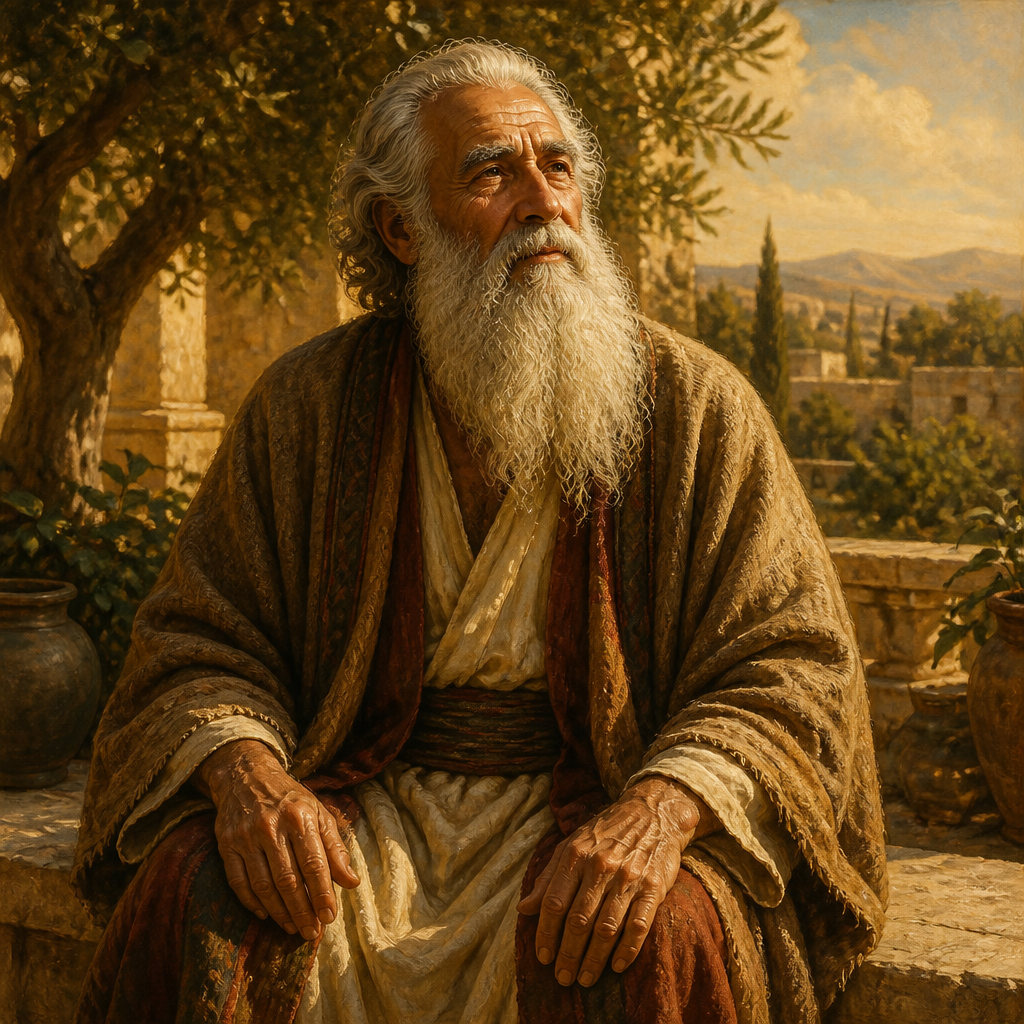
Job is the central figure of the Book of Job in the Old Testament, depicted as a man of extraordinary wealth, piety, and integrity living in the land of Uz. The biblical narrative introduces him as 'blameless and upright,' a man who feared God and shunned evil. His life serves as the primary scriptural exploration of theodicy—the vindication of divine goodness and providence in view of the existence of evil and suffering.
His story is characterized by a dramatic transition from prosperity to total loss, triggered by a celestial challenge regarding the sincerity of his faith. Despite the destruction of his property, the death of his ten children, and a debilitating physical affliction, Job maintains his integrity. His subsequent dialogue with three friends and a younger man named Elihu probes the depths of human wisdom, eventually leading to a direct encounter with God that humbles and restores him.
Background and Family
Job resided in the land of Uz, a location whose precise geographical boundaries remain unknown, though it is often associated with the regions east of the Jordan River or near Edom. The biblical text establishes Job's status as a patriarch of significant social standing and wealth. He was the father of seven sons and three daughters, whose spiritual welfare he prioritized through regular intercession and burnt offerings.
Before his trials, Job’s estate was vast, consisting of 7,000 sheep, 3,000 camels, 500 yoke of oxen, and 500 female donkeys, supported by a very large number of servants. His household was a model of patriarchal order and devotion. Following his restoration, Job fathered three additional daughters: Jemimah, Keziah, and Keren-happuch. These daughters were noted for their exceptional beauty and were uniquely granted an inheritance among their brothers, a detail that highlights Job's renewed prosperity and favor.
Major Life Events
The Testing of Job
The narrative begins in the heavenly court, where God points out Job's righteousness to Satan. Satan challenges Job's motives, arguing that his piety is merely a result of divine protection and prosperity. God permits Satan to test Job, leading to the sudden loss of his livestock, servants, and children. In response to this catastrophe, Job famously fell to the ground in worship, stating, “Naked I came from my mother’s womb, and naked I will depart. The LORD gave and the LORD has taken away; may the name of the LORD be praised” (Job 1:21).
In a second test, Job was afflicted with painful boils from head to foot. Even when his wife urged him to "curse God and die," Job refused to sin with his lips, asking, “Should we accept from God only good and not adversity?” (Job 2:10).
The Dialogues
Three friends—Eliphaz the Temanite, Bildad the Shuhite, and Zophar the Naamathite—came to comfort Job but ended up accusing him of hidden sin, arguing that his suffering was proof of divine judgment. Job vigorously defended his innocence, expressing profound grief and a desire to argue his case directly before God. He cursed the day of his birth and lamented the apparent injustice of his situation, yet he remained steadfast in his demand for an audience with the Almighty. A younger man, Elihu, later intervened to rebuke both Job for his self-justification and the friends for their failure to provide a sufficient answer.
Divine Encounter and Restoration
The climax of Job’s life occurs when the LORD answers Job out of a whirlwind. Rather than explaining the reasons for Job's suffering, God poses a series of questions about the creation and governance of the universe, demonstrating the vast distance between human understanding and divine wisdom. Job humbles himself, repenting in dust and ashes. The LORD kemudian rebukes the three friends for not speaking accurately of Him as Job had. After Job prays for his friends, God restores his fortunes, doubling his previous wealth and granting him a long life of 140 additional years, allowing him to see four generations of his descendants.
Relationship to Other Biblical Figures
Job’s primary interactions are with his unnamed wife and his four counselors: Eliphaz, Bildad, Zophar, and Elihu. While his story is largely self-contained within the book bearing his name, he is later cited as a historical model of righteousness alongside Noah and Daniel in the book of Ezekiel (Ezekiel 14:14, 20). In the New Testament, the apostle James references Job as the definitive example of perseverance, connecting his endurance to the ultimate compassion and mercy of the Lord (James 5:11).
Spiritual Significance
Job stands as the archetype of the 'righteous sufferer.' His life challenges the simplistic 'retribution theology'—the idea that prosperity always follows righteousness and suffering always follows sin. The account of Job reveals that human suffering is not always a result of personal wrongdoing and that God’s purposes often transcend human comprehension.
Job is also significant for his role as an intercessor. At the end of his trial, he is commanded by God to pray for his friends who had misrepresented the divine character. This act of grace toward his accusers coincides with the restoration of his own fortunes. His legacy, as summarized in the Epistle of James, is one of steadfastness under trial, proving that faith can survive even when the reasons for suffering remain hidden.
Job is historically and theologically significant as a non-Israelite patriarch whose righteousness was recognized by God Himself. His existence serves as a testament that the fear of God and upright living were present outside the specific lineage of the covenant people during the patriarchal era. Theologically, Job’s life provides the biblical foundation for understanding that suffering can be a test of faith rather than a punishment for sin, shifting the focus from 'why do we suffer' to 'how do we respond to God in the midst of suffering.'
His inclusion in the lists of righteous men by Ezekiel and the commendation of his endurance by James solidify his status as one of the great pillars of faith. The outcome of his life—his restoration and the doubling of his blessings—is presented not as a reward to be expected by all, but as a demonstration of the Lord's mercy and his sovereign right to bless and sustain his servants.
Frequently Asked Questions
Where was the land of Uz?
The exact location of Uz is unknown, but biblical scholars generally place it to the east of Israel, possibly in the northern Arabian desert or the region of Edom.
Who were the daughters of Job?
Job's three daughters born after his restoration were Jemimah, Keziah, and Keren-happuch, known for their great beauty and for receiving an inheritance alongside their brothers.
Why did God allow Job to suffer?
The text suggests the suffering was a test to prove to Satan that Job’s righteousness was not based solely on the material blessings God provided, but on a genuine fear of God.
What happened to Job's first ten children?
Job's seven sons and three daughters died when a mighty wind struck the house where they were feasting, causing it to collapse.
How long did Job live after his trial?
According to Job 42:16, Job lived for 140 years after his restoration, seeing his descendants to the fourth generation before dying 'old and full of years.'
Family & Relationships
 Job's WifeWifeJob 2:9Stated
 JobThis page
Children
 JemimahDaughterJob 1:1
Inferred
No verse names Jemimah and Job together; the father link is carried from the surrounding genealogy and is not stated in Scripture.Evidence: Job 1:1
 Keren-happuchDaughterJob 42:14
Inferred
No verse names Keren-happuch and Job together; the father link is carried from the surrounding genealogy and is not stated in Scripture.Evidence: Job 42:14
 KeziahDaughterJob 42:14
Inferred
No verse names Keziah and Job together; the father link is carried from the surrounding genealogy and is not stated in Scripture.Evidence: Job 42:14
Connected Figures
Family
Wife · Job 2:9
The unnamed wife of the patriarch Job who questioned his integrity and reacted to their shared suffering during his period of trial.
PatriarchsFirst: Job 2:93 versesMatriarch
Daughter · Job 1:1
Jemimah was the eldest of the three daughters born to Job after his restoration and suffering in the land of Uz.
PatriarchsFirst: Job 42:142 versesHeir and daughter of Job
Daughter · Job 42:14
Keren-happuch was the youngest of the three daughters born to the patriarch Job following his period of suffering and subsequent restoration by God.
PatriarchsFirst: Job 42:142 versesHeir to the estate of Job
Daughter · Job 42:14
The second of three daughters born to Job after his restoration, noted for her beauty and unique status as an inheritor alongside her brothers.
PatriarchsFirst: Job 42:142 versesInheritor and daughter of Job
Categories
Mentions by Book
- Job54
- Ezekiel2
- James1
Scripture References
All 57 indexed verses, in canonical order, from the Berean Standard Bible.
- Job 1:1
There was a man in the land of Uz whose name was Job. And this man was blameless and upright, fearing God and shunning evil.
- Job 1:5
And when the days of feasting were over, Job would send for his children to purify them, rising early in the morning to offer burnt offerings for all of them. For Job thought, “Perhaps my children have sinned and cursed God in their hearts.” This was Job’s regular practice.
- Job 1:8
Then the LORD said to Satan, “Have you considered My servant Job? For there is no one on earth like him, a man who is blameless and upright, who fears God and shuns evil.”
- Job 1:9
Satan answered the LORD, “Does Job fear God for nothing?
- Job 1:14
a messenger came and reported to Job: “While the oxen were plowing and the donkeys were grazing nearby,
- Job 1:20
Then Job stood up, tore his robe, and shaved his head. He fell to the ground and worshiped,
- Job 1:21Partial
saying: “Naked I came from my mother’s womb, and naked I will return. The LORD gave, and the LORD has taken away. Blessed be the name of the LORD.”
Cited as a key verse; added so References, Key Verses and Mentions by Book share one index.
- Job 1:22
In all this, Job did not sin or charge God with wrongdoing.
- Job 2:3
Then the LORD said to Satan, “Have you considered My servant Job? For there is no one on earth like him, a man who is blameless and upright, who fears God and shuns evil. He still retains his integrity, even though you incited Me against him to ruin him without cause.”
- Job 2:7
So Satan went out from the presence of the LORD and infected Job with terrible boils from the soles of his feet to the crown of his head.
- Job 2:9
Then Job’s wife said to him, “Do you still retain your integrity? Curse God and die!”
Cited as evidence on a family card; added so References, Key Verses and Mentions by Book share one index.
- Job 2:10
“You speak as a foolish woman speaks,” he told her. “Should we accept from God only good and not adversity?” In all this, Job did not sin in what he said.
- Job 2:11
Now when Job’s three friends—Eliphaz the Temanite, Bildad the Shuhite, and Zophar the Naamathite—heard about all this adversity that had come upon him, each of them came from his home, and they met together to go and sympathize with Job and comfort him.
- Job 3:1
After this, Job opened his mouth and cursed the day of his birth.
- Job 3:2
And this is what he said:
- Job 6:1
Then Job replied:
- Job 9:1
Then Job answered:
- Job 12:1
Then Job answered:
- Job 16:1
Then Job answered:
- Job 19:1
Then Job answered:
- Job 19:25Partial
But I know that my Redeemer lives, and in the end He will stand upon the earth.
Cited as a key verse; added so References, Key Verses and Mentions by Book share one index.
- Job 21:1
Then Job answered:
- Job 23:1
Then Job answered:
- Job 26:1
Then Job answered:
- Job 27:1
Job continued his discourse:
- Job 29:1
And Job continued his discourse:
- Job 31:40
then let briers grow instead of wheat and stinkweed instead of barley.” Thus conclude the words of Job.
- Job 32:1
So these three men stopped answering Job, because he was righteous in his own eyes.
- Job 32:2
This kindled the anger of Elihu son of Barachel the Buzite, of the family of Ram. He burned with anger against Job for justifying himself rather than God,
- Job 32:3
and he burned with anger against Job’s three friends because they had failed to refute Job, and yet had condemned him.
- Job 32:4
Now Elihu had waited to speak to Job because the others were older than he.
- Job 32:12
I paid you full attention. But no one proved Job wrong; not one of you rebutted his arguments.
- Job 33:1
“But now, O Job, hear my speech, and listen to all my words.
- Job 33:31
Pay attention, Job, and listen to me; be silent, and I will speak.
- Job 34:5
For Job has declared, ‘I am righteous, yet God has deprived me of justice.
- Job 34:7
What man is like Job, who drinks up derision like water?
- Job 34:35
‘Job speaks without knowledge; his words lack insight.’
- Job 34:36
If only Job were tried to the utmost for answering like a wicked man.
- Job 35:16
So Job opens his mouth in vain and multiplies words without knowledge.”
- Job 37:14
Listen to this, O Job; stand still and consider the wonders of God.
- Job 38:1
Then the LORD answered Job out of the whirlwind and said:
- Job 40:1
And the LORD said to Job:
- Job 40:3
Then Job answered the LORD:
- Job 40:6
Then the LORD answered Job out of the whirlwind and said:
- Job 42:1
Then Job replied to the LORD:
- Job 42:7Partial
After the LORD had spoken these words to Job, He said to Eliphaz the Temanite, “My wrath is kindled against you and your two friends. For you have not spoken about Me accurately, as My servant Job has.
- Job 42:8Partial
So now, take seven bulls and seven rams, go to My servant Job, and sacrifice a burnt offering for yourselves. Then My servant Job will pray for you, for I will accept his prayer and not deal with you according to your folly. For you have not spoken accurately about Me, as My servant Job has.”
- Job 42:9
So Eliphaz the Temanite, Bildad the Shuhite, and Zophar the Naamathite went and did as the LORD had told them; and the LORD accepted Job’s prayer.
- Job 42:10Partial
After Job had prayed for his friends, the LORD restored his prosperity and doubled his former possessions.
- Job 42:12
So the LORD blessed Job’s latter days more than his first. He owned 14,000 sheep, 6,000 camels, 1,000 yoke of oxen, and 1,000 female donkeys.
- Job 42:14Partial
He named his first daughter Jemimah, his second Keziah, and his third Keren-happuch.
Cited as evidence on a family card; added so References, Key Verses and Mentions by Book share one index.
- Job 42:15
No women as beautiful as Job’s daughters could be found in all the land, and their father granted them an inheritance among their brothers.
- Job 42:16
After this, Job lived 140 years and saw his children and their children to the fourth generation.
- Job 42:17
And so Job died, old and full of years.
- Ezekiel 14:14
then even if these three men—Noah, Daniel, and Job—were in it, their righteousness could deliver only themselves, declares the Lord GOD.
- Ezekiel 14:20
then as surely as I live, declares the Lord GOD, even if Noah, Daniel, and Job were in it, they could not deliver their own sons or daughters. Their righteousness could deliver only themselves.
- James 5:11
See how blessed we consider those who have persevered. You have heard of Job’s perseverance and have seen the outcome from the Lord. The Lord is full of compassion and mercy.