Keziah
Who was Keziah in the Bible?
The second of three daughters born to Job after his restoration, noted for her beauty and unique status as an inheritor alongside her brothers.
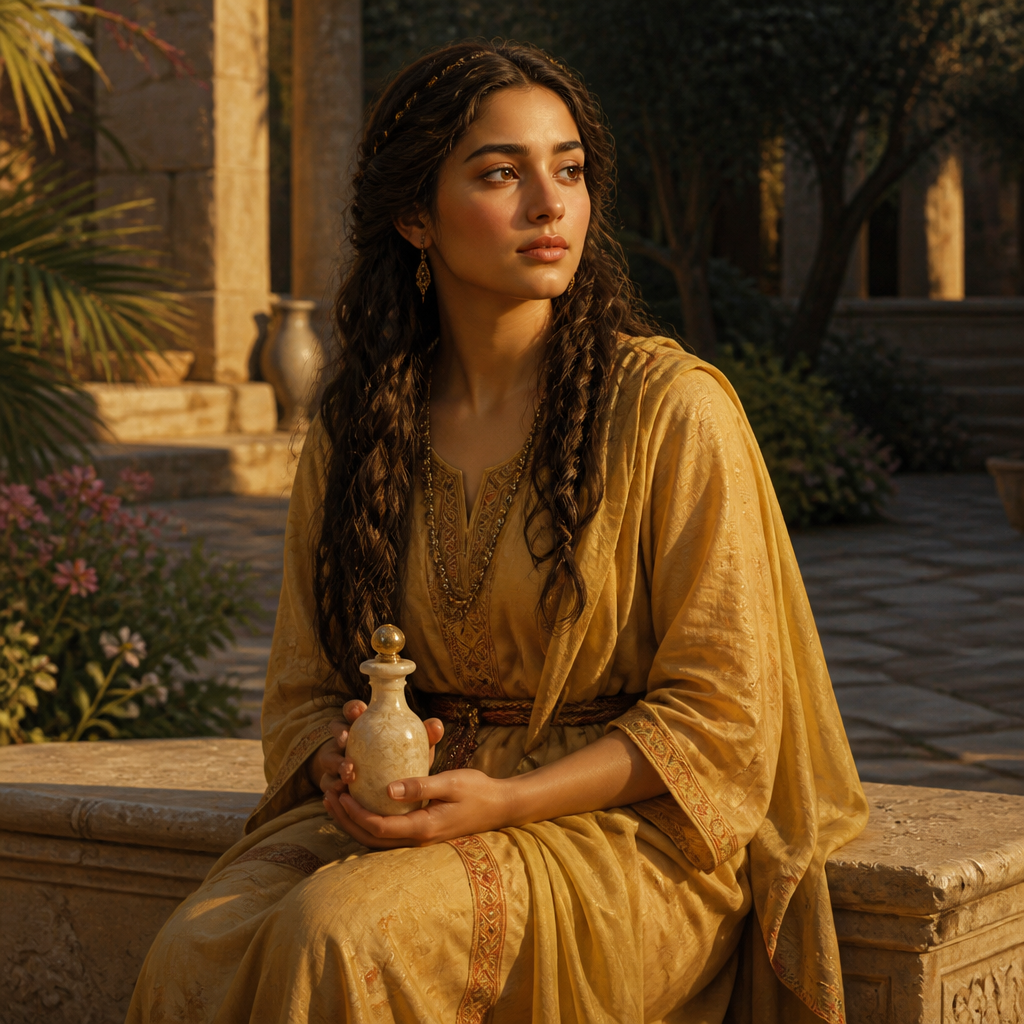
Keziah was the second daughter born to the patriarch Job following the period of his immense suffering and subsequent restoration. Her name, derived from the Hebrew word for the spice cassia, reflects a theme of fragrance and renewal that characterizes the final chapter of Job's life.
Though she is mentioned in only one verse of the Hebrew Bible, her inclusion serves a vital narrative and theological function. She is part of the new generation that signifies the end of Job’s mourning and the return of God’s favor to his household.
Background and Family
Keziah appears in the epilogue of the Book of Job, specifically within the account of Job’s restoration. After the LORD turned the captivity of Job and gave him twice as much as he had before, Job was blessed with seven sons and three daughters. Keziah is explicitly identified as the middle daughter, situated between her elder sister Jemimah and her younger sister Keren-happuch.
Her name, Qeṣiʿāh, refers to cassia, a powdered bark similar to cinnamon used in ancient perfumes and incense. This etymological connection suggests a context of pleasantness and luxury, contrasting sharply with the ash-heaps and mourning that dominated the earlier portions of her father's narrative. Unlike Job's first ten children who perished during his trials, Keziah and her sisters are described with specific emphasis on their physical appearance and legal status.
Major Life Events
The biblical record for Keziah is confined to the immediate aftermath of Job’s trials. The primary event associated with her life is her birth and naming. The text records that she was born into a state of immense wealth, as Job’s livestock and possessions had been doubled by divine decree.
He named his first daughter Jemimah, his second Keziah, and his third Keren-happuch. (Job 42:14, BSB)
Beyond her birth, the only other significant detail provided by the Chronicler is the stunning nature of her beauty. The text notes that in all the land, no women were found as fair as the daughters of Job. This serves as a literary marker of the complete restoration of Job's household dignity.
Relationship to Other Biblical Figures
Keziah’s primary relationships are defined by her immediate family. As a child of Job, she represents the continuation of his lineage after the tragedy of his first family. She is closely associated with her sisters, Jemimah and Keren-happuch, and her unnamed seven brothers.
A notable aspect of her relationship with her father and brothers is the distribution of the family estate. The biblical text highlights that Job gave his daughters an inheritance among their brothers. This was a departure from the typical patriarchal customs of the era, where inheritance was generally reserved for male heirs unless no sons were present (cf. Numbers 27). This act signifies the high regard Job held for Keziah and her sisters.
Spiritual Significance
In a theological context, Keziah represents the grace of God that follows periods of intense suffering. Her name, associated with the fragrance of cassia, symbolizes the transition from the "stink" of decay and disease that Job endured to the "sweet aroma" of divine blessing.
Furthermore, the inclusion of Keziah in the genealogical summary of Job 42 underscores the value of the individual within the family unit. While the sons are mentioned as a collective group, the three daughters are named individually, highlighting their importance in the restored order of the patriarch’s life. Her receipt of an inheritance serves as an early biblical example of female empowerment and the inclusive nature of God’s bounty.
Keziah’s significance lies in her role as a living testimony to Job's restoration. Her name and the mention of her beauty serve as literary foils to the darkness of the earlier chapters of Job. Theologically, she represents the 'double portion' of blessing received by those who remain faithful through trial. Her inclusion in the inheritance alongside her brothers is also seen by scholars as a radical gesture of grace within the patriarchal structure of the Ancient Near East.
Frequently Asked Questions
What does the name Keziah mean?
The name Keziah comes from the Hebrew word 'Qeṣiʿāh', meaning 'cassia,' which is a spice similar to cinnamon used for perfume.
Who were Keziah's sisters?
Keziah's sisters were Jemimah (the eldest) and Keren-happuch (the youngest).
Who was Keziah's father?
Keziah was the daughter of the patriarch Job, born after he was restored from his period of suffering.
Did Keziah receive an inheritance?
Yes, the Bible specifically notes that Job gave Keziah and her sisters an inheritance alongside their brothers, which was unusual for that time.
Is Keziah mentioned in the New Testament?
No, Keziah is mentioned only once in the Old Testament, in the final chapter of the Book of Job.
Family & Relationships
Parents
 JobFatherJob 42:14
Inferred
No verse names Keziah and Job together; the father link is carried from the surrounding genealogy and is not stated in Scripture.Evidence: Job 42:14
 KeziahThis page
 JemimahSisterJob 42:14
Inferred
Job 42:14 names Jemimah and Keziah in the same verse but does not state a sister tie between them; the link rests on the surrounding narrative.Evidence: Job 42:14
 Keren-happuchSisterJob 42:14
Inferred
Job 42:14 names Keren-happuch and Keziah in the same verse but does not state a sister tie between them; the link rests on the surrounding narrative.Evidence: Job 42:14
Connected Figures
Family
Father · Job 42:14
A patriarch from the land of Uz renowned for his blameless character, immense suffering, and unwavering perseverance in his relationship with God.
PatriarchsFirst: Job 1:157 versesPatriarch, wealthy landowner
Sister · Job 42:14
Jemimah was the eldest of the three daughters born to Job after his restoration and suffering in the land of Uz.
PatriarchsFirst: Job 42:142 versesHeir and daughter of Job
Sister · Job 42:14
Keren-happuch was the youngest of the three daughters born to the patriarch Job following his period of suffering and subsequent restoration by God.
PatriarchsFirst: Job 42:142 versesHeir to the estate of Job
Categories
Mentions by Book
- Job2
Scripture References
All 2 indexed verses, in canonical order, from the Berean Standard Bible.
Job · 2
- Job 42:14
He named his first daughter Jemimah, his second Keziah, and his third Keren-happuch.
- Job 42:15Partial
No women as beautiful as Job’s daughters could be found in all the land, and their father granted them an inheritance among their brothers.
Cited as evidence on a family card; added so References, Key Verses and Mentions by Book share one index.