Job and His Friends
The oldest conversation about suffering
The story of Job and His Friends is a narrative framework found in the Book of Job that explores the relationship between human suffering and divine justice. The account begins in the land of Uz, where Job is introduced as a man of perfect integrity who loses his livestock, his servants, and all ten of his children in a series of sudden catastrophes (Job 1:1–19). After Job is further afflicted with painful sores from head to foot, three companions arrive to comfort him: Eliphaz the Temanite, who suggests that the innocent do not perish and that Job should seek God’s correction (Job 4:7–9); Bildad, who insists that God does not pervert justice and that Job’s children died because of their own sin (Job 8:3–4); and Zophar, who argues that Job actually deserves more punishment than he is currently receiving (Job 11:6). These three men engage in three cycles of debate with Job, who maintains his innocence while questioning why he was born (Job 3:1).
As the dialogue between the three friends and Job reaches a stalemate, a new speaker named Elihu enters the conversation. Elihu is described as being angry with Job for justifying himself rather than God and angry with the three friends because they found no answer to Job’s complaints (Job 32:2–3). He delivers a long discourse asserting that God is greater than mortals and uses suffering as a means of instruction and discipline (Job 33:12–19). Following these speeches, God answers Job out of a whirlwind, challenging him with questions about the creation and governance of the natural world (Job 38:1–4).
The narrative concludes with God rebuking Eliphaz the Temanite and his two companions for not speaking what is right, as Job had done (Job 42:7). After Job prays for his friends, his fortunes are restored to double their previous value, and he fathers seven more sons and three daughters. These daughters are named Jemimah, who was the eldest born after his restoration (Job 42:14); Keziah, who was noted for her beauty (Job 42:14–15); and Keren-happuch, who likewise received an inheritance along with her brothers (Job 42:14–15). The text does not say how the friends reacted to this restoration, only that Job lived to see four generations of his descendants before dying at a great age (Job 42:16–17).
Everyone in this list

Bildad
Friend of Job who argued for the necessity of divine retribution. Called a Shuhite, a designation of origin rather than a people group

Elihu, Son of Barachel
Young man who defended God's justice in the Book of Job. Called a Buzite, a designation of family origin rather than a people group

Eliphaz the Temanite
Wise man of Teman who debated Job regarding the cause of his suffering

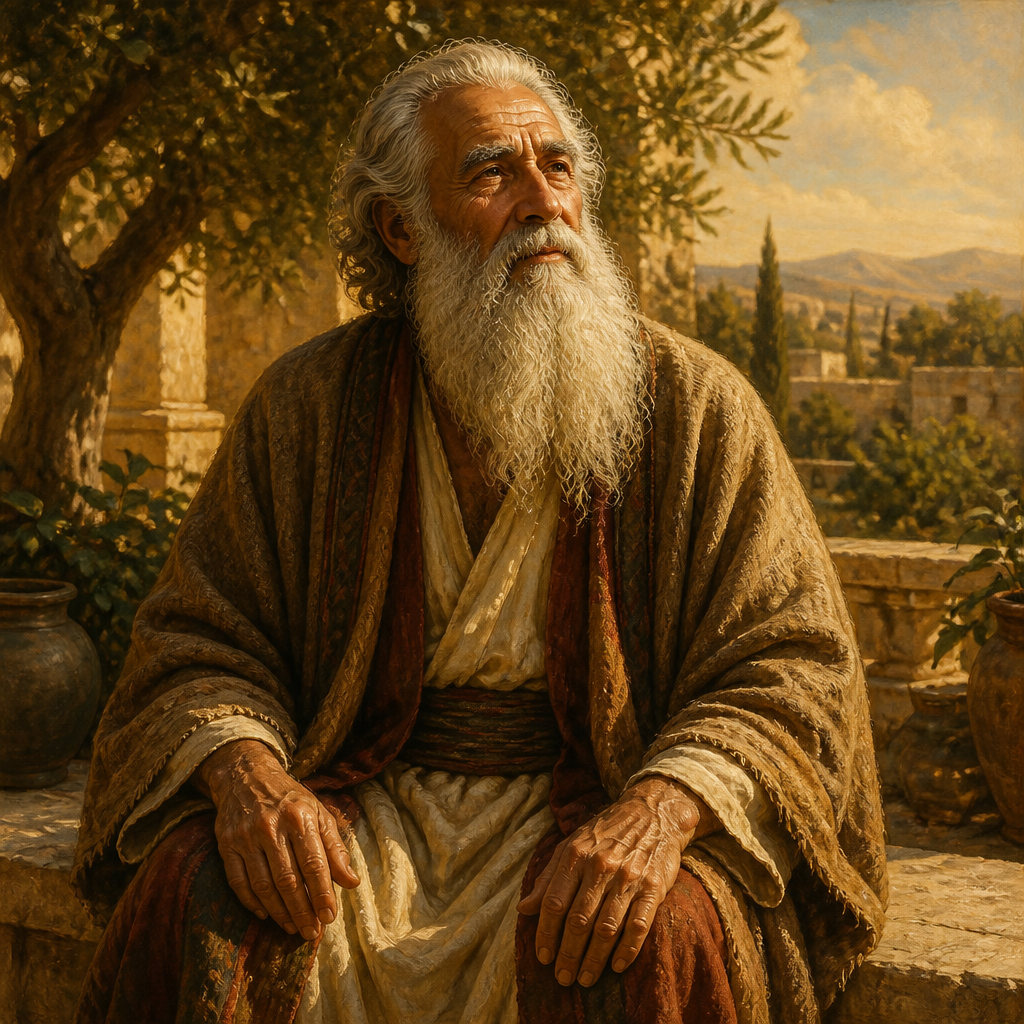
Job
Patriarch who remained faithful to God despite losing his wealth, children, and health