Job's Wife
Who was Job's Wife in the Bible?
The unnamed wife of the patriarch Job who questioned his integrity and reacted to their shared suffering during his period of trial.
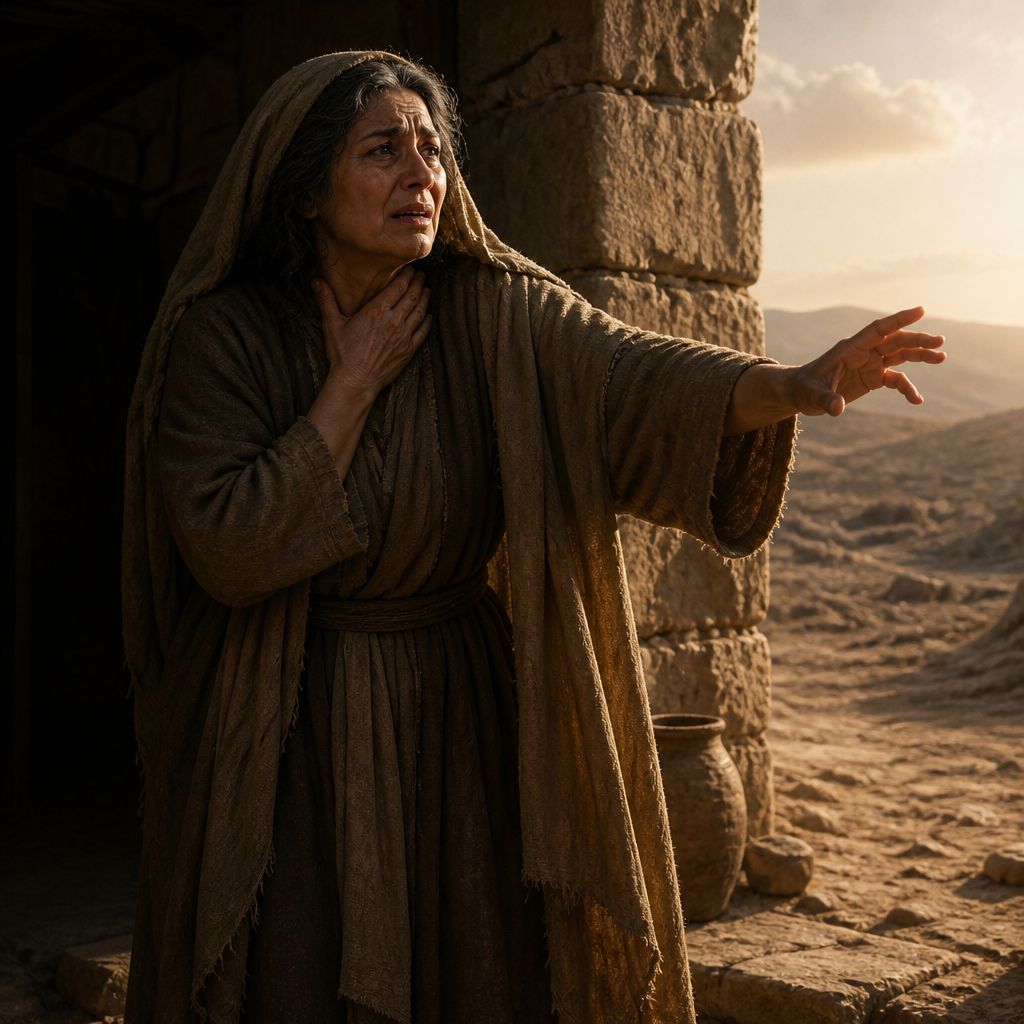
Job's wife is a figure appearing in the Book of Job during the Patriarchal Period. She remains unnamed in the biblical text, identified solely through her relationship to the protagonist, Job. Her presence in the narrative occurs during the height of Job's physical and emotional distress, following the loss of their children, wealth, and Job’s own health.
Her role is brief but significant, providing a human foil to Job’s steadfastness. While she is often remembered for a single line of dialogue, her words reflect the immense pressure of their shared tragedy. The biblical record provides a glimpse into her reaction to divine affliction and her eventual alienation from her husband during his illness.
Background and Family
The biblical account does not provide the lineage, tribe, or birth name of Job’s wife. She is introduced within the context of Job’s household in the land of Uz. As the wife of a man described as the greatest of all the people of the East, she occupied a position of significant status and wealth before the onset of their calamities. The text implies she was the mother of Job’s ten children—seven sons and three daughters—all of whom perished when a great wind struck the house where they were feasting (Job 1:18-19).
Major Life Events
The most prominent appearance of Job's wife occurs in the second chapter of the book. After Job has lost his property and children, and is subsequently afflicted with loathsome sores from head to foot, his wife approaches him. Observing his persistent devotion despite his agony, she asks, "Do you still retain your integrity? Curse God and die!" (Job 2:9).
This statement is the only dialogue attributed to her in the scriptures. Job responds by rebuking her perspective, stating that she speaks as a "foolish woman" and questioning whether they should only accept good from God and not adversity. Later in the narrative, Job mentions her again, noting that his physical condition has become so severe that his breath is "repulsive" to her, indicating a state of total domestic and physical estrangement (Job 19:17).
Relationship to Other Biblical Figures
Her primary relationship is with her husband, Job. The text portrays a marriage under extreme duress. While Job maintains a posture of submission to divine will, his wife expresses a desire for an end to the suffering, even if it necessitates death. The interaction in Job 2:10 suggests a momentary breakdown in their spiritual unity, though the text does not record any further confrontation or a formal separation. The biblical dataset does not name other contemporary relatives or associates.
Spiritual Significance
In biblical scholarship, Job’s wife is often viewed as a representative of the human struggle to process inexplicable suffering. Her suggestion to "curse God and die" serves as a final temptation for Job to abandon his righteousness, echoing the very outcome that Satan predicted Job would eventually reach.
However, some interpreters note that her words may stem from a place of deep grief and a desire to see her husband’s suffering end, rather than pure malice. Ultimately, she serves as a contrast to Job’s endurance. The silence regarding her fate at the end of the book—where Job is restored and has ten more children—leads to varying interpretations, though the text does not explicitly state whether these children were born to her or a subsequent wife. Based strictly on the provided verses, she remains a figure defined by her proximity to Job's trial and her vocal challenge to his endurance.
Theologically, Job’s wife represents the 'internal' trial of the protagonist. While Job faces external losses and physical pain, his wife’s words represent the emotional and spiritual pressure to succumb to despair. Her character highlights the difficulty of maintaining faith when the foundational elements of one's life—family, health, and social standing—are stripped away.
Her inclusion in the text serves to validate the extremity of Job's isolation. By Job 19:17, even the most intimate human bond is strained by the loathsomeness of his disease, emphasizing that Job's eventual restoration is a work of God alone, as he had been abandoned or misunderstood by all those closest to him.
Frequently Asked Questions
What is the name of Job's wife?
The Bible does not provide a name for Job's wife; she is referred to only by her title and relationship to Job.
What did Job's wife tell him to do?
She told him to 'Curse God and die,' questioning why he still maintained his integrity despite his suffering.
How did Job respond to his wife's advice?
Job rebuked her, saying she spoke like a foolish woman and asking if they should only accept good things from God and not trouble.
Did Job's wife leave him?
The Bible does not say she left him, but Job 19:17 records that his breath had become repulsive to her, suggesting a physical and emotional distance during his illness.
Family & Relationships
 JobHusbandJob 2:9Stated
 Job's WifeThis page
Connected Figures
Family
Husband · Job 2:9
A patriarch from the land of Uz renowned for his blameless character, immense suffering, and unwavering perseverance in his relationship with God.
PatriarchsFirst: Job 1:157 versesPatriarch, wealthy landowner
Categories
Mentions by Book
- Job3
Scripture References
All 3 indexed verses, in canonical order, from the Berean Standard Bible.
Job · 3
- Job 2:9
Then Job’s wife said to him, “Do you still retain your integrity? Curse God and die!”
- Job 2:10
“You speak as a foolish woman speaks,” he told her. “Should we accept from God only good and not adversity?” In all this, Job did not sin in what he said.
- Job 19:17
My breath is repulsive to my wife, and I am loathsome to my own family.