Uel
Who was Uel in the Bible?
A returning Jewish exile from the descendants of Bani who was identified among those having taken foreign wives during the post-exilic period.
Uel was a Jewish man who lived during the critical period of the Post-Exilic Return. Following the decree of Cyrus the Great in 538 BC, waves of Jewish exiles returned from Babylon to Jerusalem to rebuild the Temple and re-establish their national and religious identity. Uel is specifically identified as a descendant of Bani, a prominent family line during this restoration era.
His historical record is confined to the specific reforms led by the priest-scribe Ezra. During the mid-5th century BC, Ezra confronted the community regarding the issue of intermarriage with the surrounding pagan nations. Uel is documented as one of the individuals who had married a foreign woman, a practice viewed as a violation of the Mosaic Law. His name appears within a formal list of those who submitted to Ezra's call for repentance and the dissolution of these marriages.
Background and Family
Uel lived in the mid-5th century BC, a time characterized by the struggle of the returning Jewish remnant to maintain spiritual purity in a land surrounded by hostile neighbors. According to the genealogical record in Ezra 10, Uel was a descendant of Bani. The house of Bani was a significant ancestral group among the returnees; many members of this family had returned with Zerubbabel decades earlier, and they are frequently mentioned in the administrative and spiritual lists of the books of Ezra and Nehemiah.
Aside from his lineage, the biblical text provides no information regarding Uel’s specific occupation, his mother, or his direct siblings. His Hebrew name, Uel (אוּאֵל), likely means "Will of God" or "God is Willing," a common naming convention in the post-exilic era that emphasized a renewed dependence on Yahweh after the trauma of the Babylonian captivity.
Major Life Events
The life of Uel is recorded in the context of the "Great Reform" led by Ezra the Scribe around 458 BC. Upon his arrival in Jerusalem, Ezra was informed that the people of Israel—including priests and Levites—had not kept themselves separate from the neighboring peoples (the Canaanites, Hittites, Perizzites, and others). Uel was specifically implicated in this crisis.
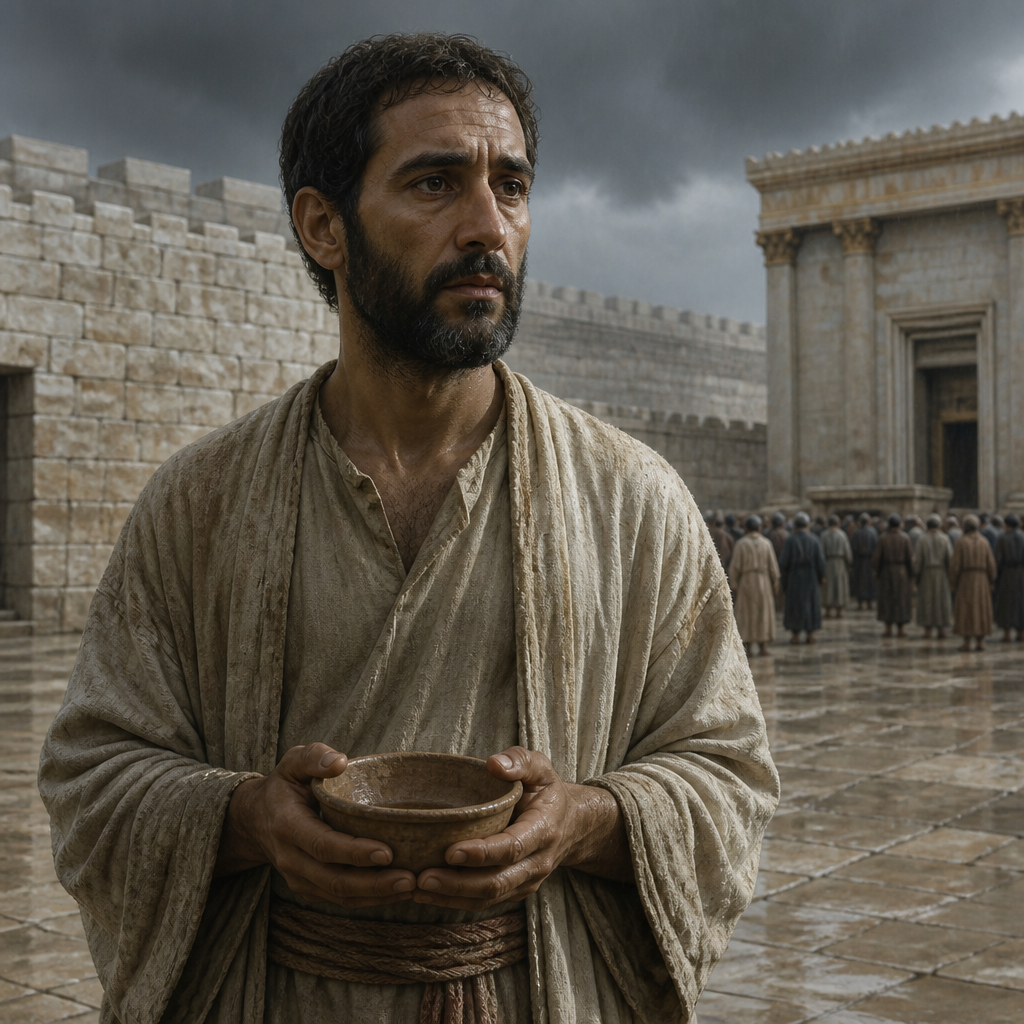
Following a period of national mourning and prayer led by Ezra, the community gathered in a heavy rain to address the matter. Uel's name appears in Ezra 10:34 among the "descendants of Bani" who had taken foreign wives. Along with others such as Maadai and Amram, Uel participated in the solemn assembly where the men agreed to put away their foreign wives and offer a guilt offering—typically a ram from the flock—for their trespass.
Relationship to Other Biblical Figures
Uel is listed in immediate proximity to Maadai and Amram within the roll of Bani’s descendants. While the text does not explicitly define their fraternal relationship, the grouping suggests they were close kinsmen within the broader family of Bani. His primary interaction in the text is passive and collective, responding to the leadership and judicial decree of Ezra. The absence of his name in later lists (such as Nehemiah’s wall-building records) suggests he may have been a private citizen rather than a civic or religious leader.
Spiritual Significance
Though Uel appears only once in the biblical narrative, his inclusion in the text serves a specific rhetorical and theological purpose. The lists in Ezra 10 are not merely administrative; they are a record of accountability and restoration. For the chronicler, Uel represents the vulnerability of the returning exiles to cultural assimilation.
His inclusion signifies the importance of the individual within the community’s collective covenant with God. By being named, Uel is preserved as an example of one who strayed from the specific mandates of the Law but ultimately submitted to the corrective authority of the community's spiritual leaders. His story highlights the tension of the post-exilic period: the effort to define a holy people through strict adherence to the Torah amidst the complexities of local life in the Persian province of Yehud.
Uel represents the widespread nature of the intermarriage crisis that threatened the distinct identity of the post-exilic Jewish community. By documenting his name alongside others of the house of Bani, the Bible emphasizes that even established families were susceptible to compromising the Mosaic Law. His significance lies in his submission to the reform process, contributing to the religious stabilization of Jerusalem during the 5th century BC.
Furthermore, Uel's mention underscores the meticulous record-keeping of the era of Ezra and Nehemiah. This accountability served to preserve the purity of the priestly and lay lineages, ensuring that the 'holy seed' was protected as the nation prepared for the centuries leading up to the advent of the Messiah.
Frequently Asked Questions
Who was Uel in the Bible?
Uel was a descendant of Bani who returned to Jerusalem from the Babylonian exile and was listed as one of the men who had married a foreign woman in violation of the Law.
What does the name Uel mean?
The Hebrew name Uel (אוּאֵל) is generally understood to mean 'Will of God' or 'God is Willing.'
In which book of the Bible is Uel mentioned?
Uel is mentioned only once in the Bible, in the Book of Ezra, chapter 10, verse 34.
What was the sin Uel was accused of?
Uel was among those accused of taking 'strange' or 'foreign' wives from the pagan nations surrounding Judah, which was forbidden under the Mosaic Law to prevent idolatry.
What happened to Uel after he was named by Ezra?
While the Bible does not record his later life, Uel was part of the group that agreed to divorce their foreign wives and offer a guilt offering to atone for their transgression.
Family & Relationships
 UelThis page
Extended family
 Bani, Ancestor of Men with Foreign WivesAncestorEzra 10:34
Inferred
Ezra 10:34 lists Bani and Uel among the descendants of bani, but does not say how the two of them are related.Evidence: Ezra 10:34
Connected Figures
Family
Ancestor · Ezra 10:34
Bani was a post-exilic Israelite patriarch whose descendants were among those who had married foreign women and were later required to separate from them during the reforms of Ezra.
Exile and ReturnFirst: Ezra 10:341 versesPatriarchal head of a family line
Categories
Mentions by Book
- Ezra1
Scripture References
All 1 indexed verse, in canonical order, from the Berean Standard Bible.
Ezra · 1
- Ezra 10:34
From the descendants of Bani: Maadai, Amram, Uel,