Obadiah, Levite of the Return
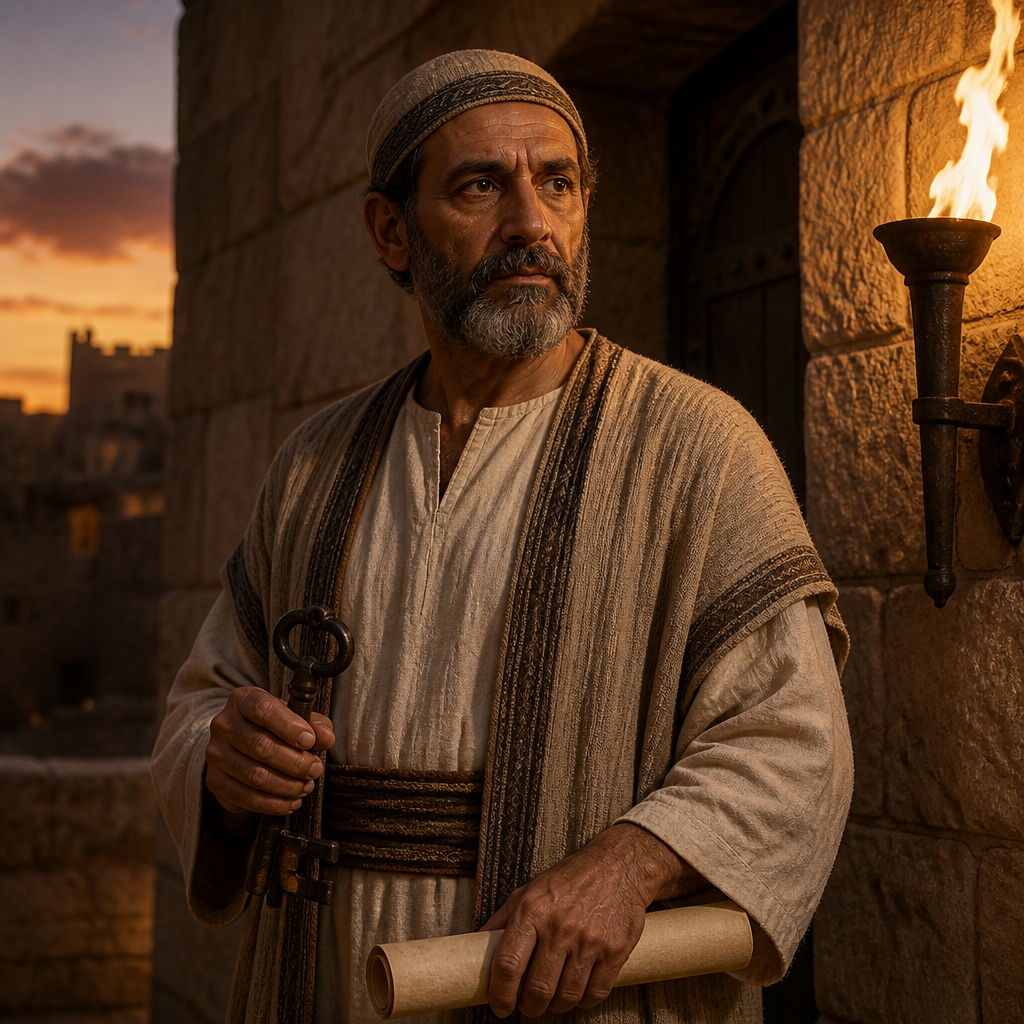
A Levite gatekeeper and descendant of Jeduthun who served in Jerusalem during the post-exilic period following the return from Babylon.
Obadiah, the son of Shemaiah, was a Levite who played a crucial role in the spiritual and civil restoration of Jerusalem after the Babylonian captivity. As a descendant of the prominent musician Jeduthun, his lineage placed him within the hereditary ranks of the temple servants. His life and service are documented in the records of the returning exiles, specifically within the genealogies and registers found in 1 Chronicles and the Book of Nehemiah.
During the era of the Exile and Return, the restoration of the temple and the securing of Jerusalem's gates were paramount concerns for the Jewish community. Obadiah is identified as both a resident of the surrounding villages and a dedicated gatekeeper within the city. His presence in these historical registries underscores the systematic effort to re-establish the Levitical order and the liturgical traditions that had been disrupted by the destruction of the first temple.
Background and Family
Obadiah was a member of the Tribe of Levi, specifically belonging to the family of Jeduthun. Jeduthun was one of the three chief musicians appointed by King David to lead the music in the house of the LORD (1 Chronicles 25:1). This ancestral connection indicates that Obadiah belonged to a family with a long-standing tradition of liturgical service and sacred music.
According to 1 Chronicles 9:16, Obadiah was the son of Shemaiah, who was the son of Galal. The text further notes that he lived in the villages of the Netophathites. The Netophathites were a group of people associated with the town of Netophah, located near Bethlehem. It was common for Levites and temple singers to reside in these outlying rural areas and travel to Jerusalem for their assigned shifts of service. This geographic detail suggests a community of Levites who maintained the agricultural life of the Judean countryside while remaining consecrated to the service of the sanctuary.
Major Life Events
The primary record of Obadiah’s life occurs during the post-exilic reconstruction of Jerusalem. Following the decree of Cyrus the Great, various waves of Jewish exiles returned to Judah to rebuild the temple and the city walls. Obadiah is listed among those who took up residence or active duty in the city of Jerusalem (Nehemiah 11:17, where he is also referred to as Abda).
His specific functional role is clarified in Nehemiah 12:25, where he is grouped with other Levites such as Mattaniah, Bakbukiah, and Meshullam. These men are described as "gatekeepers who guarded the storerooms at the gates." In the ancient Near East, and particularly in the context of the Second Temple, the role of a gatekeeper was not merely a security position but a sacred office. They were responsible for the integrity of the temple precincts, ensuring that only those who were ritually clean could enter, and protecting the tithes and offerings stored within the temple chambers.
Relationship to Other Biblical Figures
Obadiah served alongside several notable figures of the restoration era. He is frequently associated with Mattaniah and Bakbukiah. Mattaniah, a fellow descendant of the singers (from the line of Asaph), was known for leading the "thanksgiving and prayer" (Nehemiah 11:17). The proximity of Obadiah to these figures suggests a close-knit working relationship between the singers and the gatekeepers, two groups of Levites who worked in tandem to facilitate the daily operations of the temple. His father, Shemaiah, and his ancestors Galal and Jeduthun provided the genealogical legitimacy required for him to hold his position in the post-exilic community, where lineage was strictly scrutinized to ensure the purity of the priesthood.
Spiritual Significance
The presence of Obadiah in the biblical record serves as a testament to the continuity of God's covenant with the Levites. Despite seventy years of exile in Babylon, the families responsible for the service of the Lord preserved their genealogies and their sense of calling. Obadiah represents the "remnant" that returned to the land to restore the broken walls and the silent altars.
His dual identification as a descendant of a singer (Jeduthun) and a practitioner of gatekeeping highlights the multifaceted nature of Levitical service. Whether through the art of praise or the vigilance of guarding the gates, Obadiah’s life illustrates the biblical principle that all service within the community of faith is essential. His contribution was part of the foundational work that allowed the religious life of Israel to flourish once again in the land of their fathers.
Spiritual Significance
Obadiah's significance lies in his role as a bridge between the pre-exilic traditions of King David and the post-exilic restoration under Nehemiah. As a descendant of Jeduthun, he carried the heritage of Davidic worship into the Second Temple period. His inclusion in the genealogies of 1 Chronicles and Nehemiah serves a vital canonical function, proving that the spiritual infrastructure of Israel survived the judgment of the exile.
Theologically, Obadiah represents the faithfulness of the 'ordinary' Levite. While he is not a high priest or a governor like Zerubbabel, his work as a gatekeeper and his residence in the Netophathite villages demonstrate the broad participation required to rebuild a holy society. His life highlights the importance of institutional stability and the preservation of sacred duties across generations.
Frequently Asked Questions
Who was Obadiah's father?
Obadiah was the son of Shemaiah, a descendant of Galal and Jeduthun.
What was Obadiah's occupation in Jerusalem?
He served as a Levite gatekeeper, specifically responsible for guarding the storerooms at the gates of the temple.
Which tribe did Obadiah belong to?
Obadiah belonged to the Tribe of Levi, through the line of Jeduthun.
Where did Obadiah live before or during his service?
According to 1 Chronicles 9:16, he lived in the villages of the Netophathites, which were rural areas near Jerusalem.
Is Obadiah mentioned in more than one book of the Bible?
Yes, he is mentioned in 1 Chronicles 9 and twice in the Book of Nehemiah (chapters 11 and 12).
Connected Figures
Shemaiah
Father
Jeduthun
Great-great-grandfather and Ancestral Head
Mattaniah
Levitical Associate
Bakbukiah
Levitical Associate
Categories
Mentions by Book
- Nehemiah2
- 1 Chronicles1
Family & Relationships
Parent
Shemaiah, Descendant of Jeduthun
1 Chronicles 9:16
Others Named Obadiah
Obadiah, Steward of King Ahab1 Kings 18:3
A high-ranking official in the court of King Ahab who covertly saved one hundred prophets of the LORD from Jezebel's persecution.
Obadiah, Levite Overseer of Josiah2 Chronicles 34:12
A Merarite Levite and skilled musician who served as a faithful overseer during King Josiah’s restoration of the Temple in Jerusalem.
Obadiah, Priest of the Post-Exilic ReturnNehemiah 10:5
Obadiah was a prominent priest or official who signed the binding covenant of faithfulness to God under Nehemiah during the post-exilic restoration.
Obadiah, Gadite Commander1 Chronicles 12:9
A valiant Gadite warrior and commander who defected from Saul to support David at Ziklag during the Divided Monarchy era.
Obadiah, Son of Azel1 Chronicles 8:38
A Benjamite descendant of King Saul and one of the six sons of Azel, listed in the genealogical records of the Divided Monarchy.
Obadiah the ProphetObadiah 1:1
The author of the shortest book in the Old Testament and a prophet who announced God's judgment against the nation of Edom during the Exilic Period.
Obadiah, Descendant of David1 Chronicles 3:21
Obadiah was a member of the royal house of Judah and a descendant of King David through the line of Zerubbabel.
Obadiah, Son of JehielEzra 8:9
Obadiah, son of Jehiel, was a leader of the descendants of Joab who returned to Jerusalem from Babylon during the second wave of exile restoration under Ezra.
Obadiah, Father of Ishmaiah1 Chronicles 27:19
Obadiah was the father of Ishmaiah, who served as the chief officer over the tribe of Zebulun during the administration of King David.
Obadiah, Son of Izrahiah1 Chronicles 7:3
Obadiah was a chief of the tribe of Issachar and a descendant of Tola, recognized for his leadership during the Divided Monarchy period.
Obadiah, Official of Jehoshaphat2 Chronicles 17:7
A high-ranking official appointed by King Jehoshaphat to educate the citizens of Judah in the Law of the LORD.