Micaiah, Priest of the Restoration
A Jewish priest who participated in the joyous dedication ceremony of the rebuilt walls of Jerusalem under the leadership of Nehemiah.
Micaiah was a priest who served in Jerusalem during the Post-Exilic Period, specifically during the governance of Nehemiah. His name, which translates to "Who is like Yahweh?", reflects the enduring monotheistic commitment of the returning exiles. He appears in the biblical record as a participant in one of the most significant liturgical events of the restoration era: the formal dedication of the city's completed fortifications.
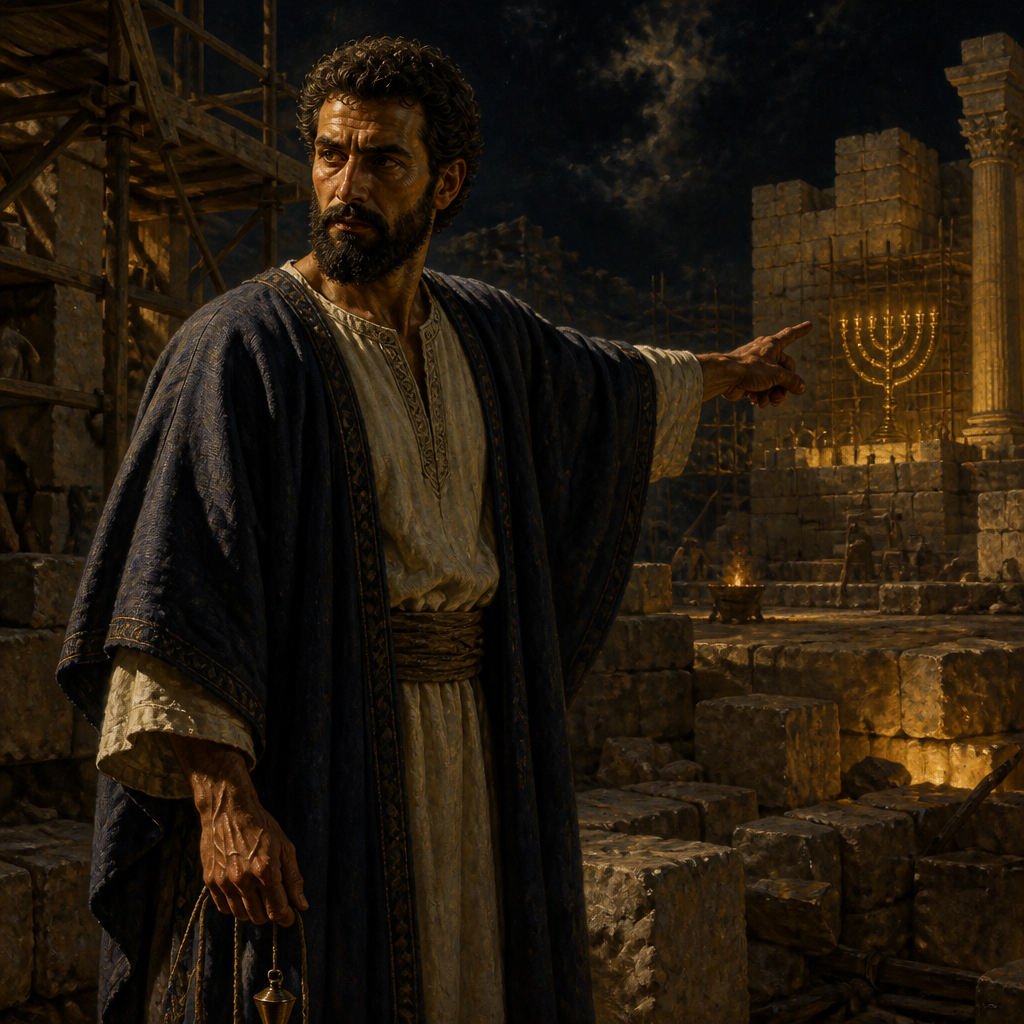
Micaiah’s role was musical and ceremonial in nature. As one of the priests designated to carry the sacred trumpets, he was an integral part of the grand procession that circled the city walls to offer thanks to God. His presence signifies the re-establishment of the Aaronic priesthood’s duties and the restoration of organized worship in the holy city following the long period of Babylonian captivity.
Background and Family
The historical record regarding Micaiah is limited to his professional and religious status as a priest during the time of Nehemiah’s reforms in the 5th century BC. While his specific lineage and tribe are not explicitly detailed in the text beyond his classification as a priest, his inclusion in the list of Nehemiah 12 implies he was of the tribe of Levi and the line of Aaron, as was required for those performing trumpet duties in the temple assembly. He was among the community of Israelites who had returned from the Babylonian Exile to rebuild their ancestral home.
Major Life Events
The sole recorded event in Micaiah’s life occurs in Nehemiah 12:41, during the dedication of the wall of Jerusalem. After the walls had been rebuilt despite intense foreign opposition, Nehemiah organized two large thanksgiving choirs to give thanks. These groups walked in opposite directions atop the walls, meeting eventually at the House of God.
Micaiah is listed as one of the seven priests who accompanied the second group, led by Hoshaiah and Ezra the scribe. Clad in priestly garments and bearing a silver trumpet, Micaiah participated in the "great sacrifices" and rejoicing that characterized the day. The sound of these trumpets was intended to be heard from afar, symbolizing the joy of Jerusalem and the reclamation of the city as a sacred space.
Relationship to Other Biblical Figures
Micaiah served alongside several notable figures of the Restoration era. He is grouped with fellow priests Eliakim, Maaseiah, Miniamin, Elioenai, Zechariah, and Hananiah. These men functioned as a cohesive unit of musicians under the civil leadership of Nehemiah and the spiritual guidance of Ezra the priest. This collaboration highlights the unity between the political and religious sectors of the post-exilic community.
Spiritual Significance
Although Micaiah is mentioned only briefly, his role carries significant theological weight. The blowing of the trumpet by priests was a practice established in the Mosaic Law (Numbers 10:1-10) to signal assembly, war, or celebration. By participating in this ceremony, Micaiah demonstrated the continuity of the Sinai covenant and the survival of the Jewish liturgical tradition through the Exile. He stands as a representative of the faithful remnant who returned to Zion to restore the broken walls and the interrupted worship of Yahweh.
Spiritual Significance
Micaiah represents the restoration of the liturgical life of Israel. His participation in the dedication of the Jerusalem wall signifies that the physical rebuilding of the city was not merely a construction project, but a spiritual act of consecration. As a trumpeter, he fulfilled the ancient mandate for the priesthood to lead the people in public declarations of God's faithfulness.
His inclusion in the genealogical and procedural lists of Nehemiah underscores the importance of individual contribution to communal worship. In the post-exilic context, figures like Micaiah served as the link between the pre-exilic glory of Solomon’s temple and the modest but hopeful beginnings of the Second Temple period.
Frequently Asked Questions
What does the name Micaiah mean?
The name Micaiah is Hebrew for 'Who is like Yahweh?'
When did Micaiah live?
Micaiah lived during the Post-Exilic Period, specifically during the mid-5th century BC, coinciding with the governorship of Nehemiah.
What was Micaiah's job?
He was a priest, specifically one of the trumpeters who played during the dedication of the wall of Jerusalem.
Which book of the Bible mentions this Micaiah?
This specific Micaiah is mentioned only in the book of Nehemiah, chapter 12.
Was Micaiah a prophet?
The Bible does not identify this specific Micaiah as a prophet; he is identified strictly as a priest.
Connected Figures
Nehemiah
Governor and leader of the wall dedication
Ezra
Priest and scribe who led the procession
Zechariah
Fellow priest and trumpeter in the same procession
Eliakim
Fellow priest and trumpeter in the same procession
Categories
Mentions by Book
- Nehemiah1
Others Named Micaiah
Micaiah, Son of Imlah1 Kings 22:8
A prophet of the Northern Kingdom of Israel during the Divided Monarchy who courageously predicted the death of King Ahab in battle despite facing intense royal opposition.
Micaiah, Father of Achbor2 Kings 22:12
A Judean man of the late 7th century BC whose son, Achbor, served as a high-ranking official in the royal court of King Josiah.
Micaiah, Official of Jehoshaphat2 Chronicles 17:7
A Judean official appointed by King Jehoshaphat to travel throughout the kingdom and teach the Book of the Law to the people.
Micaiah, Son of GemariahJeremiah 36:11
A Judean noble who witnessed the public reading of Jeremiah’s prophecies and alerted the royal officials during the reign of King Jehoiakim.