Micaiah, Son of Gemariah
Who was Micaiah, Son of Gemariah, in the Bible?
A Judean noble who witnessed the public reading of Jeremiah’s prophecies and alerted the royal officials during the reign of King Jehoiakim.
This is one of 5 people named Micaiah in the Bible. See all 5 →
Micaiah, son of Gemariah, was a high-ranking Judean official or noble during the late Divided Monarchy period. He is primarily known for his role as a witness to the public reading of the prophet Jeremiah’s scroll in the temple courts. His presence during this event occurred in the fifth year of King Jehoiakim’s reign (c. 605–604 BC), a time of significant political and spiritual crisis in Judah.
Operating within the administrative circles of Jerusalem, Micaiah served as a critical link between the common people hearing the word of God and the ruling class. Upon hearing the alarming prophecies of judgment contained in the scroll, Micaiah immediately took action to inform the royal court, demonstrating a recognition of the gravity of the prophetic word. His lineage suggests he was part of a prominent scribal family that had influence in the Davidic court.
Background and Family
Micaiah was the son of Gemariah and the grandson of Shaphan. This lineage is highly significant in the context of the late Kingdom of Judah. Shaphan was the royal scribe under King Josiah who played a pivotal role in the discovery of the Book of the Law and the subsequent Josianic reforms (2 Kings 22). Micaiah’s father, Gemariah, was also an official of status, possessing his own chamber in the upper court of the Temple of Solomon.
The family of Shaphan appears to have been generally sympathetic toward the prophets, particularly Jeremiah. By providing a space for Baruch (Jeremiah’s scribe) to read the scroll, Gemariah—and by extension his son Micaiah—participated in a legacy of administrative service that favored the preservation of the Mosaic law and the prophetic message.
Major Life Events
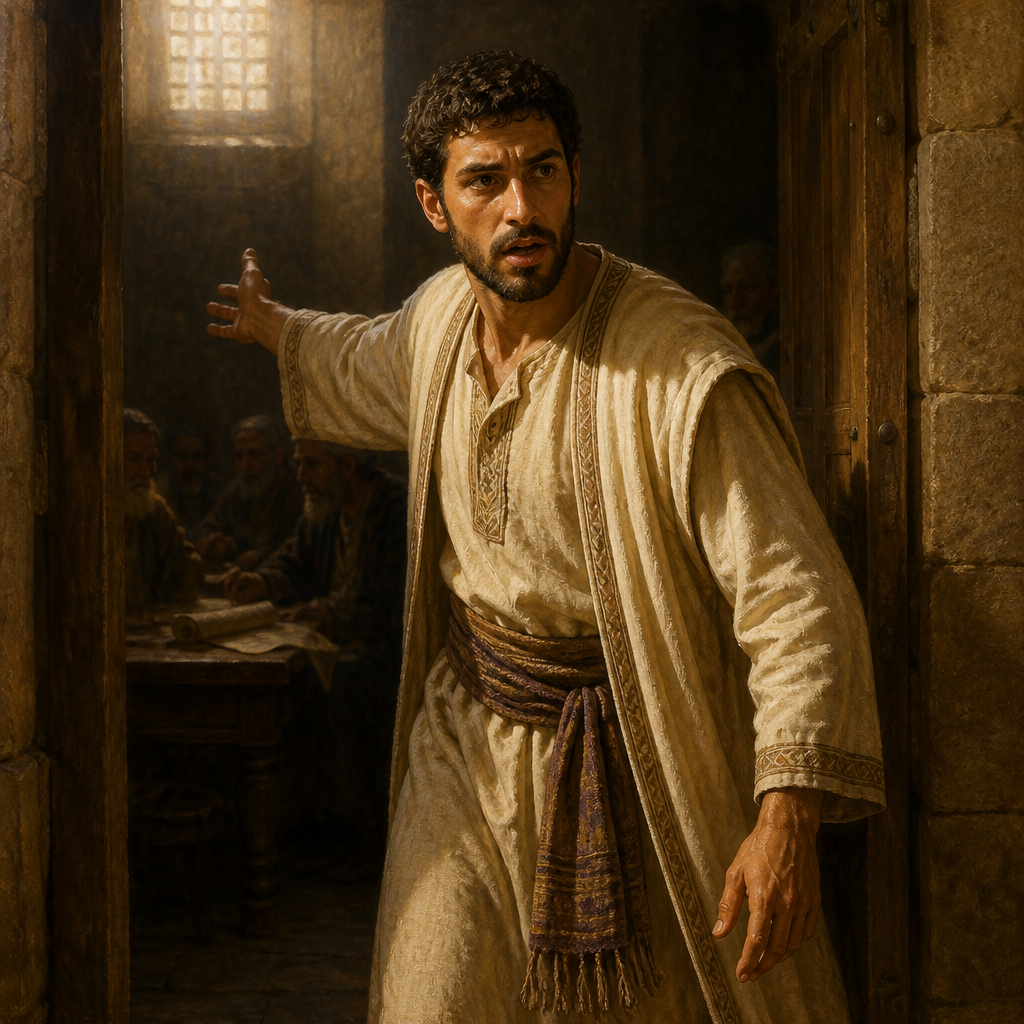
In the fifth year of King Jehoiakim, a fast was proclaimed for all the people in Jerusalem. During this gathering, Baruch son of Neriah read the words of Jeremiah from a scroll at the entrance of the New Gate of the temple, specifically from the chamber of Gemariah. Micaiah was present for this reading and heard the entirety of the divine message, which warned of the impending destruction of Jerusalem by the Babylonians.
Recognizing the political and spiritual implications of these words, Micaiah immediately left the temple and went down to the king’s palace, entering the scribe’s chamber. There, he found the high-ranking officials of Judah gathered, including Elishama the scribe, Delaiah, Elnathan, and his own father, Gemariah. Micaiah provided a formal report of everything he had heard Baruch read. This report prompted the officials to summon Baruch to read the scroll to them, eventually leading to the scroll being brought before King Jehoiakim himself.
Relationship to Other Biblical Figures
Micaiah’s primary interactions were with the administrative elite of Jerusalem and the prophetic circle of Jeremiah. As the son of Gemariah, he was part of a network of officials who attempted to navigate the tension between King Jehoiakim’s rebellion against Babylon and Jeremiah’s calls for submission and repentance. While Micaiah is not explicitly named as a disciple of Jeremiah, his promptness in reporting the scroll’s contents suggests he took the prophet’s message seriously, unlike the king who eventually burned the scroll.
Spiritual Significance
Although Micaiah’s recorded actions are brief, he serves as a model of the 'attentive witness.' In a period of spiritual apathy and political denial, Micaiah 'heard all the words of the LORD' (Jeremiah 36:11) and understood that such a message could not be kept private. His role in transferring the word from the temple to the palace highlights the duty of those in power to confront the truth of God’s word, even when that truth is uncomfortable or threatening to the status quo. He represents the remnant of the Judean nobility that remained sensitive to the voice of God before the final Babylonian exile.
Micaiah acts as a crucial historical witness to the authenticity and impact of Jeremiah's written prophecies. His actions ensured that the word of God reached the highest levels of government, fulfilling the prophetic mandate that the message be heard by both the small and the great. His presence in the text reinforces the credibility of Baruch’s public reading and the historical reality of the scribal chambers in the First Temple.
Frequently Asked Questions
Who was Micaiah’s father?
Micaiah was the son of Gemariah, a royal official who had a chamber in the temple courts.
What did Micaiah do when he heard Jeremiah’s scroll?
He went immediately to the king's palace to report the contents of the scroll to the gathered royal officials.
Was Micaiah a prophet?
The Bible does not identify Micaiah as a prophet; he appears to be a member of the Judean nobility or an official who relayed prophetic messages.
In which book of the Bible is this Micaiah found?
This Micaiah is found exclusively in the Book of Jeremiah, specifically in chapter 36.
Family & Relationships
Parents
 Gemariah, Son of ShaphanFatherJeremiah 36:11Stated
 Micaiah, Son of GemariahThis page
Connected Figures
Family
Father · Jeremiah 36:11
A Judean official and son of the scribe Shaphan who pleaded with King Jehoiakim not to destroy Jeremiah’s prophetic scroll.
Divided MonarchyFirst: Jeremiah 36:106 versesRoyal Official / Prince
Categories
Mentions by Book
- Jeremiah2
Scripture References
All 2 indexed verses, in canonical order, from the Berean Standard Bible.
Jeremiah · 2
- Jeremiah 36:11
When Micaiah son of Gemariah, the son of Shaphan, heard all the words of the LORD from the scroll,
- Jeremiah 36:13
And Micaiah reported to them all the words he had heard Baruch read from the scroll in the hearing of the people.
Others Named Micaiah
Compare all 5 bearers →Micaiah, Son of Imlah1 Kings 22:8
A prophet of the Northern Kingdom of Israel during the Divided Monarchy who courageously predicted the death of King Ahab in battle despite facing intense royal opposition.
Micaiah, Priest of the RestorationNehemiah 12:41
A Jewish priest who participated in the joyous dedication ceremony of the rebuilt walls of Jerusalem under the leadership of Nehemiah.
Micaiah, Father of Achbor2 Kings 22:12
A Judean man of the late 7th century BC whose son, Achbor, served as a high-ranking official in the royal court of King Josiah.
Micaiah, Official of Jehoshaphat2 Chronicles 17:7
A Judean official appointed by King Jehoshaphat to travel throughout the kingdom and teach the Book of the Law to the people.