Malchijah, Musician at the Wall Dedication
Malchijah was a musician or singer who participated in the jubilant choral dedication of the rebuilt walls of Jerusalem under the leadership of Nehemiah.
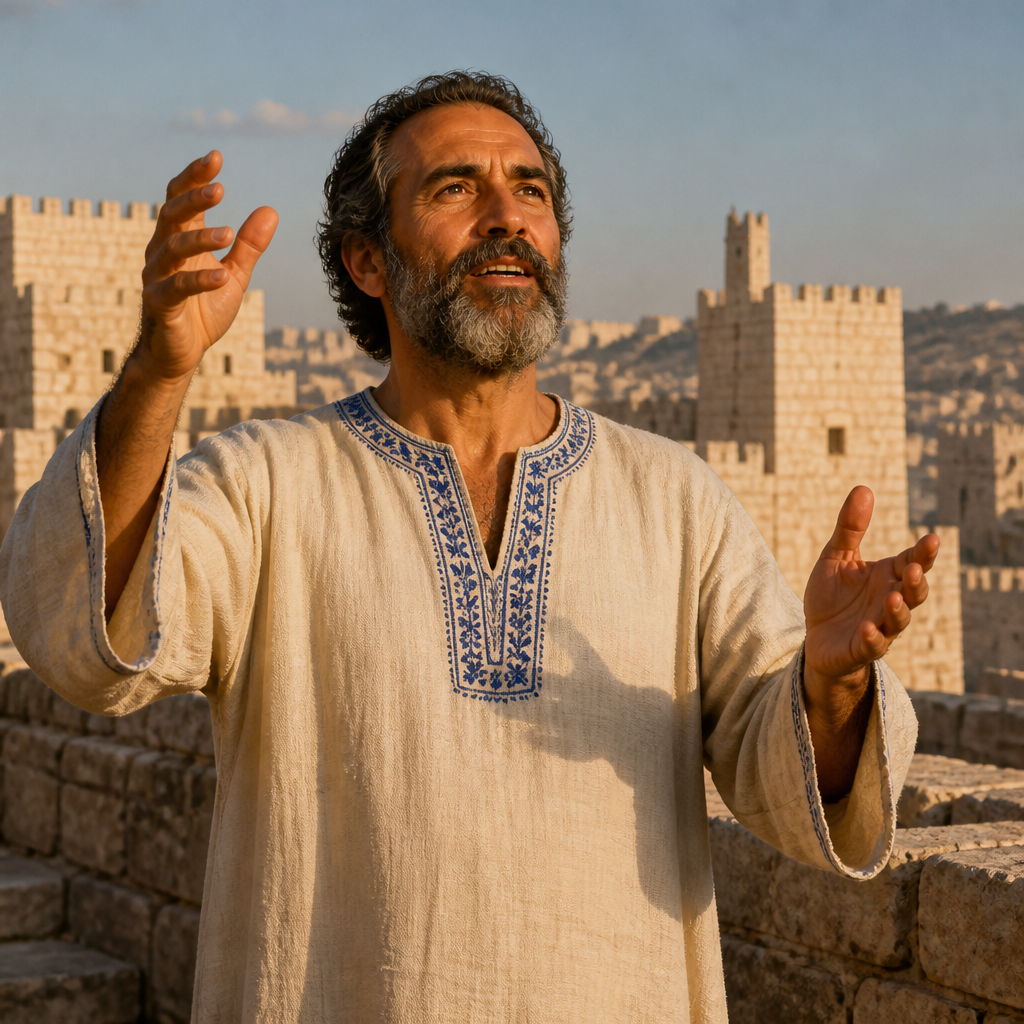
Malchijah is a figure identified within the post-exilic community of Israel, specifically active during the restoration efforts in Jerusalem following the Babylonian Captivity. His presence is recorded during one of the most significant liturgical and civic events of the late fifth century BC: the formal dedication of the city’s completed fortifications. As Jerusalem transitioned from a ruined outpost to a defensible holy city, Malchijah served as a member of the official company of singers and instrumentalists who provided the spiritual and festive soundtrack to the occasion.
While his individual lineage and specific tribal affiliation are not detailed in the verse where he appears, his inclusion in the list of participants signifies his status within the organized religious or civic structure of the returning exiles. He is one of eight figures listed alongside Maaseiah and Shemaiah who stood in the choral assembly under the direction of Jezrahiah. His role was central to the collective act of thanksgiving that marked the physical and spiritual reclamation of the Jewish capital.
Background and Family
The historical context for Malchijah is the era of the Exile and Return, specifically the period following the decree of Cyrus the Great and the subsequent waves of Jewish returnees to Judea. By the time Malchijah appears in the biblical record, the Second Temple had been completed, and Nehemiah had successfully led the effort to rebuild the walls of Jerusalem around 444 BC.
The biblical text provides no specific genealogical data for this particular Malchijah. While the name Malchijah (meaning "Yahweh is King") was common among priestly and Levite families during this period, the text in Nehemiah 12:42 simply groups him with a collective of individuals participating in the dedication ceremony. His inclusion in this specific list suggests he may have been a priest or a Levite, as these were the groups traditionally tasked with musical leadership and ceremonial duties in the Second Temple period.
Major Life Events
The sole recorded event in Malchijah’s life is his participation in the dedication of the wall of Jerusalem. This event was not merely a construction celebration but a massive liturgical processional. Nehemiah organized two large choirs (or "great companies") to give thanks. These groups walked atop the newly completed walls in opposite directions, eventually meeting at the House of God (the Temple).
Malchijah is listed as part of the assembly that participated in this ceremony. The text describes the atmosphere as one of overwhelming joy:
and also Maaseiah, Shemaiah, Eleazar, Uzzi, Jehohanan, Malchijah, Elam, and Ezer. Then the choirs sang out under the direction of Jezrahiah. (Nehemiah 12:42)
This moment represented the culmination of years of hardship and opposition. For Malchijah, this meant standing as a public witness to the fulfillment of prophetic promises concerning the restoration of Zion. The sound of these choirs was so great that the text notes the "joy of Jerusalem was heard from far away."
Relationship to Other Biblical Figures
Malchijah is positioned alongside several other key figures of the restoration. He is mentioned in the same breath as Maaseiah, Shemaiah, Eleazar, Uzzi, Jehohanan, Elam, and Ezer. These men served together under the supervision of Jezrahiah, the leader of the singers. This collective served the administrative and spiritual vision of Nehemiah the governor and Ezra the scribe. While no specific familial relationship is recorded between Malchijah and these men, they functioned as a cohesive unit in the service of the community’s worship.
Spiritual Significance
The spiritual significance of Malchijah lies in his role as a contributor to the "sacrifice of praise." In the post-exilic theology of Nehemiah, the physical security of the wall was secondary to the spiritual state of the people. By participating in the choir, Malchijah helped transform a military fortification into a sanctified space. His presence in the biblical text, though brief, highlights the importance of the individual within the community of faith; even those whose deeds are recorded in a single verse played a necessary role in the restoration of the covenant identity of Israel.
Spiritual Significance
Malchijah represents the 'rank-and-file' of the restoration period—individuals who committed their talents and presence to the rebuilding of the Jewish nation. His participation in the dedication ceremony underscores the centrality of worship and public thanksgiving in the life of the post-exilic community. By recording his name, the chronicler ensures that the work of restoring Jerusalem is seen as a collective effort involving many specific, named contributors rather than just a few prominent leaders.
Frequently Asked Questions
What does the name Malchijah mean?
The name Malchijah is of Hebrew origin (Malkiyyah) and means 'My King is Yahweh' or 'Yahweh is King.'
In which book of the Bible is this Malchijah mentioned?
He is mentioned exclusively in the book of Nehemiah, specifically in chapter 12, verse 42.
What was Malchijah's specific job during the dedication of the wall?
He was a participant in the musical and choral celebration, singing or performing under the direction of Jezrahiah.
Was Malchijah a priest?
The text does not explicitly state his title, but he is listed among men who performed roles typically reserved for the priestly or Levite classes during temple-related ceremonies.
Who was the leader of Malchijah's group?
According to Nehemiah 12:42, the choirs performed under the direction of Jezrahiah.
Connected Figures
Nehemiah
Leader and Governor of Judah
Jezrahiah
Director of the choirs
Shemaiah
Fellow participant in the ceremony
Maaseiah
Fellow participant in the ceremony
Categories
Mentions by Book
- Nehemiah1
Others Named Malchijah
Malchijah, Son of HarimNehemiah 3:11
A participant in the post-exilic reconstruction of Jerusalem who repaired a section of the wall and the Tower of the Ovens.
Malchijah, Priest of the Fifth Course1 Chronicles 24:9
A priest during the Divided Monarchy who was designated by lot to lead the fifth of twenty-four divisions in the sanctuary service.
Malchijah, Ancestor of Asaph1 Chronicles 6:40
A Levite of the Gershonite clan during the Divided Monarchy who served as a genealogical link to the temple musician Asaph.
Malchijah, Descendant of HarimEzra 10:31
An Israelite descendant of Harim who married a foreign woman and later committed to the reforms led by Ezra during the post-exilic return to Jerusalem.
Malchijah, Son of Parosh (II)Ezra 10:25
An Israelite descendant of Parosh who was identified during the post-exilic reforms for having taken a foreign wife.
Malchijah, Sealer of the CovenantNehemiah 10:3
A prominent priest or leader who joined Nehemiah in signing the binding covenant to follow God's Law during the post-exilic restoration.
Malchijah, Son of RechabNehemiah 3:14
A Jewish leader and district official who oversaw the reconstruction of the Dung Gate in Jerusalem during the post-exilic return under Nehemiah.
Malchijah, Son of ParoshEzra 10:25
An Israelite from the descendants of Parosh who was identified during the post-exilic reforms for having taken a foreign wife.
Malchijah, Attendant to EzraNehemiah 8:4
A Jewish leader or priest who stood on the platform with Ezra during the public reading of the Law after the return from Babylonian exile.
Malchijah, Ancestor of Priests1 Chronicles 9:12
Malchijah was a Levite and the father of Pashhur, whose descendants served as prominent priests in the Jerusalem temple during the post-exilic restoration.
Malchijah, the GoldsmithNehemiah 3:31
A Jewish goldsmith who participated in the post-exilic reconstruction of Jerusalem's walls under the leadership of Nehemiah.