Malchijah, Priest of the Fifth Course
A priest during the Divided Monarchy who was designated by lot to lead the fifth of twenty-four divisions in the sanctuary service.
Malchijah was a Levite and a priest who served in Jerusalem during the era of the Divided Monarchy. He is specifically identified in the records of the Chronicler as the head of one of the twenty-four priestly divisions established to organize the worship and sacrificial duties at the Temple. According to the biblical record, the order of service was determined by casting lots to ensure an impartial and divinely guided distribution of responsibilities among the descendants of Aaron.
His primary legacy is his placement in the liturgical calendar of Israel. As the leader of the fifth course, Malchijah was responsible for overseeing a rotation of priests who managed the daily operations of the sanctuary, including the presentation of offerings and the maintenance of the holy place. While the personal details of his life remain unrecorded, his inclusion in the formal census of the priesthood highlights the meticulous nature of Israelite religious administration.
Background and Family
Malchijah appears within the genealogical and administrative records of 1 Chronicles 24, a chapter dedicated to the organization of the Aaronic priesthood. As a priest, Malchijah was a descendant of Aaron, the first High Priest of Israel. During the period of the Divided Monarchy, the priesthood was divided into two main branches: the descendants of Eleazar and the descendants of Ithamar, the sons of Aaron.
Although the specific lineage of Malchijah—whether he descended from Eleazar or Ithamar—is not explicitly detailed in the brief mention in 1 Chronicles 24:9, he was recognized as a prominent "head of a father's house." This designation indicates that he was a senior figure among the priestly clans, representing a significant family unit within the tribe of Levi.
Major Life Events
The singular recorded event of Malchijah’s life is his selection by lot for the fifth priestly course. The biblical narrative describes a systematic process where the priests were divided into twenty-four groups to ensure that the heavy responsibilities of Temple service were shared equally throughout the year.
"The first lot fell to Jehoiarib, the second to Jedaiah, the third to Harim, the fourth to Seorim, the fifth to Malchijah..." (1 Chronicles 24:7–9, BSB).
This selection process was conducted in the presence of the king, the high priest, and the leaders of the Levites. By falling fifth in the rotation, Malchijah and his family were assigned specific weeks during the year to reside in Jerusalem and perform the sacred rituals required by the Mosaic Law. This structured rotation was essential for maintaining the continuous cycle of morning and evening sacrifices, the burning of incense, and the preparation of the showbread.
Relationship to Other Biblical Figures
Malchijah operated within a collegial framework of twenty-four priestly heads. He is listed immediately following Seorim, who held the fourth lot, and preceding Mijamin, who held the sixth lot. While no specific personal interactions are recorded, Malchijah would have worked in close coordination with the High Priest and other tribal leaders to maintain the sanctity of the Temple. His role was one of institutional importance, contributing to the collective stability of the Judean religious system during the Divided Monarchy.
Spiritual Significance
In the context of biblical history, Malchijah represents the principle of divine order and the sanctification of mundane administrative tasks. The use of the lot (Hebrew: goral) to determine his position signifies the belief that even the scheduling of service was under the direct sovereignty of God.
His name, which can be translated as "Yahweh is King" or "My King is Yahweh," reflects the theological climate of the faithful priesthood during the monarchy. By serving in the fifth course, Malchijah participated in a system designed to keep the worship of Yahweh central to the national identity of Israel, ensuring that the ritual laws of the Pentateuch were carried out with precision and regularity.
Spiritual Significance
Malchijah’s significance lies in his role within the twenty-four priestly divisions. This organizational structure remained a foundational element of Jewish liturgical life for centuries, influencing the way the Temple functioned until its destruction. His inclusion in the 1 Chronicles census serves as a testament to the preservation of the priestly lines and the formalization of worship during the Divided Monarchy.
Theologically, Malchijah’s position reminds readers of the importance of every individual within a larger system of service. Though his personal biography is sparse, his contribution to the 'fifth lot' ensured that the holy duties of the sanctuary were never neglected, maintaining the covenantal link between the people and God through the sacrificial system.
Frequently Asked Questions
Who was Malchijah in 1 Chronicles 24?
Malchijah was a priest during the Divided Monarchy who was chosen by lot to lead the fifth division of the twenty-four priestly courses in the Temple service.
What was the purpose of Malchijah's priestly course?
His course was responsible for serving in the Temple for a specific set of weeks each year, ensuring that the daily sacrifices and rituals were performed without interruption.
What does the name Malchijah mean?
The name Malchijah (Malkiyahu) means 'Yahweh is my King' or 'My King is Yahweh'.
Which tribe did Malchijah belong to?
He belonged to the tribe of Levi, specifically the line of Aaron, as he was a priest authorized to serve in the sanctuary.
How was Malchijah selected for his position?
He was selected by the casting of lots in the presence of the king and religious leaders to ensure a fair and divinely appointed order of service.
Connected Figures
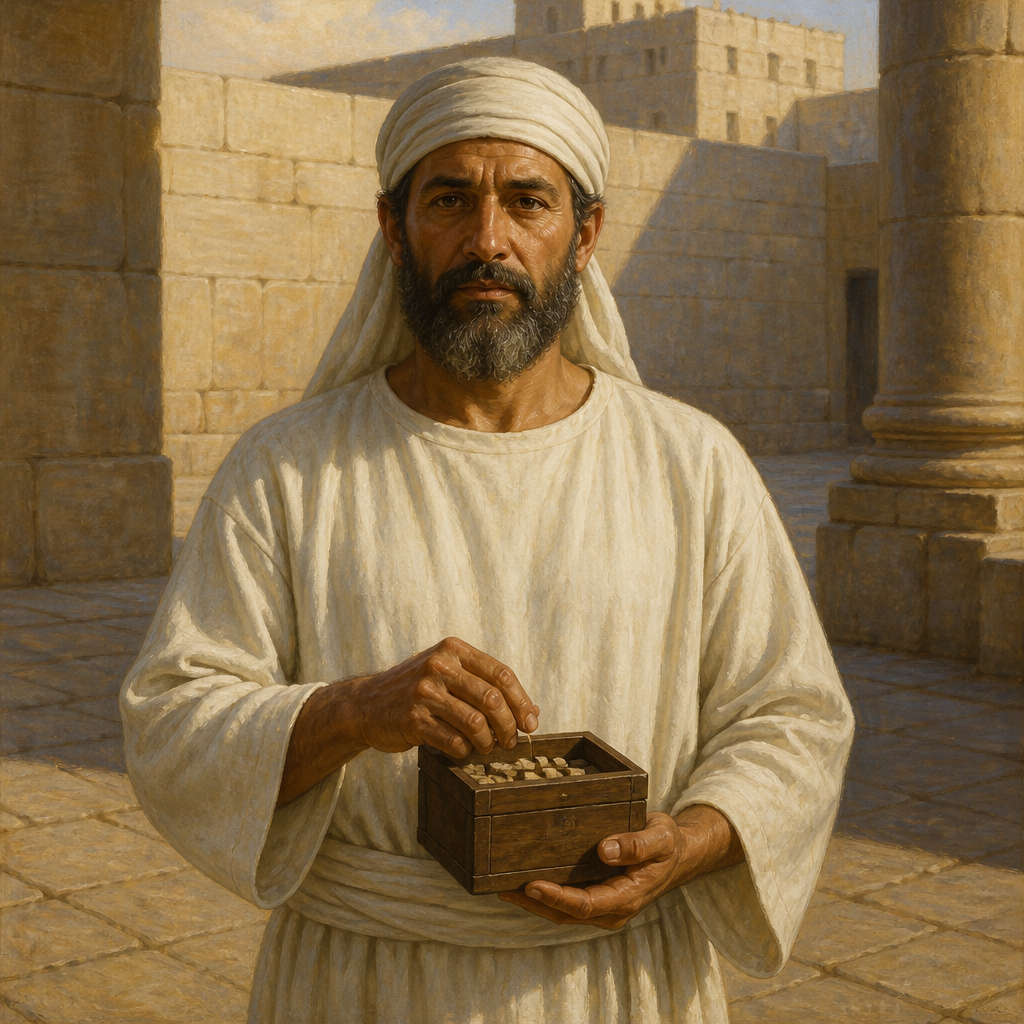
Seorim
Priest who held the fourth lot preceding Malchijah
Mijamin
Priest who held the sixth lot following Malchijah
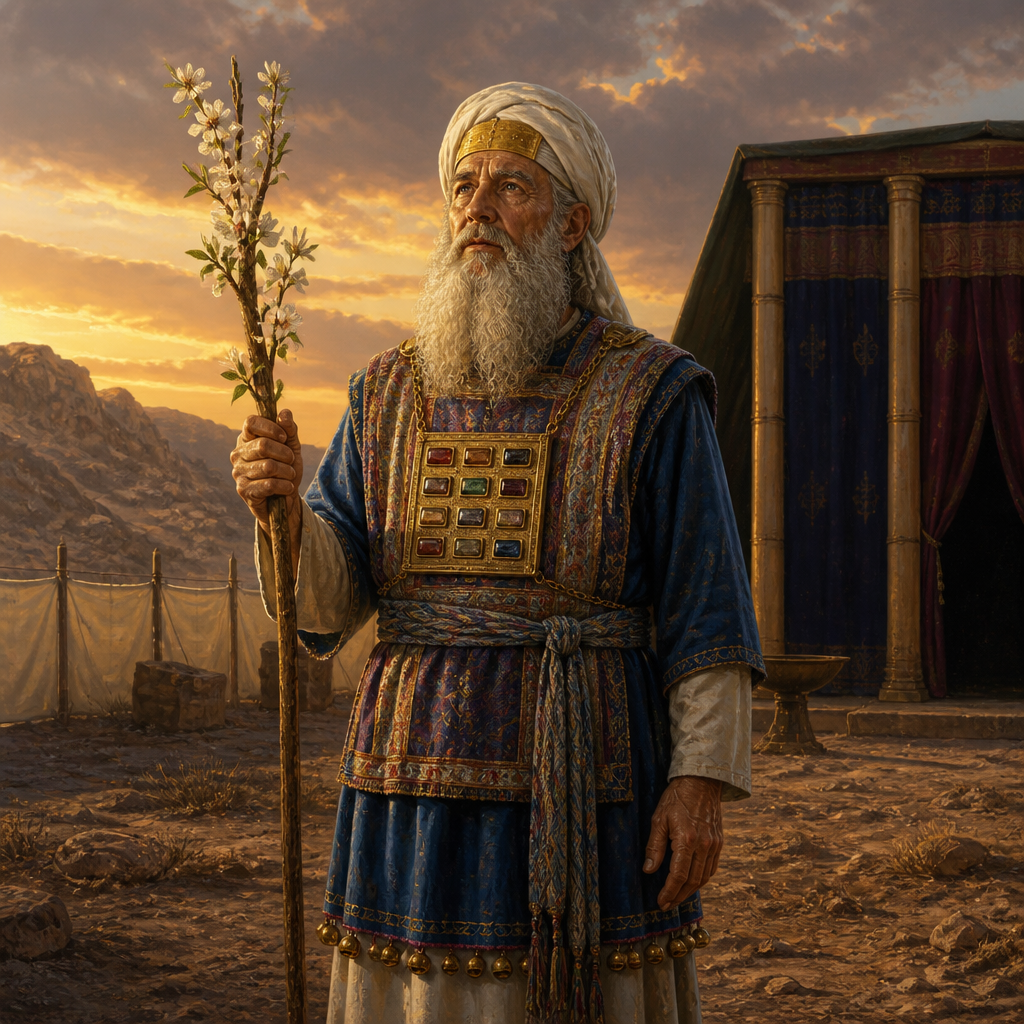
Aaron
Ancestral head of the priestly line to which Malchijah belonged
Categories
Mentions by Book
- 1 Chronicles1
Others Named Malchijah
Malchijah, Son of HarimNehemiah 3:11
A participant in the post-exilic reconstruction of Jerusalem who repaired a section of the wall and the Tower of the Ovens.
Malchijah, Ancestor of Asaph1 Chronicles 6:40
A Levite of the Gershonite clan during the Divided Monarchy who served as a genealogical link to the temple musician Asaph.
Malchijah, Descendant of HarimEzra 10:31
An Israelite descendant of Harim who married a foreign woman and later committed to the reforms led by Ezra during the post-exilic return to Jerusalem.
Malchijah, Son of Parosh (II)Ezra 10:25
An Israelite descendant of Parosh who was identified during the post-exilic reforms for having taken a foreign wife.
Malchijah, Musician at the Wall DedicationNehemiah 12:42
Malchijah was a musician or singer who participated in the jubilant choral dedication of the rebuilt walls of Jerusalem under the leadership of Nehemiah.
Malchijah, Sealer of the CovenantNehemiah 10:3
A prominent priest or leader who joined Nehemiah in signing the binding covenant to follow God's Law during the post-exilic restoration.
Malchijah, Son of RechabNehemiah 3:14
A Jewish leader and district official who oversaw the reconstruction of the Dung Gate in Jerusalem during the post-exilic return under Nehemiah.
Malchijah, Son of ParoshEzra 10:25
An Israelite from the descendants of Parosh who was identified during the post-exilic reforms for having taken a foreign wife.
Malchijah, Attendant to EzraNehemiah 8:4
A Jewish leader or priest who stood on the platform with Ezra during the public reading of the Law after the return from Babylonian exile.
Malchijah, Ancestor of Priests1 Chronicles 9:12
Malchijah was a Levite and the father of Pashhur, whose descendants served as prominent priests in the Jerusalem temple during the post-exilic restoration.
Malchijah, the GoldsmithNehemiah 3:31
A Jewish goldsmith who participated in the post-exilic reconstruction of Jerusalem's walls under the leadership of Nehemiah.