Malchijah, Descendant of Harim
An Israelite descendant of Harim who married a foreign woman and later committed to the reforms led by Ezra during the post-exilic return to Jerusalem.
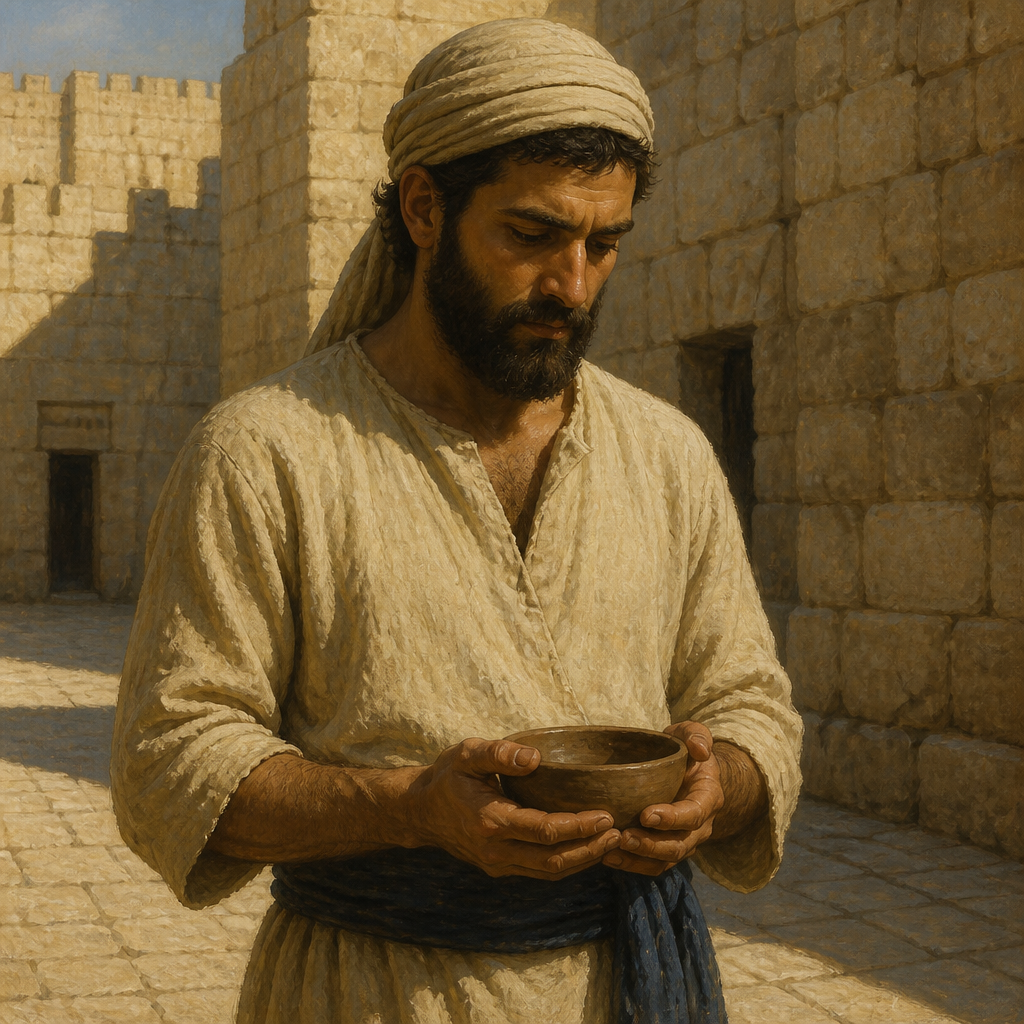
Malchijah was a member of the post-exilic community in Judah, identified specifically as a descendant of Harim. He appears in the biblical record within the context of the spiritual and social reforms initiated by Ezra the scribe. His life is situated in the mid-5th century BC, during the period when the Jewish people were transitioning from Babylonian captivity back to their ancestral homeland.
His mention is tied to the movement of national repentance following the discovery that many of the returning exiles had intermarried with the surrounding pagan populations. Malchijah is listed among those who acknowledged their transgression and took an oath to separate from their foreign wives in order to preserve the purity of the community and adhere to the Mosaic Law.
Background and Family
Malchijah is identified in the genealogical records of Ezra 10 as a descendant of Harim. The house of Harim was a significant family group among the returning exiles; according to Ezra 2:39, a branch of the Harim family consisted of 1,017 individuals who returned under the leadership of Zerubbabel. While the specific parentage of this Malchijah is not detailed, his membership in this clan establishes his status within the covenant community of the Return.
The era of Malchijah was one of great difficulty. The returnees faced economic hardship, political opposition from local Samaritans, and the daunting task of rebuilding the infrastructure of Jerusalem. Within this setting, the family units—identified by their patriarchal heads like Harim—served as the primary social and religious structures for the re-establishment of the nation.
Major Life Events
The sole recorded event in Malchijah’s life occurs in approximately 458 BC, following Ezra's arrival in Jerusalem. Ezra was distressed to find that the holy seed had intermingled with the peoples of the lands (Ezra 9:2). This was viewed not as a matter of ethnic prejudice, but as a direct violation of the commands found in Deuteronomy 7:3-4, which warned that such unions would lead Israel into idolatry.
Malchijah is explicitly listed in Ezra 10:31 as one of the men who had taken a foreign wife. Along with his kinsmen Eliezer, Isshijah, Shemaiah, and Shimeon, he stood before the assembly of Israel. The biblical text indicates that these men were required to make a confession and offer a guilt offering. Though the text at Ezra 10:31 serves as a registry of those who transgressed, it also serves as a registry of those who ultimately submitted to the communal resolution to divorce their foreign wives and return to strict adherence to the Law of Moses.
Relationship to Other Biblical Figures
Malchijah is inextricably linked to Ezra the Priest, who provided the spiritual impetus for the reforms. As a member of the descendants of Harim, he is also associated with Eliezer, Isshijah, Shemaiah, and Shimeon. These men were likely close relatives, perhaps brothers or cousins, who acted in concert during the public assembly. His participation in the reforms suggests a level of communal accountability where individual actions were subsumed under the collective spiritual health of the family of Harim.
Spiritual Significance
The inclusion of Malchijah’s name in the sacred text underscores the biblical theme of corporate responsibility. While he is only mentioned once, his presence in the list of Ezra 10 highlights the reality that even families of significant standing (such as the descendants of Harim) were susceptible to the cultural pressures of their environment.
Malchijah’s story represents a moment of painful but necessary purification for the post-exilic community. By agreeing to the terms of Ezra's reform, Malchijah prioritized his covenantal relationship with Yahweh over his domestic ties. The record of his name serves as a historical testimony to the difficulty of maintaining a distinct religious identity during a period of cultural reconstruction and the rigorous measures taken to ensure the survival of the Jewish faith after the Exile.
Spiritual Significance
Malchijah serves as a specific historical example of the internal struggles faced by the returning exiles. His presence in the biblical text highlights the tension between cultural assimilation and religious distinctiveness. His willingness to submit to Ezra's reforms, despite the personal cost, illustrates the priority of the Law in the post-exilic community's attempt to avoid the sins that led to the original Babylonian captivity.
Furthermore, Malchijah's inclusion in the 'list of the guilty' who repented emphasizes the transparency of the biblical record. It demonstrates that the restoration of Israel was not a movement of perfect people, but of flawed individuals who were willing to be corrected and redirected toward the covenant requirements of God.
Frequently Asked Questions
What does the name Malchijah mean?
The name Malchijah (Malkiyyah) is Hebrew for 'My King is Yahweh' or 'Jehovah is King.'
What was Malchijah's sin according to the book of Ezra?
Malchijah was one of the Israelites who had married a foreign woman from the surrounding pagan nations, which was a violation of the Mosaic Law intended to prevent idolatry.
Which family did Malchijah belong to?
He was a descendant of Harim, a prominent family that returned from the Babylonian Exile.
Did Malchijah repent of his actions?
Yes, his name is included in the list of those who agreed to the reforms of Ezra, which involved confessing the sin and separating from the foreign wives.
Connected Figures
Ezra
Spiritual Leader and Reformer
Eliezer
Fellow descendant of Harim
Isshijah
Fellow descendant of Harim
Shemaiah
Fellow descendant of Harim
Categories
Mentions by Book
- Ezra1
Others Named Malchijah
Malchijah, Son of HarimNehemiah 3:11
A participant in the post-exilic reconstruction of Jerusalem who repaired a section of the wall and the Tower of the Ovens.
Malchijah, Priest of the Fifth Course1 Chronicles 24:9
A priest during the Divided Monarchy who was designated by lot to lead the fifth of twenty-four divisions in the sanctuary service.
Malchijah, Ancestor of Asaph1 Chronicles 6:40
A Levite of the Gershonite clan during the Divided Monarchy who served as a genealogical link to the temple musician Asaph.
Malchijah, Son of Parosh (II)Ezra 10:25
An Israelite descendant of Parosh who was identified during the post-exilic reforms for having taken a foreign wife.
Malchijah, Musician at the Wall DedicationNehemiah 12:42
Malchijah was a musician or singer who participated in the jubilant choral dedication of the rebuilt walls of Jerusalem under the leadership of Nehemiah.
Malchijah, Sealer of the CovenantNehemiah 10:3
A prominent priest or leader who joined Nehemiah in signing the binding covenant to follow God's Law during the post-exilic restoration.
Malchijah, Son of RechabNehemiah 3:14
A Jewish leader and district official who oversaw the reconstruction of the Dung Gate in Jerusalem during the post-exilic return under Nehemiah.
Malchijah, Son of ParoshEzra 10:25
An Israelite from the descendants of Parosh who was identified during the post-exilic reforms for having taken a foreign wife.
Malchijah, Attendant to EzraNehemiah 8:4
A Jewish leader or priest who stood on the platform with Ezra during the public reading of the Law after the return from Babylonian exile.
Malchijah, Ancestor of Priests1 Chronicles 9:12
Malchijah was a Levite and the father of Pashhur, whose descendants served as prominent priests in the Jerusalem temple during the post-exilic restoration.
Malchijah, the GoldsmithNehemiah 3:31
A Jewish goldsmith who participated in the post-exilic reconstruction of Jerusalem's walls under the leadership of Nehemiah.